
Introduction to the F-35 Lightning II Program
Since its launch in 2001, the F-35 Lightning II program has evolved into the largest combat aircraft project in history. Known as the Joint Strike Fighter (JSF), the F-35 has production lines in Fort Worth, USA, Cameri, Italy, and a final-assembly site in Nagoya, Japan. The project includes a vast network of data centers across two continents, continuously updating its software. Currently, 20 countries either operate or have ordered the fifth-generation fighter, predominantly led by the United States, Japan, the United Kingdom, Australia, and Italy. When combined, these nations aim to deploy nearly 3,000 aircraft in three variants, creating a formidable defense alliance.
Top Five F-35 Fleets Globally
The United States stands as the primary operator of the F-35 fleet with contributions to its air force, navy, and marine corps. The USAF has ordered 1,763 F-35As, the Navy has 340 F-35Cs, and the Marines have secured 353 F-35Bs. Other leading operators include Japan, the United Kingdom, Australia, and Italy, as detailed below:
| Ranking | F-35 Fleet Numbers (Total Planned) |
|---|---|
| 1. USA | 1,763 F-35As, 340 F-35Cs, 353 F-35Bs |
| 2. Japan | 105 F-35As, 42 F-35Bs |
| 3. United Kingdom | 138 F-35Bs |
| 4. Australia | 100 F-35As |
| 5. Italy | 60 F-35As, 30 F-35Bs |
US Program Impact
The extensive F-35 program has influenced multiple sectors, from technological advancements to supplier engagement, with over 300 US suppliers involved in production. The Pentagon plans further upgrades, including propulsion advancements and multi-domain command integration, aiming for future Block 4 configurations.
Japan’s Increasing Defense Capabilities
Japan’s integration of the F-35 is driven by a response to strategic threats from regional powers like China, prompting the establishment of a Final Assembly and Check-Out facility in Nagoya. Japan plans to deploy 42 F-35Bs and has enhanced its fleet to 105 F-35As as part of a broader defensive strategy to protect its air borders.
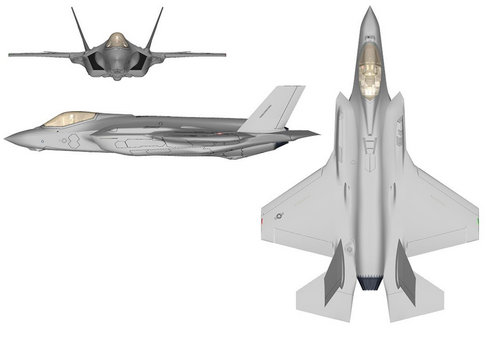
| Spec | F-35A | F-35B | F-35C |
|---|---|---|---|
| Powerplant | One Pratt & Whitney F135-PW-100 turbofan engine | F135-PW-600 | F135-PW-100 |
| Thrust | 43,000 pounds | 38,000 pounds (40,500 pounds Vertical) | 43,000 pounds |
| Length | 51.5 feet (15.7 meters) | 51.2 feet (15.1 meters) | 51.5 feet (15.7 meters) |
| Wingspan | 35 feet (10.7 meters) | 35 feet (10.7 meters) | 43 feet (13.1 meters) |
| Payload | 18,000 pounds (8,160 kilograms) | 15,000 pounds (6,800 kilograms) | 18,000 pounds (8,160 kilograms) |
United Kingdom’s Aerospace Strategy
The UK has acquired 138 F-35Bs to enhance its carrier capabilities and forge stronger US-UK aerospace ties. The F-35B plays a critical role for UK’s new Queen Elizabeth-class carriers and broadens Britain’s military reach across various operations.
Australia’s Strategic Focus on F-35s
Australia procured 100 F-35As to replace aging aircrafts and bolster its defense in alignment with ANZUS treaty commitments. The F-35’s long-range intelligence and reconnaissance capabilities are key for monitoring the Indo-Pacific region.
Italy’s Intricate Role
Italy is a primary contributor to F-35 production in Europe, having a final assembly line at Cameri Air Base. Italy integrates the F-35 with its Eurofighter Typhoon program and participates in multi-national exercises, highlighting its strategic military position in Europe.