
Introduction to the Eurofighter Typhoon
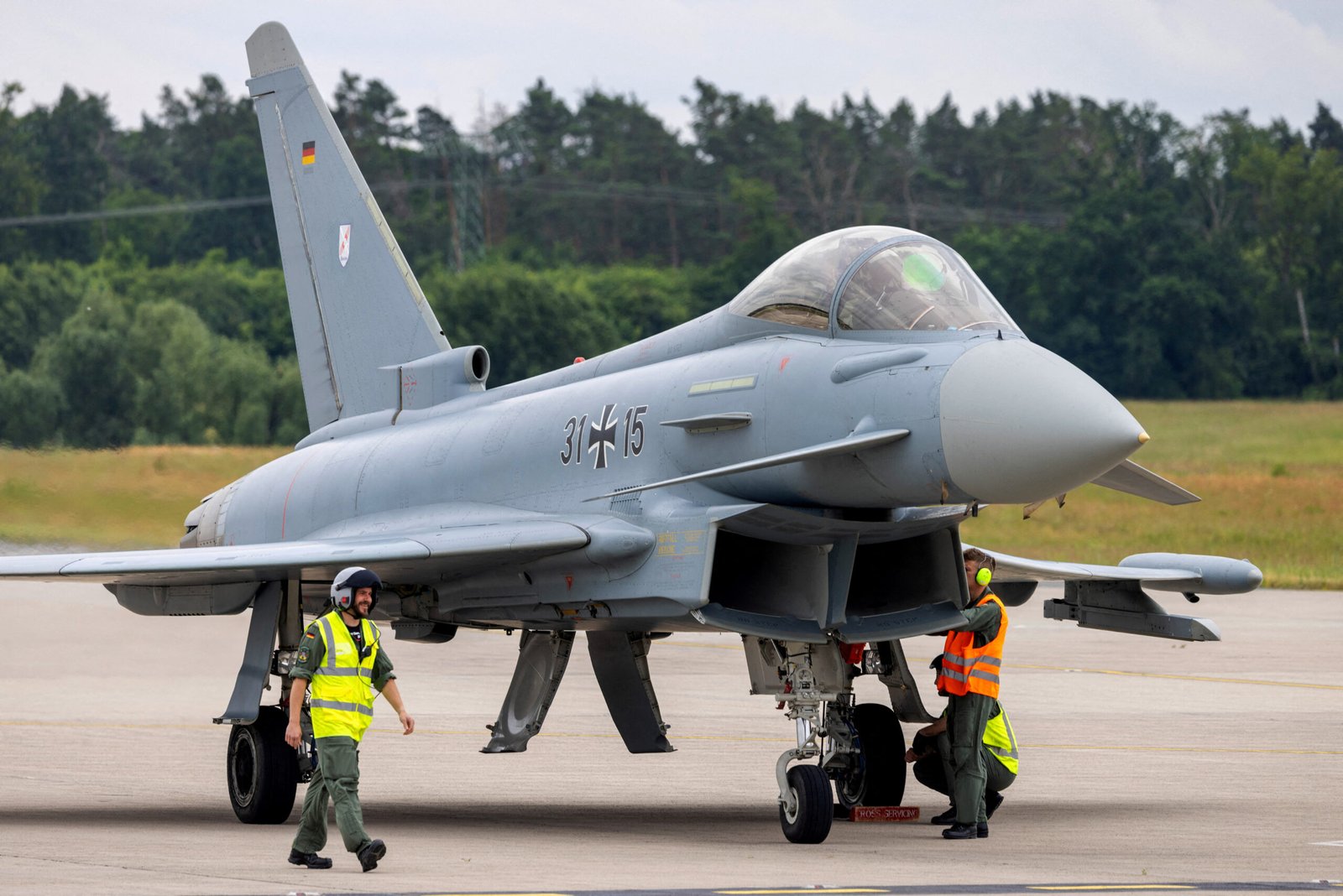
The Eurofighter Typhoon has been celebrated over the past two decades as one of the most agile and versatile multirole combat aircraft globally. However, the rising prominence of stealth fighters has exposed its limitations, making it appear more outdated. Some analysts and operators perceive it as obsolete, signaling a potential shift towards using the Typhoon for less demanding roles to conserve resources for more advanced stealth aircraft.
Challenges of Competing in Modern Air Warfare
The focus has shifted from the Typhoon’s dominance in dogfights to its ability to contend with stealth-equipped opponents using advanced technologies such as sensor fusion, networking, and electronic warfare (EW) saturation. The aircraft’s canard-delta design inadvertently increases radar visibility, and attempts to adapt its structure for stealth would diminish its strengths in speed and maneuverability, ultimately rendering such modifications unfeasible.
Limitations in Stealth Features
Fifth-generation fighters like the F-35, J-20, and Su-57 achieve reduced radar cross-section (RCS) through features that the Typhoon lacks, including radar-absorbent materials (RAM), serpentine engine intakes, and internal weapon storage. Consequently, the Typhoon must maintain a distance during engagements, relying on larger, more visible missiles that compromise performance. The evolving sophistication of surface-to-air missiles (SAMs) further challenges its traditional strategies, leaving stealth as the principal safeguard.
Historical Context and Design of the Eurofighter Typhoon
Initially conceived during the Cold War, the Eurofighter Typhoon was optimized for high-speed, high-altitude performance and agility in short-range battles against Soviet forces. This design emphasized rapid launches, hard climbs, and tight turns, over long-range, deep penetration, and stealth capabilities.
| Spec | Eurofighter Typhoon |
|---|---|
| Wingspan | 35 feet, 11 inches (10.95 meters) |
| Length | 52 feet, 4 inches (15.96 meters) |
| Height | 17 feet, 4 inches (5.28 meters) |
| Wing Area | 551.1 feet² (51.2 meters²) |
| Empty Weight | 24,250 lbs (11,000 kgs) |
| Max Takeoff Weight | 51,809 lbs (23,500 kgs) |
| Max Payload | 16,535 lbs (7,500 kgs) |
| Pylons | 13 Hardpoints |
| Max Fuel | 11,020 lbs (5,000 kgs) |
| Max G’s | Pos 9 to Neg 3 G |
| Engines | Two Eurojet EJ200 reheated turbofans |
Technological and Economic Considerations
Attempts to enhance stealth characteristics would require extensive redesigns, such as incorporating serpentine intakes and redesigning the exhaust for reduced infrared visibility. These modifications are not only cost-prohibitive but also constrained by the original architecture, which predates considerations for stealth in European defense planning.
Electronic Warfare and Performance Limitations
While some argue that the Typhoon’s exceptional performance could offset its lack of stealth, advancements in missile technology present new challenges. Modern missiles possess advanced seekers and datalink course corrections, making them difficult to evade, diminishing the efficacy of the Typhoon’s agility and speed. Furthermore, the need for enhanced EW capabilities would require structural upgrades that could hinder performance by adding weight and drag.
The Typhoon’s Future Role
Looking towards the future, investing in new fifth-generation aircraft, such as the Tempest and Future Combat Air System (FCAS), is more practical than attempting to retrofit the Typhoon for stealth. While the Typhoon remains a capable fourth-generation fighter and will see continuous use into the 2040s, its role is shifting. The latest Tranche 5 jets incorporate advancements like upgraded radar and EW features, allowing them to support stealth aircraft effectively.
| Eurofighter Typhoon (ECRS) Radar | Features |
|---|---|
| Repositionable AESA array | Wide field of regard |
| Electronic warfare and jamming features | |
| Passive detection via Pirate Infrared Sensor | |
| Automated defensive aids (DASS) | Threat response |
| Modular design | Ongoing updates |
The Eurofighter Typhoon will continue to serve as a high-performance asset, complementing next-generation stealth fighters rather than assuming a stealth role itself.