
Decline of First Class in Modern Aviation
Air travel demand is rising, leading to intensified competition among airlines. On crowded routes, carriers distinguish themselves not just through flight schedules but increasingly through premium onboard offerings. Over recent years, there have been significant changes in cabin design, with premium economy becoming standard and business class featuring amenities once exclusive to first class.
Historically, first class was a hallmark of an airline’s prestige, attracting travelers willing to pay for maximum comfort. However, this pattern is shifting, and many airlines are reducing or completely eliminating first class. Industry analysis indicates that by 2024, the annual scheduled first-class seats have dwindled by over 40% compared to 2019.
American Airlines‘ Approach to First Class
American Airlines is currently the only US carrier offering international first-class fares, although it plans to phase out its flagship first class. The airline announced in 2022 that it would eliminate its Flagship First class, joining other carriers like United Airlines and Delta Air Lines that have already made similar moves. United phased out first-class by 2018, and Delta removed it entirely. Several international airlines like Turkish Airlines, LATAM, and China Airlines have also moved away from first class.
Current First Class Offerings
Currently, American Airlines’ Flagship First is available on the Boeing 777-300ER and Airbus A321T aircraft. The widebody features a 1-2-1 layout for its eight seats, while the narrowbody Airbus A321T offers ten seats in a 1-1 configuration. Despite ongoing phase-outs, first class remains on long-haul routes to Asia, Australia, Europe, and South America. Domestically, it is still available on certain routes, such as Los Angeles–New York JFK and San Francisco–JFK.
The Economic Rationale Behind Eliminating First Class
A primary reason for discontinuing first class is the financial inefficiency. Airlines aim for a load factor of 80–85%, but first class struggles to meet this, with occupancies sometimes as low as 20%. The seats provide marginal additional comfort compared to business class, lacking privacy enhancements that would justify higher fares.
Investments in business class have made it more attractive, with features like lie-flat seats becoming standard, contributing to the decline of first class. Additionally, first-class cabins require more space, reducing total seat capacity and thereby limiting revenue potential.
American Airlines Flagship First
| Aircraft | Boeing 777-300ERs, Airbus A321Ts |
|---|---|
| Routes | Transcontinental, long-haul international |
| Number of Seats | 8 on 777-300ERs, 10 on A321Ts |
| International Destinations | Asia, Australia, Europe, South America |
Introduction of New Business Suites
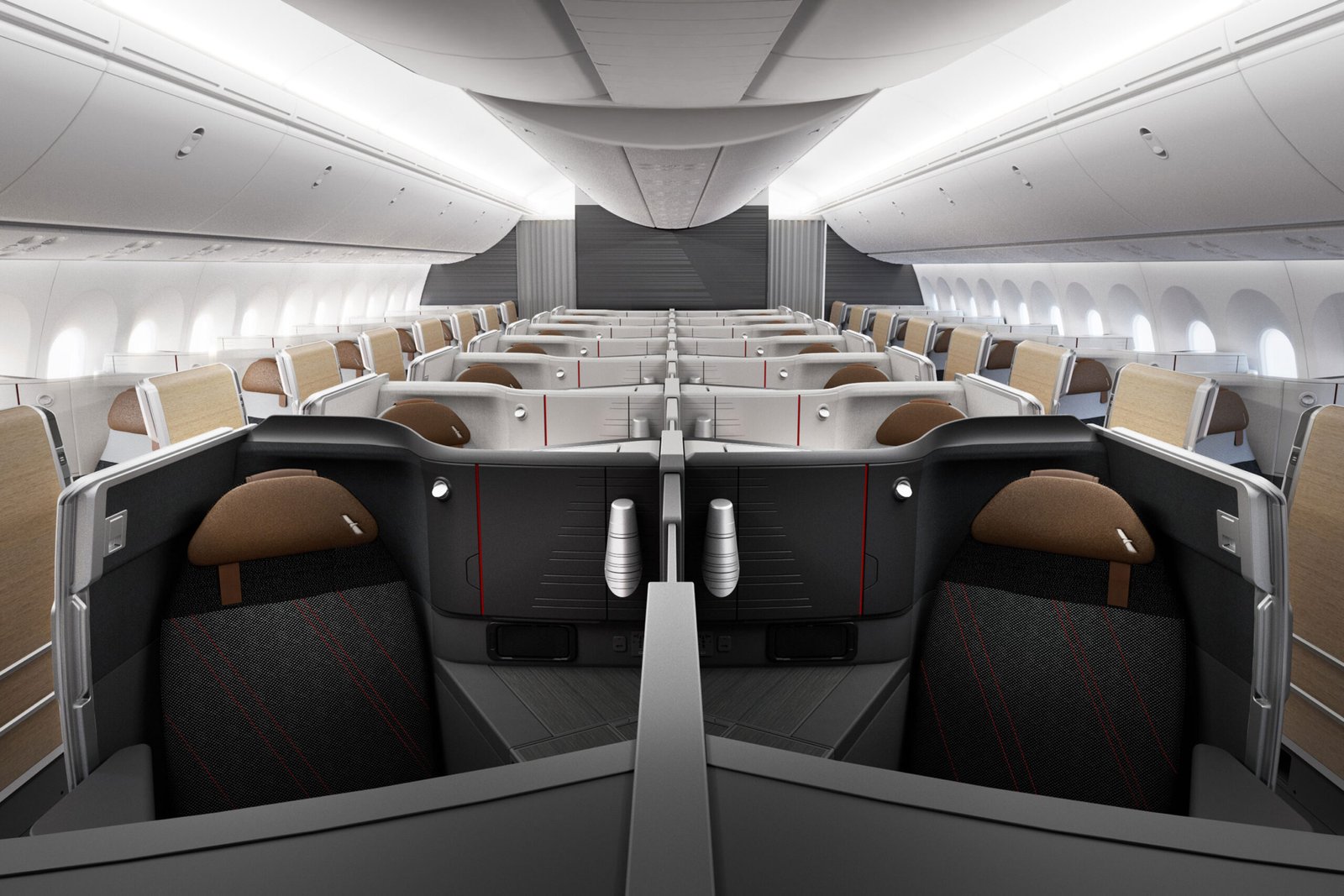
American Airlines has introduced the Flagship Suite with plans to retrofit all its Boeing 777-300ERs. Each will accommodate 70 business class suites and 44 premium economy seats. Enhancements have been made to the seating, with privacy doors, improved storage, and more space.
The new layout reduces first-class seats by eight but adds 34 premium seats. The reconfiguration optimizes seat availability for popular long-haul destinations like London, Sao Paulo, and Tokyo. American Airlines aims to capitalize on strong premium cabin demand with better capacity compared to competitors.
Future Plans for A321XLR and 787 Dreamliners
The Flagship Suite will debut on American’s new Boeing 787-9 Dreamliners and A321XLR fleet. The 787-9s will offer fully enclosed suites in a 1-2-1 reverse herringbone layout. They feature enhanced technology and comfort options. This new design, being adopted on both widebodies and narrowbodies, aligns with the airline’s strategy to strengthen its market presence.
The A321XLR will provide 20 suites in a 1-1 layout, allowing American Airlines to compete with JetBlue’s Mint Suites and United’s Polaris product on transcontinental routes. This enhancement will grant American greater flexibility in introducing non-stop flights to less accessible destinations.
Business and Premium Economy as the Future
As the aviation industry evolves, business and premium economy are becoming more profitable than first class, leading airlines, including American, to shift focus. The introduction of the Flagship Suite and upgraded amenities in business class stands out as a prudent strategy, embracing market demands for high comfort and efficiency at more competitive rates.