
Is the Eurofighter Typhoon Faster Than the Lockheed Martin F-35 Lightning II?
The question of whether the Eurofighter Typhoon is faster than the Lockheed Martin F-35 Lightning II continues to provoke discussion among aviation enthusiasts and defense analysts. Speed plays a crucial role in the design of modern fighter jets, influencing their combat performance, mission adaptability, and survivability. Both the Typhoon and the F-35 exemplify modern Western aerospace engineering, and a comparison of their maximum speeds reveals their design priorities and operational roles.
Design Philosophy Showdown
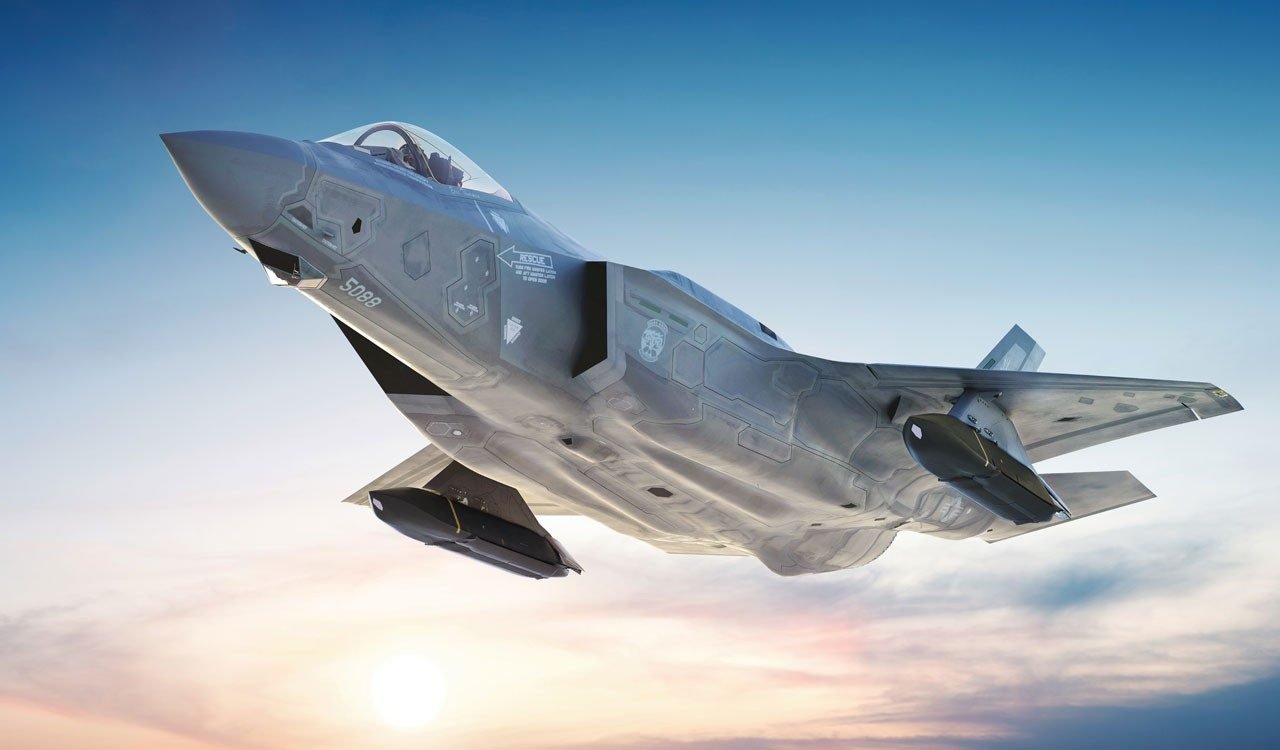
The Eurofighter Typhoon is designed to emphasize air superiority and agility, making it ideal for rapid response and dogfighting. On the other hand, the F-35 prioritizes stealth, sensor integration, and multirole versatility, focusing on network-centric warfare. To determine if the Typhoon is faster than the F-35, we should consider the factors influencing their performance, including their utilization and comparisons with other modern fighters.
Performance Specifications
The Typhoon can reach a top speed of approximately Mach 2 (1,320 mph at altitude), outperforming the F-35 which reaches Mach 1.6 (1,200 mph). While the difference of 0.4 Mach may seem small, it translates to significant benefits during high-speed interceptions and high-altitude operations, particularly for Quick Reaction Alert missions. The design philosophy behind each aircraft influences this disparity in speed.
Technical Comparison
| Feature | Eurofighter Typhoon | F‑35 Lightning II |
|---|---|---|
| Max Speed | Mach 2.0 | Mach 1.6 |
| Engines | 2 × EJ200 afterburning turbofans | 1 × Pratt & Whitney F135 |
| Thrust (afterburner) | ~60,000 lbf combined | ~43,000 lbf |
| Thrust-to-Weight Ratio | ~1.15:1 | ~0.87:1 |
| Primary Design Goal | Air superiority, agility, speed | Stealth, multirole flexibility |
| Aerodynamic Layout | Delta wing + canards | Stealth-optimized blended wing-body |
| Strengths | Climb rate, acceleration, sustained supersonic flight | Low observability, sensor fusion, precision strike |
Why Is the Typhoon Faster than the F-35?
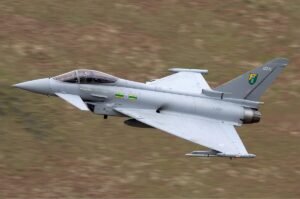
The difference in speed stems from engine configuration, thrust-to-weight ratio, aerodynamics, and mission-centric design choices. The Typhoon’s dual Eurojet EJ200 engines produce about 60,000 lbf of thrust, boosting its acceleration, climb rate, and redundancy. Conversely, the F-35’s single Pratt & Whitney F135 engine, although powerful, integrates features minimizing thermal signature and radar visibility, compromising efficiency at high speeds. The Typhoon’s aerodynamic delta wing and forward canards yield high lift and agility, optimizing its supersonic performance.
Operational Usage
In service, the Eurofighter Typhoon and F-35 Lightning II fulfill distinct yet complementary roles. The Typhoon frequently leads in Quick Reaction Alert duties, excelling in air superiority tasks due to its speed and agility. It is also effective in strike missions and high-speed escorts. The F-35’s stealth capabilities enable it to penetrate well-defended airspace undetected, conducting precision strikes with a lower risk of detection. Tactical deployment in air forces like the RAF highlights the synergy between speed-driven and stealth-focused missions.
How Do the Typhoon & F-35 Compare With Other Fighters?
Comparisons with other current fighters shed light on their speed. The Russian Su-35 and American F-22 Raptor are faster than the F-35, with the F-22 matching the Typhoon at Mach 2. China’s J-20 also achieves approximately Mach 2. While the F-35 may be outpaced by these models, it dominates through stealth and sensor capabilities. Ultimately, the Typhoon has advantages in agility and Mach 2 capabilities, but lacks the radar-evasion capacities of newer fifth-generation aircraft.
Is Speed Always an Advantage?
The Eurofighter Typhoon is theoretically faster, but real-world conditions and mission parameters often constrict speed usage. Speed alone proves less decisive in modern air combat. The F-35’s sensors, stealth, and situational awareness can outweigh raw speed. In exercises like Red Flag, F-35s often outperform faster opponents through superior technology and tactics. While the Typhoon outpaces the F-35, the latter’s stealth and connectivity strengths showcase non-speed benefits essential in today’s combat scenarios.
Final Verdict: Why Speed Isn’t Everything in Modern Air Combat
Thus, while the Eurofighter Typhoon outpaces the F-35, speed isn’t the definitive factor in combat superiority. The differing design philosophies—speed and agility for the Typhoon, stealth, and advanced sensors for the F-35—highlight the complex dynamics of air combat. Where the Typhoon serves rapid interception, the F-35 manages stealth strikes. Speed contributes to performance, but strategic and tactical considerations define the overarching success in contemporary aerial engagements.