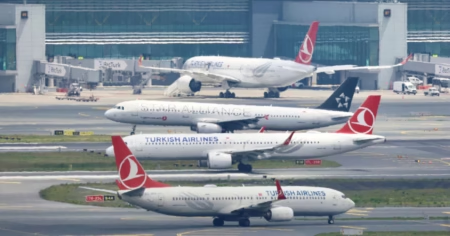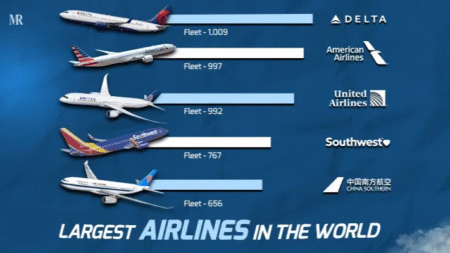
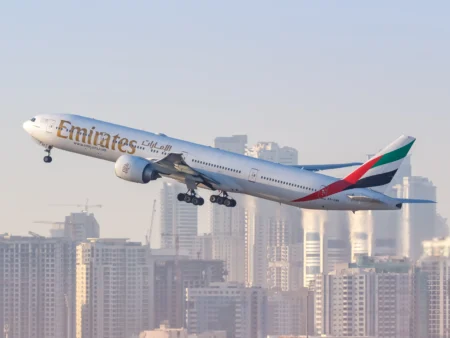
In 2025, the top five airlines with the largest widebody fleets are leading the charge in shaping the future of international air travel. With fleets that boast hundreds of aircraft, Emirates, United Airlines, Qatar Airways, Delta Air Lines, and Turkish Airlines are at the forefront of innovation and sustainability, redefining passenger and cargo flights across the globe.
Browsing: Turkish Airlines
Turkish Airlines has announced a major expansion with an order for up to 225 Boeing aircraft. This includes 50 firm orders for Boeing 787 Dreamliners, potential additional orders, and 100 Boeing 737 MAX jets. The move aims to enhance global operations and reinforce Istanbul’s status as a key aviation hub.
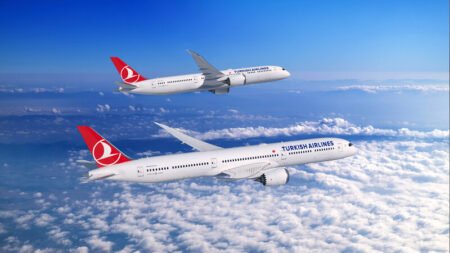
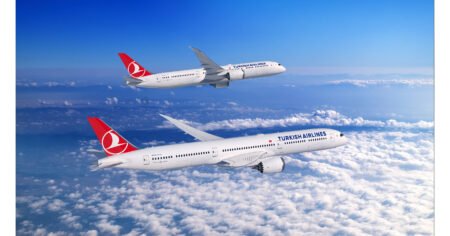
Turkish Airlines has made its largest-ever widebody aircraft order with Boeing, securing up to 75 787 Dreamliners. This agreement supports the airline’s plan for fleet expansion, aiming to reach a total of 800 aircraft by 2033. Additionally, Turkish Airlines plans to expand its narrowbody fleet by ordering up to 150 Boeing 737 MAX jets.
Turkish Airlines has placed a significant order with Boeing for up to 75 Boeing 787 Dreamliners and 150 737 Max airliners to bolster its fleet and support its Vision 2033 expansion plan. The deal includes firm orders for various models with options for additional aircraft. The airline aims to enhance its operational capabilities and expand its fleet to more than 800 aircraft by 2033.
Turkish Airlines plans to increase its global reach to 285 destinations by the end of 2025, highlighting its expansive network through new and resumed routes. From Istanbul Airport, the airline recently added services to cities like Misrata, Seville, and Port Sudan, showcasing its strategic efforts to enhance connectivity. With significant operations in Europe and Africa, Turkish Airlines underscores its importance in global aviation.
Boeing and Lockheed Martin are anticipated to finalize a major deal with Turkish Airlines for 250 commercial planes and F-16 fighter jets. This potential agreement, which may be announced during President Erdogan’s visit to Washington, aligns with Turkish Airlines’ expansion plans, seeking to enhance Istanbul’s global aviation presence. Additionally, the deal could influence US-Turkey relations regarding the F-35 program debacle.
Turkish Airlines has strategically acquired a 25-27% stake in Air Europa, marking a significant step in its network expansion strategy. The investment, structured through €300 million in convertible debt and shares, allows the airline to enhance connectivity between Europe and Latin America while adhering to EU ownership regulations. This move underscores Turkish Airlines’ super-connector strategy, positioning it to capitalize on Madrid’s pivotal air traffic role.
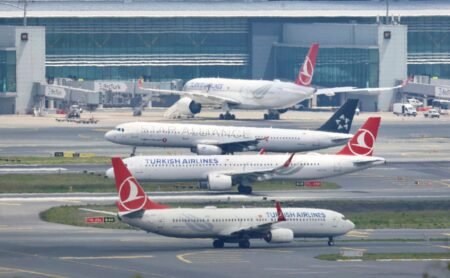
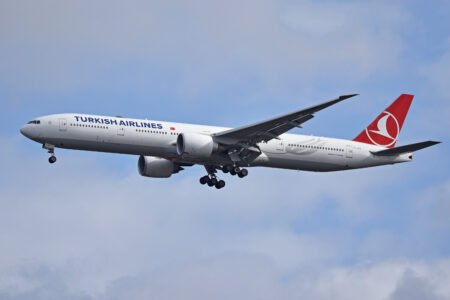
The analysis identifies the top five airlines by widebody aircraft fleet size. Emirates leads with 264 widebody aircraft, followed by United Airlines with 227. Qatar Airways and Delta Air Lines also have substantial widebody fleets, prioritizing modern, efficient aircraft. Turkish Airlines uses its fleet of 154 widebodies effectively to connect its Istanbul hub to global destinations.
A Turkish Airlines Boeing 787-9 had to return to JFK Airport due to landing gear issues after takeoff. The crew executed a fuel dump procedure and safely landed without requiring emergency services. A similar precautionary incident occurred previously on a different Turkish Airlines flight.
Turkish Airlines is rapidly expanding, offering attractive salaries and extensive benefits to its cabin crew. New crew members start with competitive pay and receive additional perks including layover allowances, comprehensive healthcare, and opportunities for career advancement. The recruitment process for crew involves specific qualifications and an intensive training program.