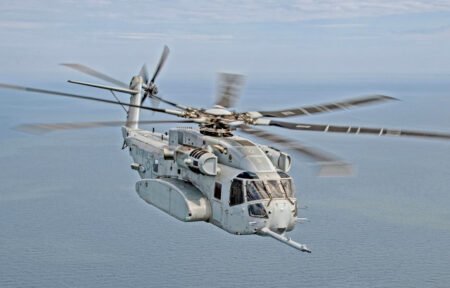
Lockheed Martin has secured a $10.855 billion contract for the production of up to 99 CH-53K King Stallion helicopters for the U.S. Marine Corps. This multi-year agreement optimizes costs and supply chains, impacting numerous suppliers and stabilizing production. The CH-53K enhances military logistical capabilities and offers potential for international sales, marking a key phase in its program development.
Browsing: Lockheed Martin
In 2025, Lockheed Martin and Boeing continue to compete fiercely in the military aircraft sector. Lockheed dominates with its F-35 program, while Boeing excels in tankers and bombers. Government procurement decisions and ongoing technological developments shape this dynamic landscape, with Lockheed currently leading in exports but Boeing holding strong in innovation and future program involvement.
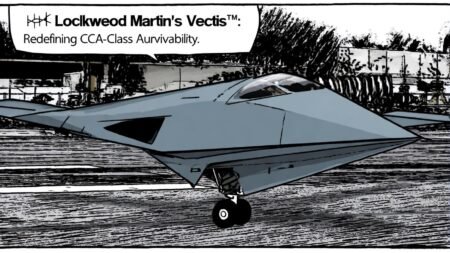
Lockheed Martin has revealed Vectis, an autonomous collaborative combat aircraft designed to operate alongside the F-35 in multi-domain missions. Utilizing stealth technology, Vectis promises high survivability at a competitive cost. Key specifications remain undisclosed, but the project is moving forward with plans for a prototype within two years.
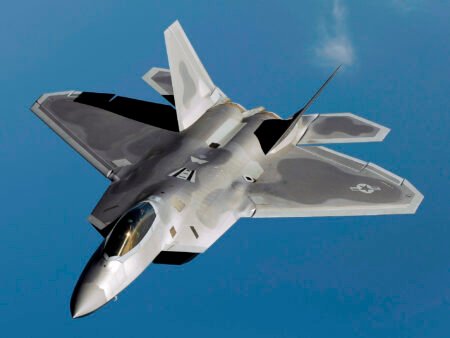
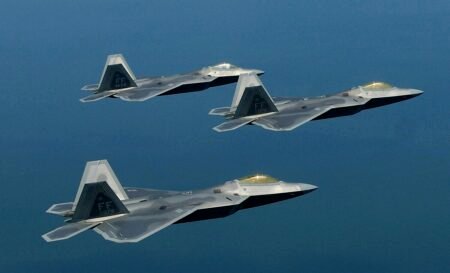
Lockheed Martin is advocating for upgrades to the U.S. Air Force’s oldest F-22 Raptors instead of retiring them. As threats from nations like Russia and China grow, maintaining a robust fleet is critical. The imminent F-47 fighter will eventually replace the F-22, but until then, modernizing the current fleet remains a priority.
Lockheed Martin has unveiled the Vectis, a stealth drone designed for both air-to-air and air-to-ground missions. Classified as a Group 5 drone, it will operate alongside crewed fighters like the F-35. The company aims to make it more affordable than traditional pilots through modular design and digital engineering techniques.
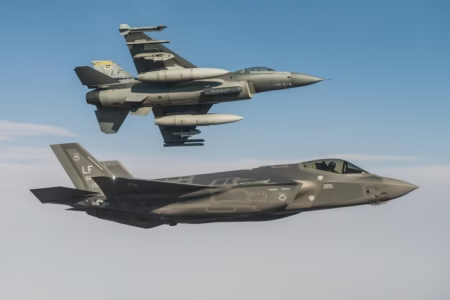
The F-35 Lightning II is gradually replacing the F-16 Fighting Falcon across the US Air Force and allied nations due to its advanced stealth, sensor fusion, and operational capabilities. As a fifth-generation fighter, the F-35 offers a significant upgrade, with higher survivability, a comprehensive sensor suite, and ease of modernization, making it superior to the aging F-16 despite higher acquisition costs.
The Aerospace & Defense sector has achieved notable financial returns in 2025, outperforming the S&P 500 due to geopolitical and legislative influences. Analysts suggest potential continued growth, though concerns exist about costs from tariffs and material prices. Key companies, except Lockheed Martin, have seen impressive stock gains.
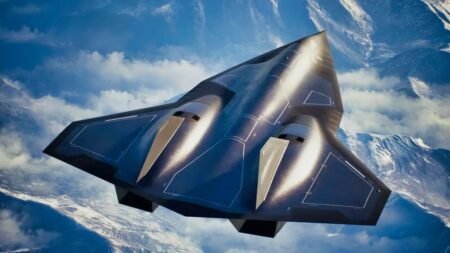
Lockheed Martin’s potential development of the hypersonic SR-72 aircraft is explored, emphasizing its strategic, technological, and developmental challenges. While publicly unconfirmed, signs suggest possible progress towards realization. The article contrasts the SR-72’s anticipated capabilities with those of its predecessor, the SR-71, and examines its portrayal in media to underscore its public and strategic implications.
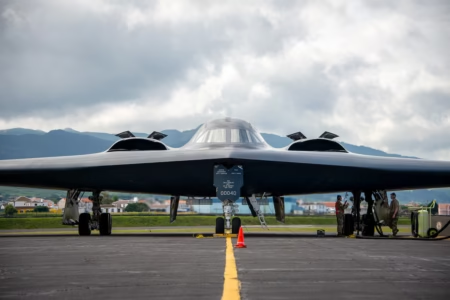
Lockheed Martin has secured a $56.4 million contract from the US Air Force to enhance the B-2 Spirit stealth bomber’s electronic countermeasure receivers. The project, set to conclude in 2031, addresses advancements in air defense technologies. Lockheed Martin’s experience in electronic warfare bolstered its selection for this critical contract, ensuring the B-2’s continued strategic value until the B-21 Raider is operational.
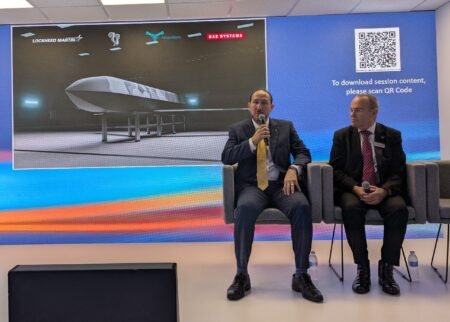
Lockheed Martin’s Skunk Works and BAE Systems’ FalconWorks have announced a strategic partnership to develop advanced autonomous air systems, focusing on modular designs for various military missions. Unveiled at the DSEI defense conference, this collaboration aims to accelerate innovations in air technology. The partnership is expected to significantly impact autonomous aviation and military operations.