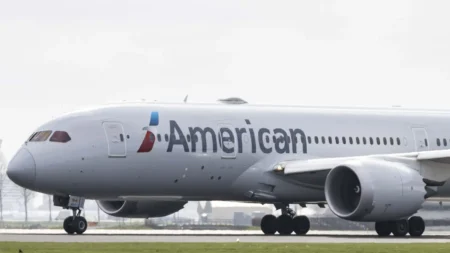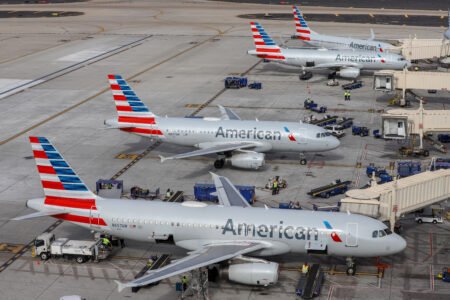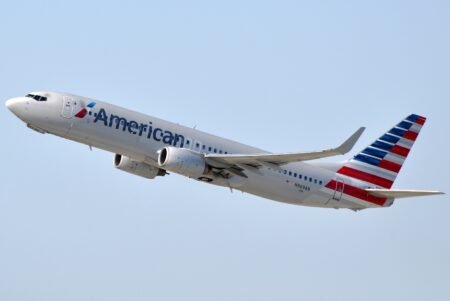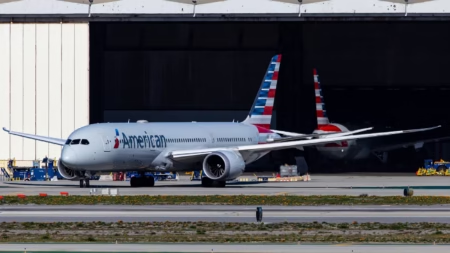

American Airlines briefly operated the Boeing 737-100 in the early 1980s, acquiring two aircraft via its merger with AirCal. Though these planes never sported the full American livery, they served on short domestic routes until being phased out. This rare venture highlights a unique chapter in American’s aviation history.

Browsing: American Airlines
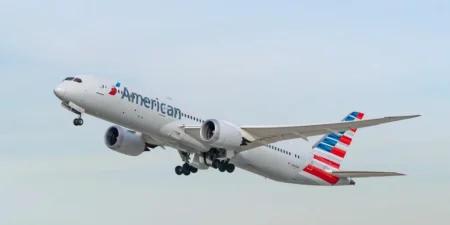
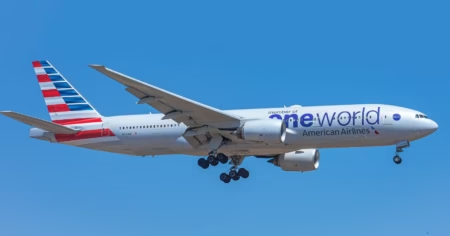
American Airlines is planning to modernize its fleet by 2025, replacing the aging Boeing 777-200ER with more advanced Boeing 787 Dreamliners. The shift focuses on enhancing fuel efficiency and passenger comfort. While Airbus’ A350 could present competition, Boeing remains the favored choice.
An American Airlines Airbus A321 narrowly avoided a collision at LAX when an AeroLogic Boeing 777F crossed its runway. The quick actions by the air traffic controller and the American Airlines pilots averted the potential disaster. The FAA is investigating the incident, which underscores the ongoing challenges with runway incursions.
American Airlines is striving to compete as a premium carrier amid high operational costs and a market heavily dominated by Delta and United. To succeed, it must capture high-yield passengers through strategic investments in service enhancements and cultural shifts within the company, while overcoming limitations from airport slot constraints and government policies.
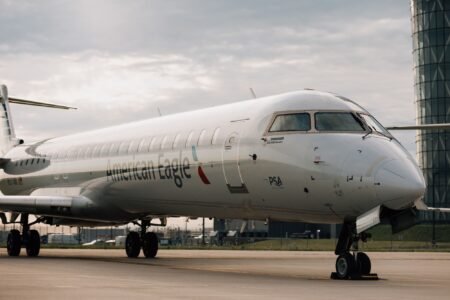
American Airlines has achieved a significant milestone by operating its longest ever regional jet route using a Bombardier CRJ-900. This development marks the airline’s growing adaptability in utilizing regional jets for lengthier domestic routes, expanding potential service capabilities.
American Airlines introduces a new nonstop service between Boston and Buffalo, challenging JetBlue’s existing monopoly. Concurrently, the airline is scaling back in Miami by ending the Sacramento route, focusing instead on routes from major hubs. This move aligns with its strategy to balance demand and capacity while optimizing profitability.
American Airlines faces a $11 million penalty after a passenger suffered two strokes during a Miami to Madrid flight that the airline did not divert for medical care. The decision spotlights the airline’s prioritization of operational efficiency over passenger safety, a decision found to have worsened the passenger’s health outcome.
A confrontation in etiquette arose when an American Airlines passenger bypassed a deplaning line at DFW to catch a connecting flight. While the action reduced risks of missing a flight, it sparked a debate on balancing individual urgency against group norms. This incident underscores the ongoing challenge of deplaning efficiency and etiquette in air travel.
A California jury has ordered American Airlines to pay $9.6 million for mishandling a medical emergency when a passenger, Jesus Plasencia, showed signs of a stroke on a 2021 flight. Despite clear symptoms, proper medical protocols were not followed. The case highlights the critical responsibility airlines have in managing medical crises during flights and may influence future protective measures.
American Airlines leverages the Boeing 787-9 Dreamliner to expand its global network, focusing on ultra-long-haul routes between 7,000 and 9,000 miles, including Dallas to Brisbane. While these routes are fewer, they are strategically vital, showcasing American’s capability in long-haul travel. The airline also ensures strong connectivity across 5,000–7,000-mile routes while adapting to short-haul demands with the versatile 787-9.