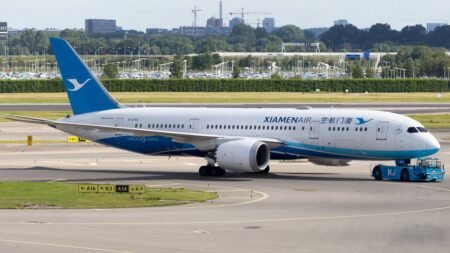
Xiamen Air has set a new benchmark in aviation with its 19-hour and 20-minute nonstop flight from New York to Fuzhou, making it the world’s longest nonstop passenger flight. This strategic route, bypassing Russian airspace, serves New York’s sizable Fuzhou community, highlighting the airline’s innovative approach to meeting demand.
Browsing: Airline Strategy
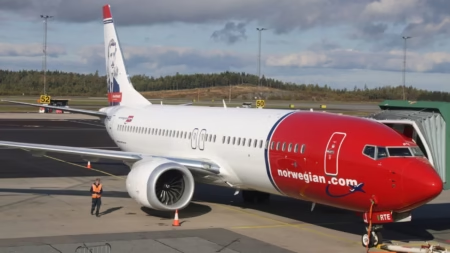
Norwegian has expanded its fleet by ordering 30 more Boeing 737 MAX 8 jets, bolstering its total to 80 aircraft by 2031. This order is a part of Norwegian’s strategic focus on fleet modernization, improved passenger experience, and sustainability. The airline also secures operational resilience with new spare engines amid discussions on new aircraft models.
The 2025 Skift Global Forum shed light on significant parallels in the challenges faced by U.S. and international airlines, as discussed by Frontier’s Barry Biffle and AirAsia’s Tony Fernandes. Key topics included easing labor challenges, the impact of delayed aircraft deliveries, and the shift in demand patterns. The forum also addressed evolving network strategies and the potential growth for low-cost and legacy carriers.
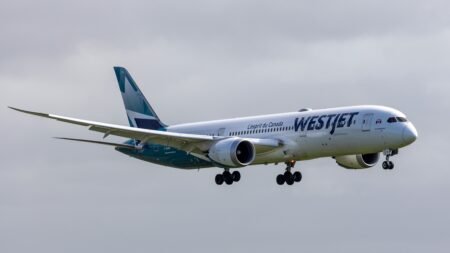
WestJet ranks as Canada’s second-largest airline with a strong focus on international routes, especially those connecting Canadian cities to the U.S. Busiest routes include Los Angeles-Calgary, Phoenix-Calgary, and Las Vegas-Calgary, emphasizing WestJet’s strategic use of U.S. gateways. The list of the top 20 routes showcases a blend of leisure and business travel, underscoring an integrated transborder strategy.
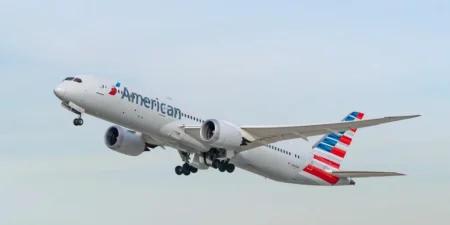
American Airlines introduces a new nonstop service between Boston and Buffalo, challenging JetBlue’s existing monopoly. Concurrently, the airline is scaling back in Miami by ending the Sacramento route, focusing instead on routes from major hubs. This move aligns with its strategy to balance demand and capacity while optimizing profitability.
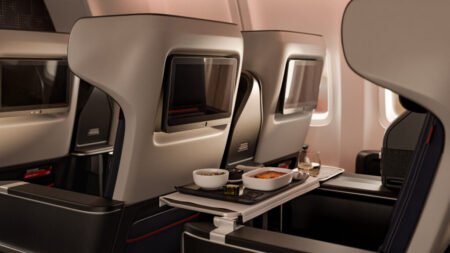
Delta Air Lines is retrofitting its Airbus A350 cabins with enhancements like memory-foam seating and advanced lighting. These changes, aimed at aligning product consistency and improving passenger comfort, address both the functional needs of long-haul flights and strategic revenue goals by increasing premium seating capacity.
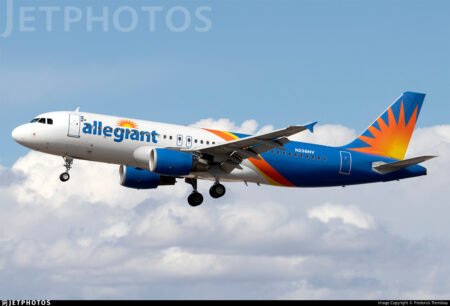
Allegiant Air will end operations at LAX by January 2026, shifting to Hollywood Burbank Airport to reduce costs. This transition reflects Allegiant’s strategy to align with its low-cost business model, providing more favorable conditions for its target market of price-sensitive leisure travelers.
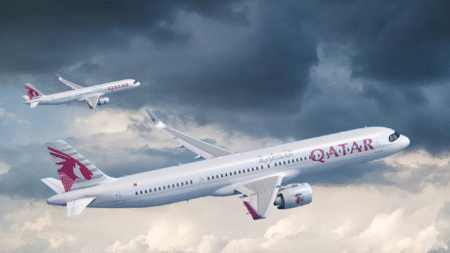
Qatar Airways plans to incorporate high-density Airbus A321neos to enhance capacity on select routes. This move represents a shift from the airline’s premium-heavy tradition and aims to optimize operations for high-demand routes while maintaining service quality.
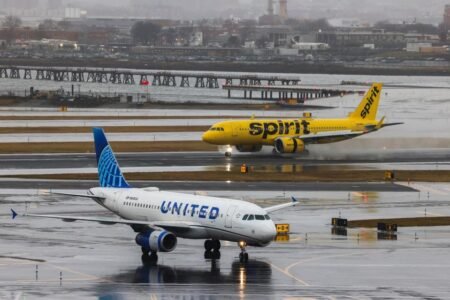
United Airlines has decided not to bid for Spirit Airlines’ assets, citing the lack of strategic alignment and significant reconfiguration costs. Instead, United focuses on expanding its current routes and increasing fleet capacity through organic growth. While United abstains, other carriers might pursue Spirit’s available aircraft and routes.
The Airbus A380 and Boeing 777X represent contrasting eras and strategies in aviation. The A380 focused on maximum passenger capacity, while the 777X offers modern efficiency and flexibility. The shift in airline priorities towards efficiency has resulted in the 777X gaining favorable interest, supported by orders from major airlines as they phase out the A380.