
Spirit Airlines Flight’s Close Encounter with Air Force One
On September 16, 2025, a Spirit Airlines (NK) flight came alarmingly close to Air Force One in New York airspace. Air traffic controllers issued repeated instructions to maintain safe separation during the president’s international journey.
This incident emphasizes the stringent protocols for flights involving the president, as controllers exercised excessive caution. However, preliminary investigations confirm adherence to all safety standards.
Incident Overview Over Long Island
The situation developed over Long Island when Air Force One, carrying President Trump towards London Stansted Airport (STN), shared nearby airspace with a commercial Spirit Airlines flight. The Boeing 747 requires larger separation distances compared to regular air traffic due to its special status and operational parameters.
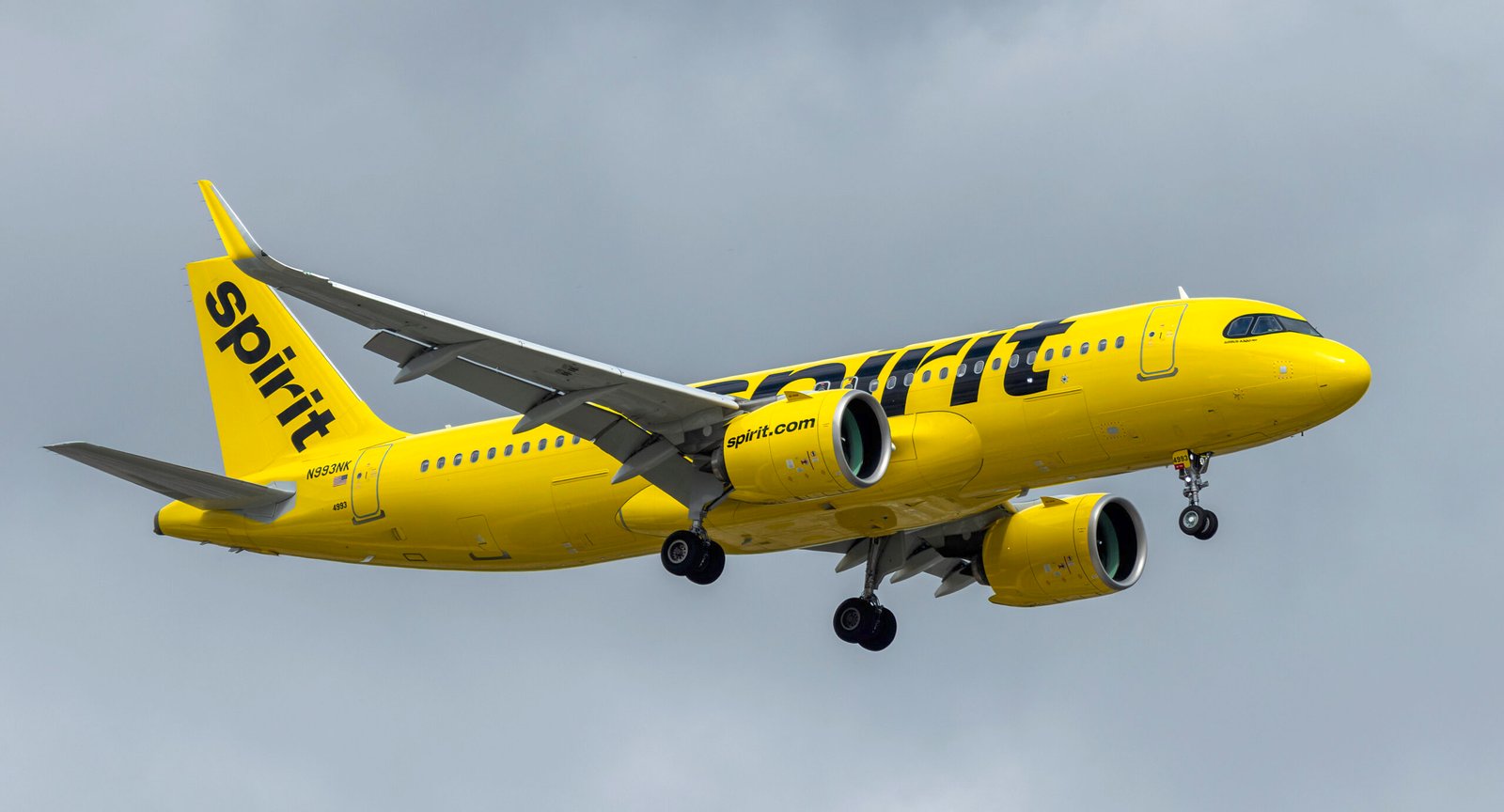
Spirit Airlines flight NK1300, an Airbus A321 registered as N687NK, was on its routine journey from Fort Lauderdale International Airport (FLL) to Boston (BOS). As the plane descended from 37,000 feet, a proximity alert sounded.
Air Traffic Control Response
New York Center air traffic controllers identified the potential risk and issued vectoring procedures. Commands for Spirit Airlines’ pilots to turn 20 degrees right were met with delayed acknowledgment.
- First command: “Spirit 1300, turn 20 degrees right, vectors traffic in descent.” No immediate response was received.
- Third attempt: “Spirit 1300, turn 20 degrees right now.”
- Final demand: “Spirit Wings 1300, turn 20 degrees right immediately.”
Pilots complied only after the fourth command, and the controller confirmed the situation by noting Air Force One was eight miles to the left.
Controller Communications and System Precision
A recording from LiveATC revealed the sequence, showcasing the crucial need for precision in crowded airspace. The rapid directives likely contributed to the delay in response.
Flight tracking data confirmed that Spirit Airlines executed the instructed turn, maintaining distance east of New York City.
Enhanced Safety Measures
Due to security protocols, Air Force One receives amplified separation standards, typically greater than the standard 5 miles laterally or 1,000 feet vertically. Despite potential collision concerns, eight miles of separation negated any need for Traffic Collision Avoidance System (TCAS) alerts.
The FAA’s preliminary review ruled out any violations. Spirit Airlines affirmed its crew’s adherence to procedures, with the plane landing safely in Boston.
Potential Factors in Communication Delay
Pilots’ delayed reactions might be due to pre-landing workloads, including routine cockpit activities potentially involving personal electronics. The controller’s mention of an iPad stressed the ongoing concern regarding such devices, yet no concrete evidence emerged.
Impact on Air Traffic Management
New York Center’s bustling airspace necessitates constant vigilance. This minor incident underscores the importance of training on prompt communication and radio etiquette. Rapid successive instructions may have limited pilot response time.
Spirit Airlines, an ultra-low-cost carrier using Airbus aircraft, mainly covers domestic routes. This event highlights operational challenges posed by shared airspace, especially near high-profile flights.
No political impact resulted from the incident. Both aircraft fulfilled their flight schedules without further complications, with Air Force One, transporting President Trump and his delegation, arriving on time in London.
Ongoing FAA reviews aim to refine protocols to seamlessly manage various types of flights. Aviation experts recognize the inherent robustness of the current system in mitigating genuine risks.