
Rolls-Royce Jet Engine Production Overview
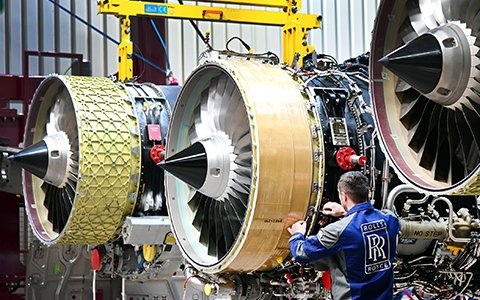
Rolls-Royce is a prominent name in the aviation sector, known for its exceptional engineering and production of jet engines for a variety of aircraft, including commercial airliners, business jets, military planes, and helicopters.
| Company Details | |
|---|---|
| Stock Code | RR |
| Business Type | Engine Maker |
| Date Founded | March 15, 1906 |
| CEO | Tufan Erginbilgic |
| Headquarters | London, United Kingdom |
| Key Product Lines | Trent Engine, Pearl Engine |
Annual Jet Engine Production
On an annual basis, Rolls-Royce produces hundreds of jet engines. These engines are integral to sectors ranging from commercial aviation to military applications and helicopters. Annual production numbers fluctuate based on factors such as market demand, supply chain dynamics, and significant events like the COVID-19 pandemic. In 2023, Rolls-Royce delivered 262 large jet engines, including those that power aircraft like the Airbus A350 and Boeing 787. Additionally, they delivered 196 engines for business jets and regional aircraft, making the total nearly 500. When considering military and helicopter engines, the company exceeds 500 units annually, positioning Rolls-Royce as a leading global jet engine manufacturer, second to General Electric in commercial engine production.
The Beginnings of Aircraft Engine Production
Founded in 1906 by Charles Rolls and Henry Royce, the company initially focused on luxury automobiles. With the onset of World War I, they shifted to aircraft engines, creating the Eagle engine in 1914 in response to the British government’s need for reliable military aircraft power. The Eagle’s success led to advancements like the Merlin engine, which powered the Supermarine Spitfire, among others. Nearly 150,000 Merlin engines were produced from the 1930s onwards.
The Jet Engine Evolution
Rolls-Royce transitioned to jet engines in the 1940s with the Welland, after acquiring Power Jets Ltd’s development project from Frank Whittle. The Welland powered the Royal Air Force’s first jet fighter, the Gloster Meteor. Rolls-Royce advanced their technology with engines like the Derwent and progressed through the development of the Avon and Conway engines in subsequent decades.
Welland Engine Specifications
| Length | 62 inches |
| Diameter | 43 inches |
| Dry weight | 850 pounds |
| Maximum thrust | 1,600 lbf |
| Thrust-to-weight ratio | 1.887:1 |
Recent Developments and the Trent Series
Rolls-Royce’s RB211 series in the 1970s led to the innovative Trent family of engines. The Trent XWB engine, introduced in the 2010s, powers the Airbus A350, while the Trent 1000 is used in the Boeing 787 Dreamliner. The company’s investment in R&D enables ongoing improvements.
Trent Series Specifications
| Specification | Trent 700 | Trent 800 | Trent 900 | Trent 1000 | Trent XWB |
|---|---|---|---|---|---|
| Maximum thrust | 71,000 lbf | 93,400 lbf | 74,400 lbf | 72,000 lbf | 97,000 lbf |
| Mass | 13,580 pounds | 13,400 pounds | 13,770 pounds | 13,492 pounds | 16,043 pounds |
| Bypass Ratio | 5:1 | 6.4:1 | 8.7:1 | 10:1 | 9.6:1 |
| First Run | 1992 | 1993 | 2003 | 2006 | 2010 |
| Application | Airbus A330 | Boeing 777 | Airbus A380 | Boeing 787 | Airbus A350 |
BR700 and Pearl Engine Families
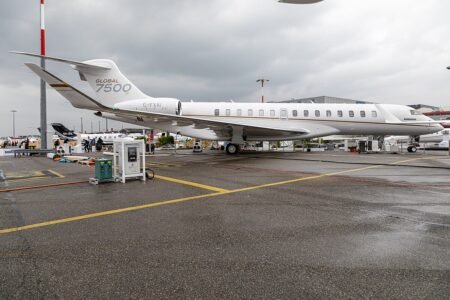
Alongside the Trent series, Rolls-Royce’s BR700 engines support long-range business jets and regional aircraft. The follow-up Pearl series, introduced in 2018, features advanced design elements and powers models like Gulfstream and Bombardier jets. These developments maintain Rolls-Royce’s leading position in the business jet engine market.