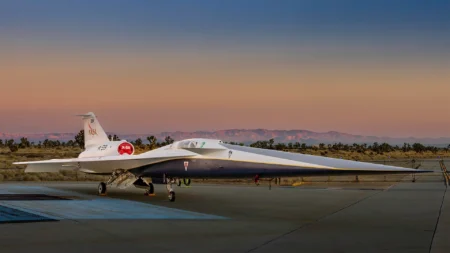
The NASA X-59 QueSST aims to overcome the challenge of sonic booms in supersonic travel, utilizing a unique design developed by Lockheed Martin’s Skunk Works. The project has led to significant testing and development efforts, hoping to create quieter flight experiences and new pathways for future supersonic passenger aircraft. Collaboration with organizations like Boom Supersonic highlights the broader industry interest in advancing sustainable, high-speed air travel.
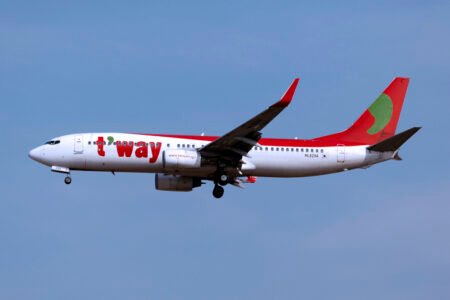
T’way Air, a South Korean airline, plans to rebrand itself as Trinity Airways in 2026. This rebranding effort involves adopting a new name and livery, representing a strategic transformation to strengthen customer trust and improve the airline’s corporate vision.
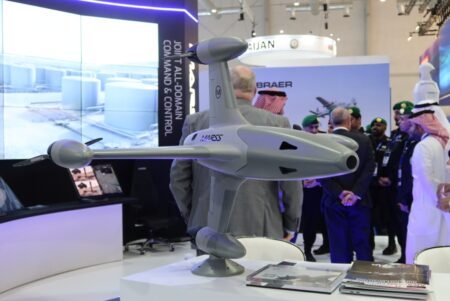
MARSS’s INTERCEPTOR-MR, a medium-range counter-drone system, has successfully completed UK flight tests. This AI-driven system, which offers a safer, explosive-free alternative to traditional missiles, is now set for NATO evaluation, reflecting significant international interest. The company plans to expand its workforce and begin full production in 2026, keeping the UK as the focal point for European operations.
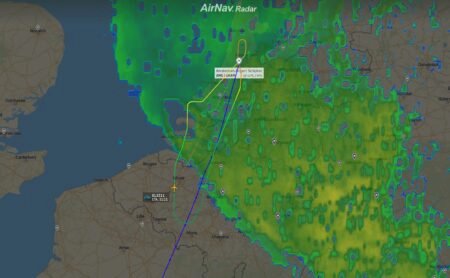
A KLM flight from Amsterdam to Barcelona turned back to Schiphol Airport shortly after takeoff due to an undisclosed technical issue. Emergency services were prepared as a precaution when the Boeing 737-8K5 landed safely. Passengers are being rebooked on subsequent flights to Barcelona.
United Airlines flight UA181, a Boeing 787-9 traveling from Frankfurt to Denver, diverted to Keflavik, Iceland due to an urgent customer situation. The diversion is anticipated to delay the flight’s arrival in Denver by over an hour, though the specific reason for the change in course has not been disclosed.
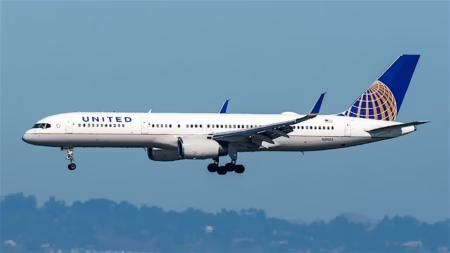
United Airlines has strategically retired its aging Boeing 757 fleet in favor of more modern aircraft, such as the Airbus A321XLR and Boeing 737 MAX 10, to enhance fuel efficiency and reduce maintenance costs. The decision was influenced by long-standing operational principles, engine performance, and fleet standardization needs. The legacy 757, a key component in United’s operations for three decades, is being phased out as the airline moves towards next-generation airliners.
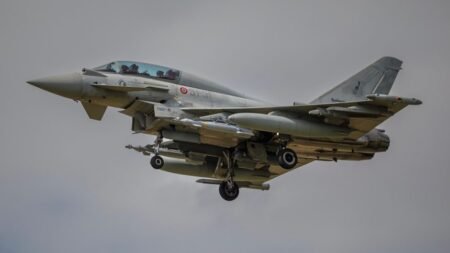
Raytheon UK has completed successful integration trials of the Paveway IV guided bomb on the Eurofighter Typhoon, strengthening collaborative combat capabilities within NATO. The trials, involving live-fire exercises and simulations, highlight multinational defense cooperation and the weapon’s precision and reliability in contested environments.
The McDonnell Douglas F-15C/D Eagle, a key player in the USAF’s air superiority strategy for over four decades, is gradually being replaced by modern platforms. Active-duty USAF phases out F-15C/Ds, but the Air National Guard continues their service in air defense until 2026. Notable for its unmatched combat record and technological upgrades, the Eagle’s legacy will remain impactful.
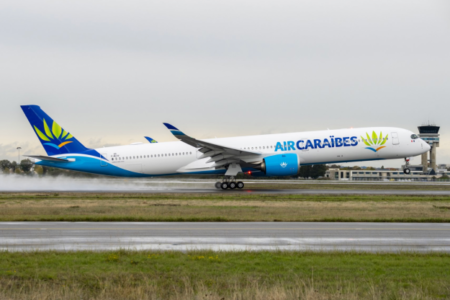
Air Caraïbes will start a very short widebody service this winter, operating an Airbus A350-900 on a 40-minute flight between Samana and Santo Domingo in the Dominican Republic. This service provides the only European link to Samana and will operate weekly, increasing to twice weekly by 2026. The article also highlights other small block-time widebody operations worldwide and details Air Tanzania’s short 787-8 service in East Africa.
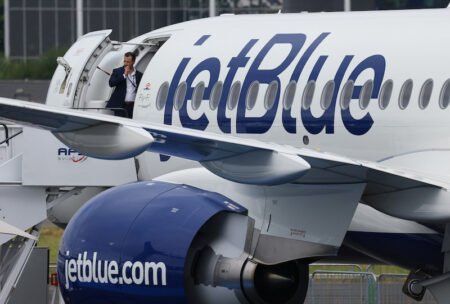
JetBlue has become the first U.S. airline to implement the SkyBreathe MyFuelCoach system, enhancing its sustainability efforts by optimizing fuel consumption and reducing emissions. This tool provides pilots with performance insights to improve fuel efficiency, aligning with JetBlue’s broader strategy for economic and environmental benefits. The airline is saving additional fuel and emissions through data-driven efficiency improvements.