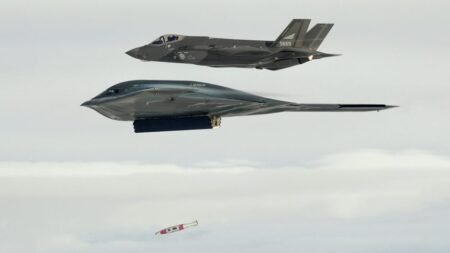
The U.S. Air Force and Royal Norwegian Air Force jointly conducted a maritime strike exercise in the Norwegian Sea, featuring the B-2 Spirit bomber with QUICKSINK munitions. This collaboration demonstrated advanced military capabilities and innovation, enhancing interoperability for future operations in contested environments.
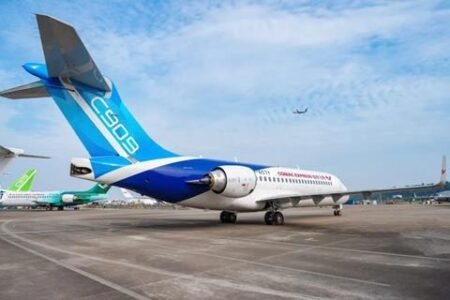
Air Cambodia has made a preliminary deal with the Commercial Aircraft Corporation of China (COMAC) to acquire up to 20 C909 regional jets, enhancing the airline’s fleet. This move positions Cambodia alongside other Southeast Asian countries choosing COMAC jets, as COMAC attempts to compete with Airbus and Boeing. The C909 jets will improve Air Cambodia’s operational efficiency on short to medium-haul routes while supporting growing regional passenger demand.
In August 2025, Heathrow Airport broke records by accommodating over 8 million passengers in a single month, the first European airport to achieve this feat. The airport managed high passenger volumes with impressive efficiency, maintaining strong operational standards and minimal disruptions. Amidst its full operational capacity, Heathrow continues to advocate for a third runway to bolster the UK’s connectivity on the global stage.
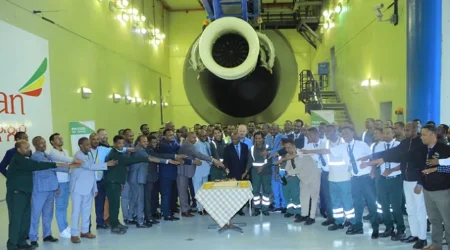
Ethiopian MRO Services has obtained the CFM Leap-1B PRSV1 capability, allowing for the restoration of engine performance to original specifications. This achievement is backed by approvals from Ethiopian and U.S. aviation authorities, distinguishing it among a few global facilities with such capability. The LEAP-1B engine powers the Boeing 737 MAX exclusively.
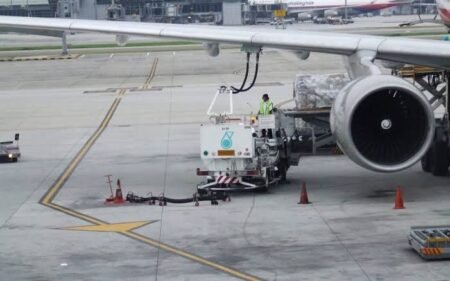
The European Commission is expanding its sustainable aviation fuel initiatives to Africa in collaboration with AFCAC, addressing financial barriers to SAF development. The partnership, involving major financial and aviation organizations, aims to support the African aviation sector’s transition to cleaner energy, bolstering the EU-AU cooperation ahead of the upcoming summit.
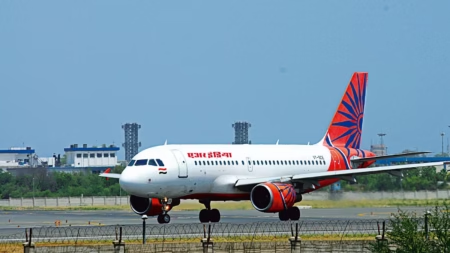
Passengers on an Air India flight from Delhi to Singapore experienced a nearly six-hour delay due to a technical issue, involving a lack of cabin cooling. Similar disruptions occurred in Copenhagen due to technical problems with another Boeing 787, affecting over 250 passengers. Air India addressed travel interruptions by providing accommodations and meals while planning for flight rescheduling.
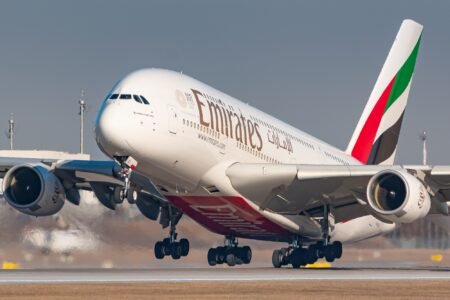
An Emirates Airbus A380 flying from Sydney to Dubai diverted to Perth due to a medical emergency, ensuring the passenger’s safety and continued travel arrangements for others. This event echoes a similar diversion in January 2025 when a flight from Dubai to Kuala Lumpur rerouted for medical reasons, underscoring Emirates’ commitment to passenger care.
The aviation industry is experiencing a shift where ancillary revenue is rising as fares fall. Low-cost carriers (LCCs) like Frontier, Spirit, and Wizz Air are leading, with some airlines earning more from ancillary services than base fares. Global ancillary revenue reached $148 billion in 2024, with traditional airlines seeing a 5.3% rise in per-passenger ancillary income despite fare declines.
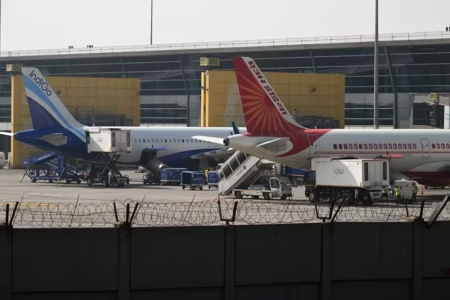
Air India and IndiGo initiated repatriation flights from Kathmandu to manage the return of Indian nationals stuck due to protests that shut down Nepal’s main airport. Following the political unrest, which included violent demonstrations and a government collapse, the Indian government coordinated relief efforts. Security and safety concerns arose, affecting many, including high-profile political figures.
The Gujarat government has started acquiring land for greenfield airports in Dahod and Dwarka, following AAI feasibility studies. This initiative is part of a broader strategy to bolster the state’s aviation infrastructure, alongside existing expansions like Ahmedabad and Rajkot airports, positioning Gujarat as a key aviation hub.