
KLM Experiences Significant €30 Million Loss from Amsterdam Airport Strikes
Focus Keyword: KLM €30 Million Loss
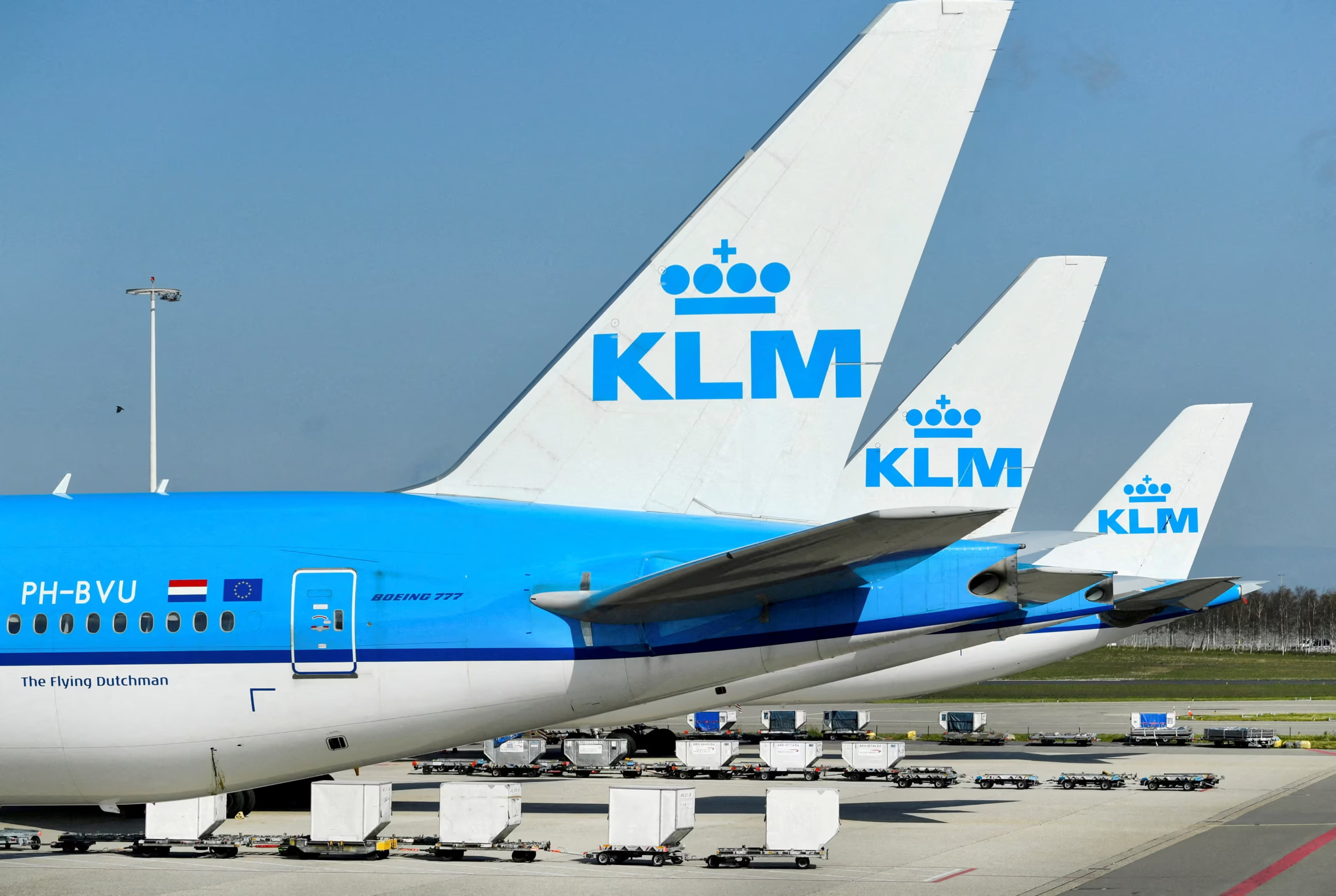
KLM has announced financial losses exceeding €30 million due to three recent strikes by its ground crew at Amsterdam Airport Schiphol (AMS). If the planned industrial action persists next week, the airline anticipates an additional €10 million in losses.
The industrial walkouts have severely disrupted operations at one of Europe’s busiest airports, necessitating the cancellation and rescheduling of many flights. This disruption exacerbates pressure as KLM is already engaged in a €450 million cost-saving initiative targeted for 2025.
KLM Suffers €30 Million Loss
The strikes are rooted in disagreements between KLM management and unions representing ground staff. While a new collective labor agreement was accepted by three unions—NVLT, VKP, and De Unie—members of the FNV and CNV unions rejected the proposed 2.25% pay increase.
- FNV and CNV argue that ground staff receive unfair treatment compared to pilots and demand higher compensation.
- KLM considers these demands as “unrealistic and unattainable,” indicating higher labor costs could damage competitiveness.
According to NL Times, KLM confirmed that negotiation channels remain open, although progress has been limited. FNV expressed its intention to continue the strikes until a better offer is secured, with another strike already scheduled.
Financial and Competitive Pressure
KLM’s ongoing strike-related losses emerge amid fierce competition from low-cost carriers and the impact of increased air travel taxes in the Netherlands, prompting some passengers to choose airports in adjacent countries.
The financial repercussions include not just direct revenue loss, but also an erosion of customer trust and rising operational costs. For KLM, already navigating cost-reduction efforts, the strikes intensify the pressure to retain efficiency and remain competitive.
Previous Legal Interventions
Not every strike proposal has proceeded. Earlier this year, Dutch courts prevented two strike actions that FNV had scheduled before the summer season, highlighting the necessity of balancing labor rights with operational stability during peak periods. Despite these legal hurdles, unions are staunch in their pursuit of improved terms, extending the uncertainty for KLM and its customers.