
Families File Lawsuit Over Fatal DC Crash Against Airlines, FAA, and Army
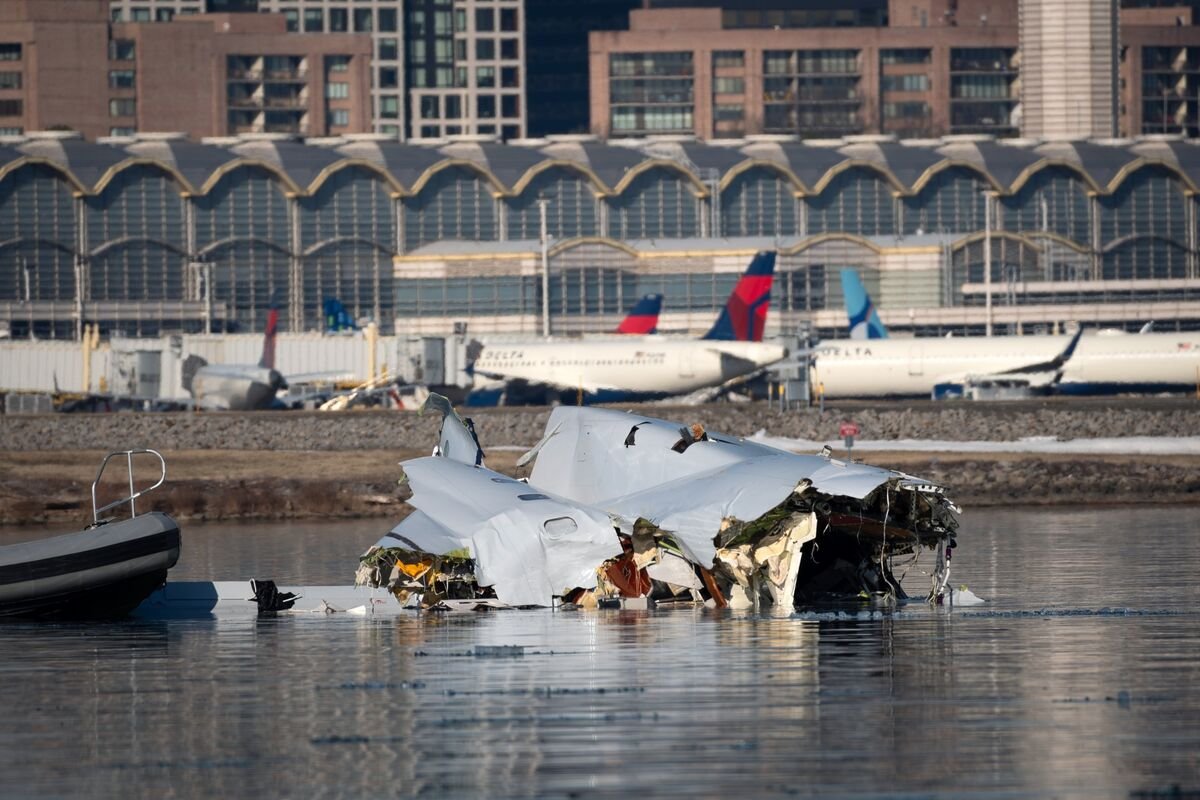
In the aftermath of the tragic January 29 midair collision near Washington DC, families of the victims have filed a federal lawsuit. The defendants named in this case are American Airlines, its regional subsidiary PSA Airlines, the US Army, and the FAA. The lawsuit claims that negligence and systemic failures by the parties mentioned contributed to the accident, resulting in the loss of 67 lives. The lawsuit was lodged in the US District Court in Washington, D.C., seeking accountability and compensation.
Accusations Against American Airlines and the US Army
The complaint details accusations against American Airlines and PSA Airlines for allegedly misusing the arrival rate system at Reagan National Airport, allowing more arrivals than were safe. It also accuses the US Army of flying a Black Hawk helicopter above its authorized altitude and holds the FAA responsible for failing to maintain aircraft separation and issue timely safety alerts. Plaintiffs allege that these combined mistakes rendered the crash “wholly avoidable.”
Specific Allegations in the Lawsuit
According to the lawsuit, the defendants failed to address known risks adequately. Plaintiffs reference over 30 documented near-misses in the D.C. airspace, which they claim were ignored. The Army helicopter reportedly flew at an elevation exceeding its authorized corridor, conflicting with commercial flight paths. Air traffic control‘s failure to ensure minimum separation and issue critical alerts when aircraft were in unsafe proximity is also highlighted.
The suit further accuses American Airlines and PSA Airlines of manipulating scheduling to push more flights into the constrained airspace of Reagan National Airport, thereby reducing safety margins and increasing collision risk.
Background of the Crash
The crash involved flight AA5342, operated by PSA for American Airlines, on its final approach to Ronald Reagan Washington National Airport, colliding with a US Army Black Hawk helicopter. The CRJ-700 jet had departed from Wichita carrying 60 passengers and four crew members, while the helicopter was returning from a night evaluation flight connected to a ‘continuity of government’ training plan.
| Flight | Aircraft | Occupants |
|---|---|---|
| AA5342 | Bombardier CRJ-700 | 64 (4 Crew, 60 Passengers) |
| PAT25 | Sikorsky UH-60L Black Hawk | 3 (All Crew) |
The crash, which occurred just before landing, took place in an airspace with limited vertical separation between helicopter and fixed-wing routes. Preliminary reports suggest the helicopter was flying above its published altitude, placing it in the CRJ’s approach path. The NTSB has acknowledged the complexity and tight management of the airspace around Washington DC. The incident is the deadliest US commercial aviation accident in over two decades, leading to immediate restrictions on helicopter flights near the area by the FAA.
Potential Industry Impacts
If the lawsuit is successful, it could set significant precedents regarding the accountability of airlines, the FAA, and military operations in shared airspace. Courts might also demand stricter scheduling and more rigorous altitude enforcement, with enhanced oversight of arrival management in busy airports.
The case demonstrates the balancing act between boosting airport throughput and maintaining safety. Airlines increasing arrival rates in constrained airspaces may face accusations of compromising safety margins. As air traffic demand rises, similar concerns might surface in other regions with dense helicopter and flight operations.
The lawsuit could also prompt regulatory changes. The FAA and Congress might revise helicopter routes, define altitude corridors, update integration protocols for military and civilian flights, and enforce stricter separation rules. This crash and the legal actions could drive the modernization of DC’s airspace and enhance operational standards.