
Emirates Flight Delay in SFO Related to H-1B Visa Fee Announcement
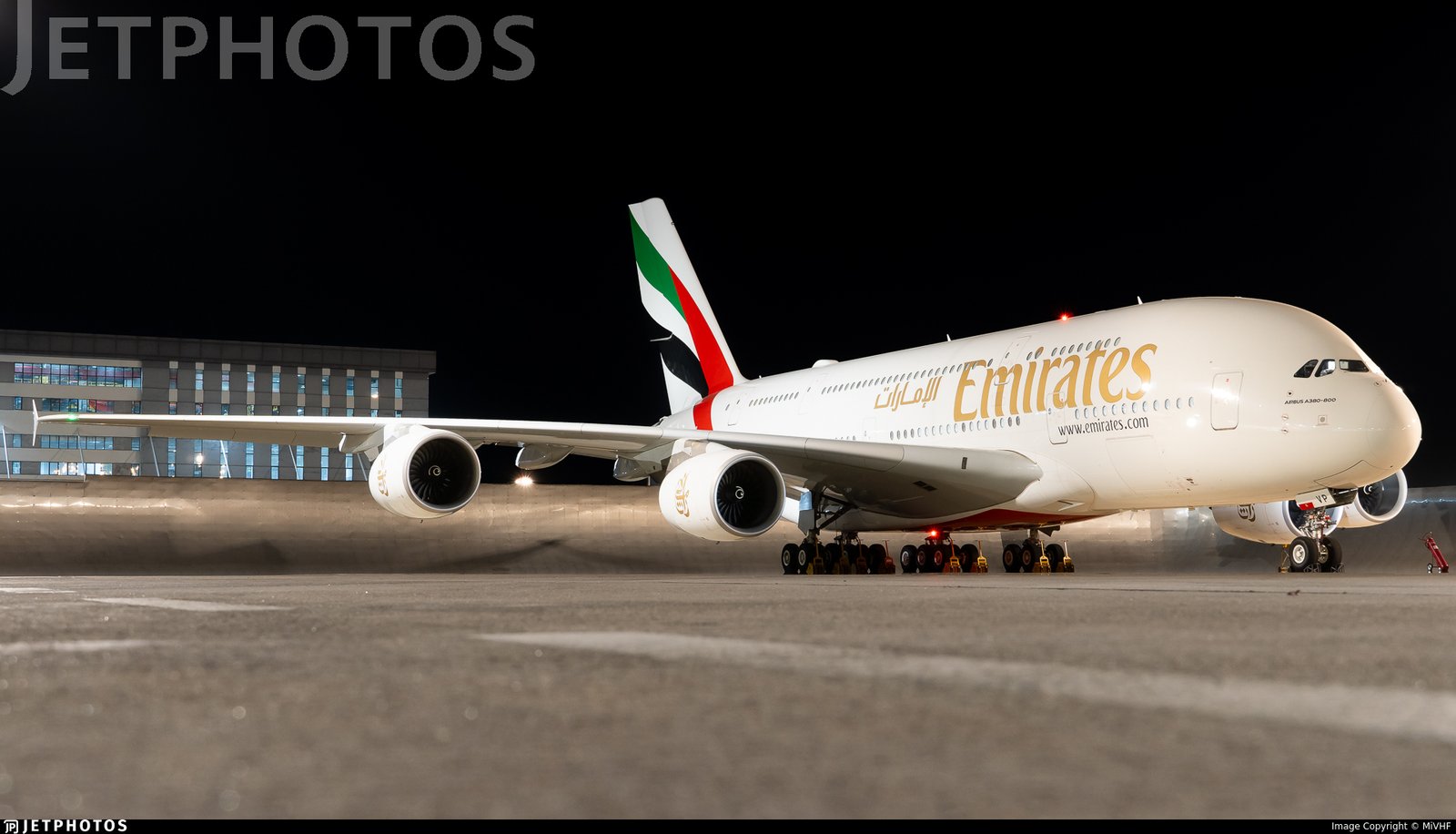
An Emirates Airlines flight from San Francisco International Airport (SFO) to Dubai International Airport (DXB) experienced a delay exceeding three hours after reports about a $100,000 H-1B visa fee caused considerable concern among passengers.
The delay occurred on September 19 on Emirates flight EK226, which was operated by an Airbus A380. Many passengers, primarily Indian nationals, requested to disembark following news of a new visa rule by President Trump.
Details of the Flight Delay
The 15-hour flight was initially set to leave San Francisco at 5:05 pm. However, just before the scheduled departure, rumors about an executive order began to spread. This prompted passengers to reconsider their plans, according to reports.
The Emirates captain addressed the situation through the intercom and announced that passengers wishing to leave could do so. With Indian nationals comprising over 70% of current H-1B visa holders, the announcement sparked significant concern.
Fearing the $100,000 visa fee might prevent their return to the U.S., many passengers requested to be offloaded from the plane.
Managing the Offloading Process
Cabin crew and ground staff faced challenges in handling the logistical issues as several passengers sought to leave the aircraft. This resulted in the flight being delayed for over three hours. Finally, Emirates EK226 departed at 8:45 pm, which meant passengers were onboard for more than 18 hours before reaching Dubai.
The situation, while unanticipated, allowed those who remained onboard to benefit from additional space, underscoring how swiftly travel confidence can be affected by sudden policy shifts.
White House’s Rationale for the Visa Fee
President Trump justified the $100,000 H-1B visa fee by asserting that U.S. companies were exploiting the system to replace American workers with more inexpensive foreign labor. The administration pointed to the technology industry as a sector wherein such practices are occurring.
Initial rumors suggested that the fee would not only target new visa applicants but also existing holders returning from overseas, potentially applying even as an annual payment. The White House, however, later clarified that the fee only applied as a one-time charge for new applicants.
Effects on Indian Nationals and the Tech Industry
With Indian nationals representing a majority of H-1B holders, the new regulation is likely to notably affect this demographic. For many, the fee presents a formidable barrier, essentially closing the H-1B pathway.
Technology companies, including Microsoft, have already advised employees to reassess international travel, highlighting the evolving uncertainty in the sector. This change might reshape workforce strategies in Silicon Valley and beyond, with firms rethinking how to fill pivotal positions.
For further information, follow us on social media and join our Telegram group for the latest aviation updates.