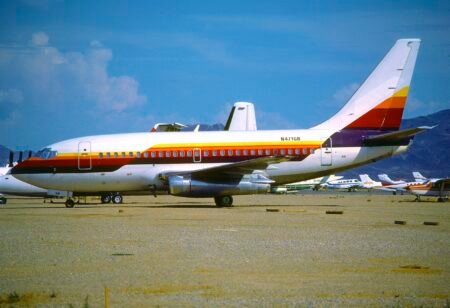

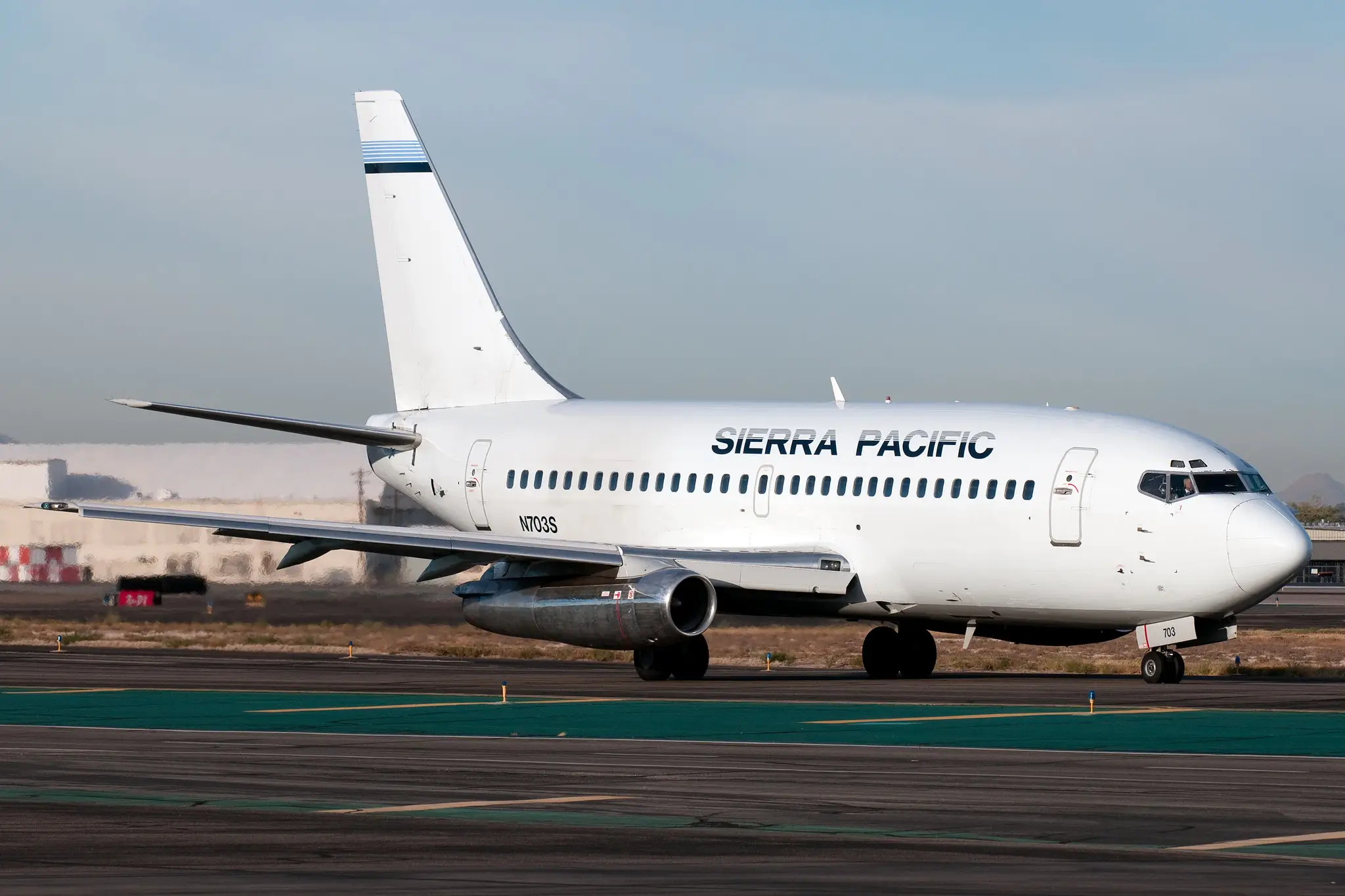
The aviation industry has witnessed countless advancements since the debut of Boeing’s 737-200. Yet, this resilient model, affectionately known as the “Baby Boeing,” continues to fly high in several regions worldwide, proving its unmatched durability.
India’s Timeless Aviation Marvel

At the heart of this ongoing legacy is the Indian Air Force‘s K3187, a Boeing 737-200 that has been in service since 1971. Celebrated as the world’s oldest active 737-200, this aircraft showcases exceptional longevity and reliability. Having transitioned from civilian to military duties, K3187 has spent its life transporting personnel and officials across India’s diverse landscapes. Its continuation in service is a testament to rigorous maintenance and the expansive utility it offers the Indian military.
Latin America’s Aviation Heritage

In Latin America, the Boeing 737-200 remains a familiar workhorse. Airlines like Venezolana, Estelar, and Avior maintain these venerable jets in Venezuela, while Ecuador’s Fuerza Aérea Ecuatoriana utilizes them for governmental tasks. Notably, Venezuela’s YV3471, delivered in 1978, stands as one of the oldest passenger-configured 737-200s in operation, offering a nostalgic trip back to the golden era of aviation.
Indonesia’s Archipelagic Necessities

Indonesia utilizes the 737-200 extensively, relying on its capabilities to navigate the nation’s 17,000 islands. The Indonesian Air Force’s fleet, including aircraft like AI-7304, exemplifies the model’s utility in demanding environments, handling unpaved and short runways with ease.
Canada’s Arctic Dependable

In Canada’s challenging Arctic conditions, Nolinor Aviation operates a 737-200 with a distinctive gravel kit. This modification enables the aircraft to land on unpaved surfaces, vital for servicing remote communities and industrial operations. This adaptability highlights the 737-200’s unrivaled capability in one of the world’s harshest environments.
Militaries Worldwide Rely on the 737-200

The 737-200’s continued service in numerous air forces, including Mexico’s Fuerza Aérea Mexicana and Ecuador’s Fuerza Aérea Ecuatoriana, underscores its adaptability and low operational cost. Its multi-role capability as a passenger, cargo, or mixed-use aircraft makes it an invaluable asset for nations worldwide.
Specifications of The Boeing 737-200
| Specification | Value |
|---|---|
| Wing span | 93 ft (28.35 m) |
| Length | 100 ft 1 in (30.53 m) |
| Height | 36 ft 10 in (11.23 m) |
| Engines | 2 × Pratt & Whitney JT8D-9A |
| MTOW | 115,500 lb (52,390 kg) |
| Takeoff Distance | 6,000 ft (1,830 m) |
| Cruise Speed | 400 knots (740 km/h) |
| Service Ceiling | 37,000 ft (11,278 m) |
| Range | 1,200 NM (2,220 km) |
| Landing Distance | 4,600 ft (1,400 m) |
Despite the modern aviation industry’s focus on newer, fuel-efficient models, the Boeing 737-200 remains a relevant and reliable aircraft. Its ability to adapt to various demanding roles solidifies its place in aviation history as a true testament to engineering longevity.