
Delta Air Lines Repairs CRJ900 After Collision
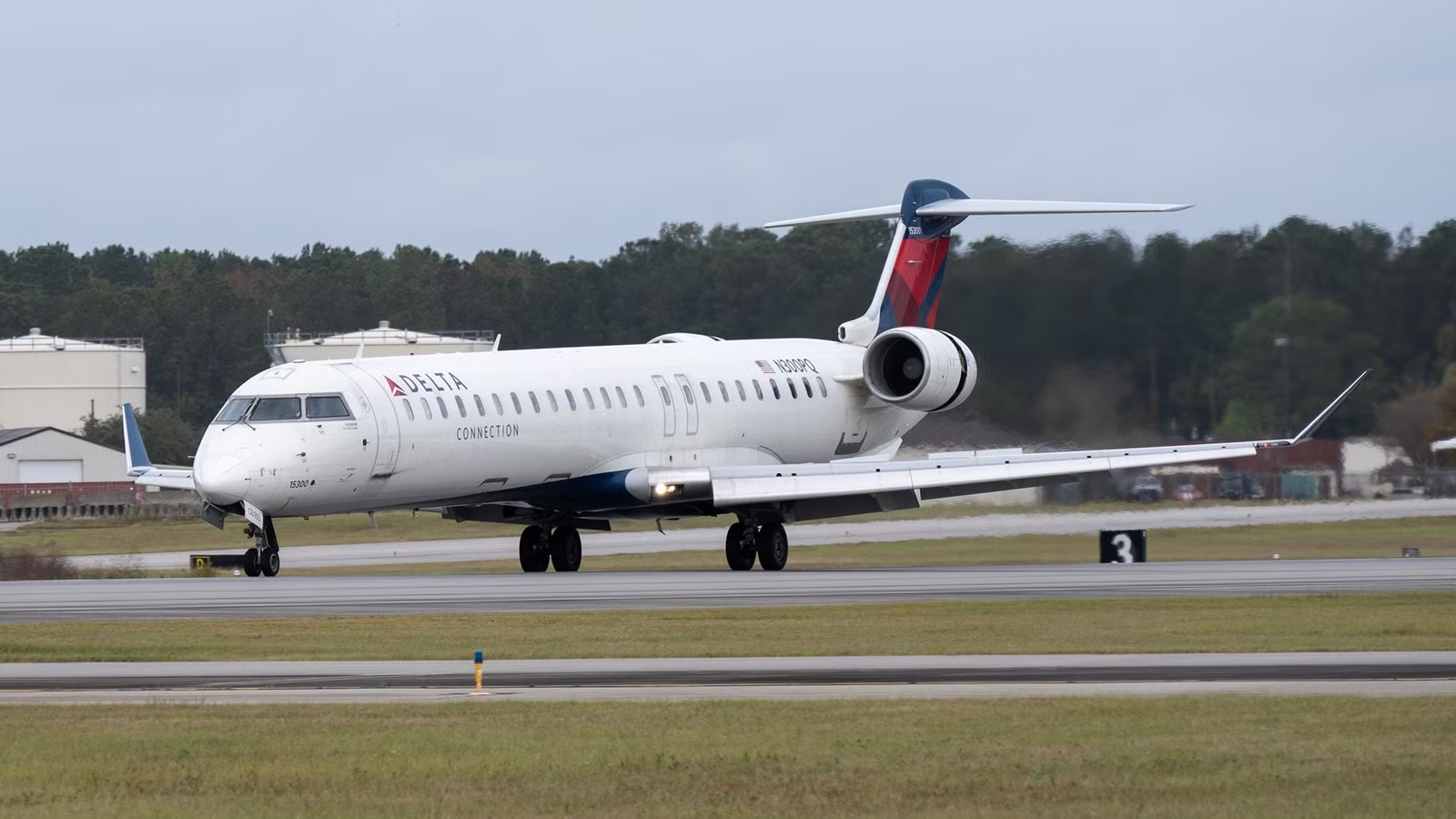
Delta Air Lines has completed repairs on a Bombardier CRJ900 after a collision with an Airbus A350 at Hartsfield-Jackson Atlanta International Airport over a year ago. The incident, involving an Airbus A350, previously utilized in Delta’s operations, resulted in severe damage to an Endeavor Air CRJ-900 domestic flight under the Delta Connect program.
Details of the Incident
The Airbus A350 involved in the incident was operating as Delta Air Lines Flight 295 bound for Tokyo. During its taxi for takeoff, the jet inadvertently struck the tail of the CRJ-900, operated as Endeavor Air Flight 5526, which was set to depart for Louisiana. Fortunately, no injuries were reported among the 221 passengers aboard the Airbus or the 53 on the CRJ-900. However, both flights were subsequently canceled, leading Delta to rebook all affected passengers on later flights to ensure their travel plans were minimally disrupted.
Damage and Repairs
The initial collision resulted in catastrophic damage to the CRJ’s tail, necessitating extensive repairs. Registered as N302PQ, the 12-year-old Bombardier jet experienced a significant delay in service due to the damage. While some speculated the aircraft might be a total loss, Delta’s maintenance team at Atlanta took action to restore the CRJ to operational condition just in time for the 2025 holiday travel season.
Rebuilding the CRJ900
The repair of the CRJ-900 required significant effort, as major structural repairs had to be carried out. The process began with an initial assessment and transportation of the aircraft to a Maintenance, Repair, and Overhaul (MRO) facility. Non-destructive testing, employing methods like ultrasound and X-rays, helped determine the extent of airframe damage. The process adhered to the standards stipulated in the Structural Repair Manual (SRM), with sections of vertical stabilizers and control surfaces needing replacement. Following the disassembly and removal of damaged parts, new sections were fabricated and installed, including systems checks for hydraulic components, flight controls, and avionics.
Final Adjustments and Conclusion
After the repairs, system checks were conducted to ensure structural integrity, including a cabin pressure test to identify any leaks in the fuselage. The new tail section was painted to match the aircraft’s existing aesthetic. Following these efforts, the CRJ-900 has been returned to the fleet, marking a successful recovery from what could have been a far more serious outcome.