
Emirates Aircraft Fleet in 2025: An Overview
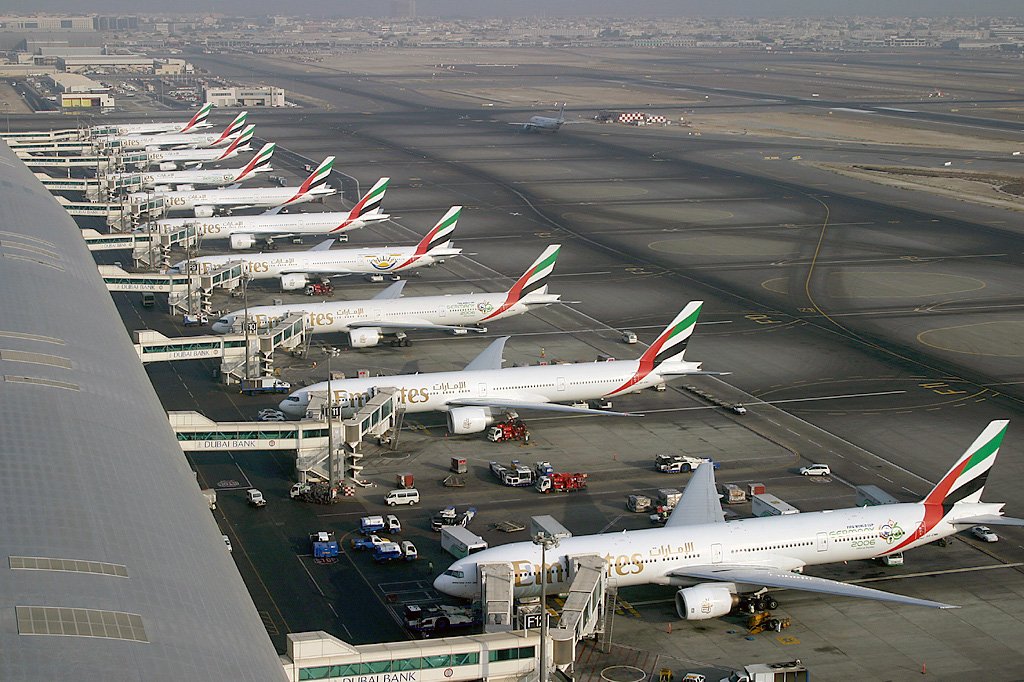
Emirates, recognized as a major airline operating an exclusive all-widebody fleet, is notable for its reliance on three primary aircraft families as of 2025. The airline’s operations are predominantly dominated by Airbus A380 superjumbos and Boeing 777 widebodies. Additionally, Emirates is integrating a limited number of Airbus A350s as part of its fleet diversification efforts.
Boeing 777 Series: The Largest Fleet Segment
- Total Boeing 777s: 141
- 119 Boeing 777-300ERs
- 10 Boeing 777-200LRs
- 12 Boeing 777-200 freighters
The Boeing 777-300ER forms the cornerstone of Emirates’ long-haul operations, appreciated for its adaptability and passenger capacity of roughly 300 to 400, depending on configuration. This model is often used for high-capacity medium- and long-haul routes. The 777-200LR, with a smaller size, is utilized for thinner ultra-long-haul routes.
The 777-300ER fleet features a variety of configurations due to Emirates’ retrofit program, which has added premium economy seating on certain aircraft. As reported by aeroLOPA, these aircraft have six different layouts, with the highest seating capacity accommodating 421 passengers in a two-class configuration. The most luxury-oriented version hosts 328 passengers across four classes.
World’s Largest Operator of the Airbus A380
Emirates holds the distinction of operating the largest fleet of Airbus A380s globally, with a total of 123 A380s delivered. Presently, 118 remain in service after Emirate retired five, with an average age of 10.8 years according to ch-aviation data.
The Airbus A380 is prized for its luxurious features, such as onboard showers and bars, facilitating Emirates’ strategy to fill these aircraft even on shorter routes. Despite many airlines retiring the A380 during the COVID-19 pandemic, Emirates remains committed to this aircraft, planning continued operation into the late 2030s and possibly early 2040s due to the Boeing 777X certification delays.
Emirates operates at least eight different A380 configurations. The densest model seats 615 passengers in a two-class layout, while the premium-heavy configuration seats up to 484 including a premium economy section.
New Addition: The Airbus A350
The newest entry into Emirates’ fleet is the Airbus A350, marking its return to Airbus twinjets since retiring the A330s. Emirates’ first A350 arrived in November 2024, and began commercial service in early 2025. By July 2025, Emirates had received nine A350-900s from its order of 65 aircraft.
The Airbus A350-900 services around 17 destinations including Adelaide, Ahmedabad, and Istanbul, from Dubai International Airport. Configured to hold 312 passengers, the aircraft features a three-class setup: 32 business class, 21 premium economy, and 259 economy seats.