
The Evolution of the Boeing 787 and McDonnell Douglas DC-10
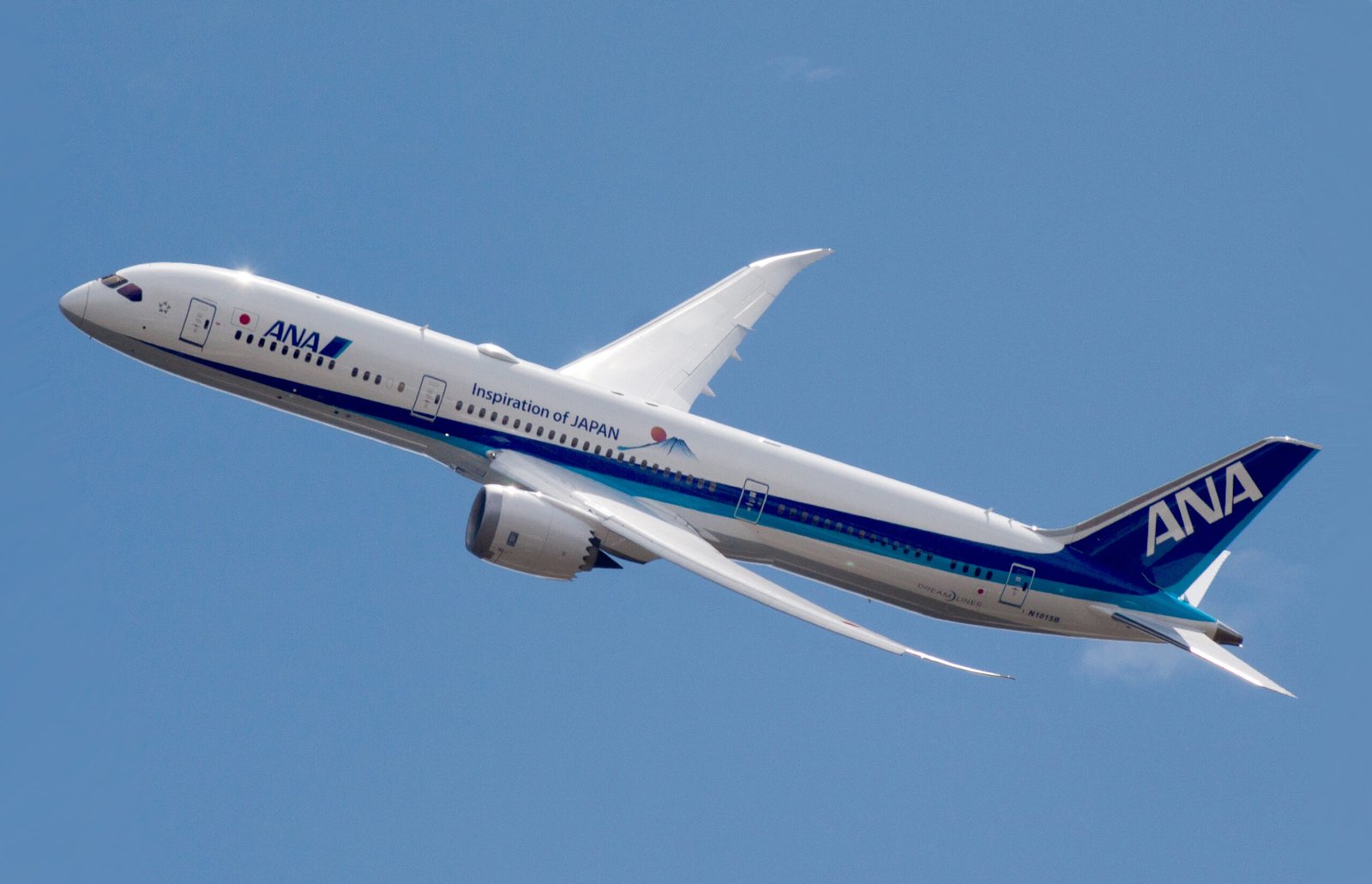
The Boeing 787, marketed as a ‘small widebody,’ is noted for its suitability in serving secondary markets and its impressive range, matching that of a Boeing 747 or 777 while being more economical. This size distinction differentiates it significantly in today’s aviation market.
The introduction of widebodies began with the Boeing 747 in 1970, followed by the DC-10, which was smaller than the jumbo jet but provided widebody economics. Positioned between the 747 and 767, the DC-10 set a benchmark for size comparison with current widebodies.
Differentiating Variants of the Aircraft
The initial Boeing 787 model, the 787-8, was smaller but later overshadowed by the 787-9 due to better economic efficiency, resulting in many 787-8 orders being converted. The Boeing 787-10, although newer, provides the best operating economics with a limited range.
The DC-10 variants maintained consistent fuselage lengths. The short-haul DC-10-10 and the long-range DC-10-30 and DC-10-40, with the latter utilizing Pratt & Whitney JT9D engines, defined the series. These long-range models had a larger wingspan and increased MTOW.
Boeing 787-8 vs. McDonnell Douglas DC-10
DC-10 variants measure around 182 feet long, featuring wingspans of 155 and 165 feet for short and long-haul models, respectively. In contrast, the Boeing 787 seats nine across in a 3-3-3 configuration, compared to the DC-10’s wider fuselage and typical 2-5-2 layout. The 787-8’s MTOW is 227.9 tonnes, compared to 254 tonnes for the 787-9 and 787-10.
| Specification | McDonnell Douglas DC-10-30 | Boeing 787-8 |
|---|---|---|
| Length | 181 feet eight inches (55.35 meters) | 186 feet one inch (56.72 m) |
| Wingspan | 165 feet four inches (50.39 meters) | 197 feet three inches (60.12 meters) |
| Height | 57 feet, seven inches (17.55 meters) | 55 feet, six inches (16.92 meters) |
| MTOW | 251.7 tonnes | 227.9 tonnes |
| Engines | 3x General Electric CF6 | 2x General Electric GEnx or Rolls-Royce Trent 1000 |
The 787’s superior wingspan at 197 feet also highlights advancements over past designs, positioning it as a ‘small’ widebody that is considerably larger than previous models.

The McDonnell Douglas MD-11 and Size Growth in Widebodies
In response to competitive pressures in the 1980s, McDonnell Douglas evolved the DC-10 into the MD-11 by extending its fuselage and upgrading its engines. The MD-11 resembles the 787-9, with slight parallels in length but a reduced wingspan. Boeing’s 787-9 is longer, measuring 206 feet.
| Specification | McDonnell Douglas MD-11 | Boeing 787-9 |
|---|---|---|
| Length | 202 feet, two inches (61.6 meters) or 200 feet, 11 inches (61.2 meters) | 206 feet, one inch (62.81 meters) |
| Wingspan | 170 feet, six inches (51.97 meters) | 197 feet, three inches (60.12 meters) |
| Height | 57 feet, 11 inches (17.65 meters) | 55 feet, 10 inches (17.02 meters) |
| MTOW | 273.3 tonnes | 254.7 tonnes |
| Engines | 3x General Electric CF6 or Pratt & Whitney PW4000 | 2x General Electric GEnx or Rolls-Royce Trent 1000 |
The MD-11’s only counterpart in size from the 1970s and 1980s that surpasses the 787 is the 747.
The Growth Trend in Widebody Aircraft
Currently, Boeing positions the 787 as a mainstream widebody, while the 777X serves as its flagship. Airbus’ A330neo and A350 complement Boeing models in size, revealing the trend toward larger widebody designs over time. Developments like these demonstrate a notable increase in widebody dimensions compared to earlier eras.
Fuselage extensions, as seen in models like the MD-11, help reduce per-seat operating costs, driving the trend towards larger designs. Modern widebody aircraft increasingly distance themselves in size and capability from narrowbodies to optimize efficiency.
The Influence of Narrowbody Aircraft
The shift from early narrowbodies like the Boeing 707 and Douglas DC-8 to later models like the Airbus A320 and Boeing 757 demonstrates significant improvements in range and efficiency. Modern narrowbodies offer competitive operational costs, reducing the viability of smaller widebodies, despite wider body expansion.
| Aircraft | Entry-Into-Service |
|---|---|
| Boeing 727 | 1964 (727-100) |
| McDonnell Douglas DC-9 | 1965 (DC-9-10) |
| Boeing 737 | 1968 (737-100) |
| McDonnell Douglas MD-80 | 1980 (MD-81) |
| Boeing 757 | 1983 (757-200) |
| Boeing 737 Classic | 1984 (737-300) |
| Airbus A320 | 1988 (A320-100) |
| McDonnell Douglas MD-90 | 1995 (MD-90) |
| Boeing 737NG | 1997 (737-700) |
With the introduction of the Airbus A321XLR, offering extended range, narrowbodies have further encroached on the market traditionally held by smaller widebodies.
Conclusion
Boeing’s 787 Dreamliner was designed for long-haul routes and has enjoyed tremendous success, nearly doubling the 767’s sales. The 787 exemplifies the trend of larger, versatile aircraft, crucial in an era where efficient narrowbody options provide stiff competition for short and medium-haul flights.