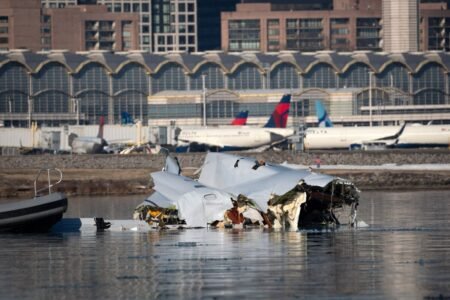
The January 29 midair collision near Washington DC has led victims’ families to file a lawsuit against American Airlines, its subsidiary PSA Airlines, the US Army, and the FAA, accusing them of negligence and systemic failures. The suit addresses unsafe arrival scheduling, excessive helicopter altitude, and insufficient air traffic control measures. This case could prompt widespread industry changes, affecting airline accountability, airspace management, and regulatory standards.
Browsing: Featured
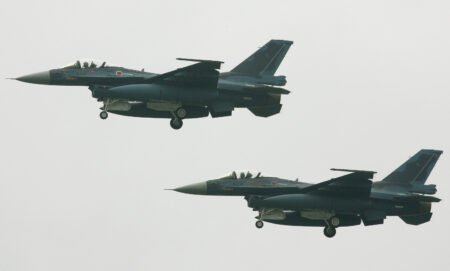
Japan’s Air Self-Defense Force is enhancing its F-2 fighter jets with the advanced AAM-5B missiles, a significant step in a broader modernization plan. The upgrade includes advanced guidance systems and integrations with future missiles, improving combat readiness amidst regional security concerns.
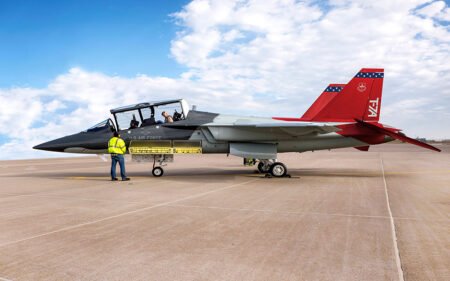
Boeing has unveiled a video detailing the progress of the T-7A Red Hawk’s flight testing, designed for modern pilot training using digital technologies. The aircraft, replacing the older T-38 Talon, features advanced avionics and integrated simulations to enhance pilot readiness and system safety. With several test units already delivered, the project is advancing through its development stages, promising further efficiencies and adaptability in military training operations.
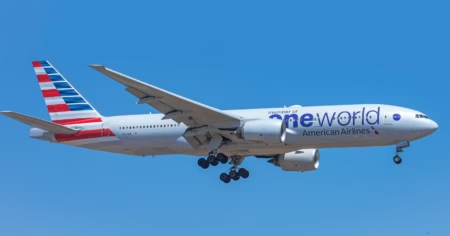
American Airlines faces a $11 million penalty after a passenger suffered two strokes during a Miami to Madrid flight that the airline did not divert for medical care. The decision spotlights the airline’s prioritization of operational efficiency over passenger safety, a decision found to have worsened the passenger’s health outcome.
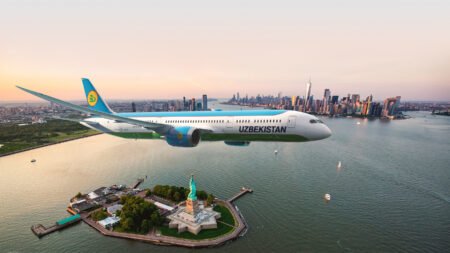
Uzbekistan Airways has made its largest aircraft order with up to 22 Boeing 787 Dreamliners to advance its international fleet. This strategic acquisition is set to strengthen long-haul capabilities and promote Uzbekistan as a central aviation hub, while also modernizing the existing fleet.
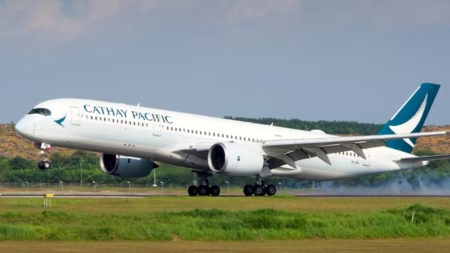
Cathay Pacific will restart its Hong Kong to Seattle service with five weekly flights on the Airbus A350-900, commencing March 2026 after a pandemic-induced pause. The new schedules accommodate both passenger and cargo needs, with promotional fares available. The carrier emphasizes connectivity via its expansive Cathay Group network.
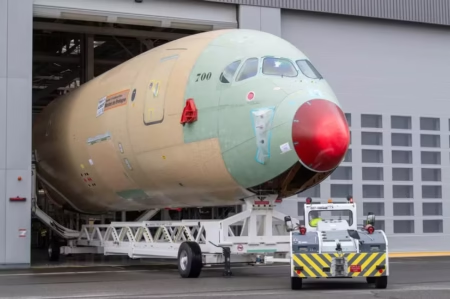
The Airbus A360 has sparked curiosity but remains a speculative designation in Airbus’s lineup. The company has no plans to release such an aircraft, focusing on evolving its existing models and sustainable projects like the ZEROe initiative. The gap left by the A360, while intriguing, does not currently align with Airbus’s strategic priorities, which emphasize technological advancement and emission reductions in the existing fleet.
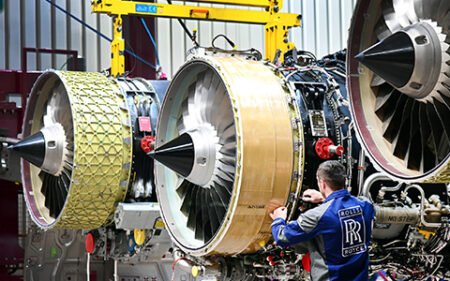
Rolls-Royce is recognized as a leading manufacturer of jet engines, producing nearly 500 engines annually for various aircraft. The company, founded in 1906, initially focused on luxury cars before shifting to aircraft during World War I. Rolls-Royce’s modern engines, such as the Trent and Pearl series, demonstrate their commitment to innovation and leadership in the aviation sector.
Lockheed Martin has unveiled the Vectis, a stealth drone designed for both air-to-air and air-to-ground missions. Classified as a Group 5 drone, it will operate alongside crewed fighters like the F-35. The company aims to make it more affordable than traditional pilots through modular design and digital engineering techniques.
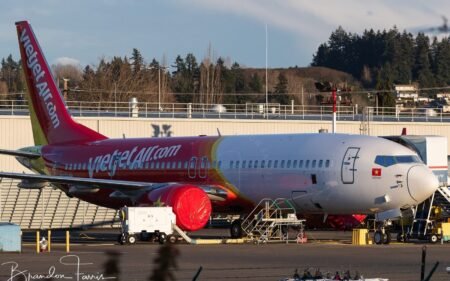
Vietjet is finally receiving its first Boeing 737 MAX, six years after the originally planned delivery date. With a large order placed back in 2016, the airline had anticipated earlier deliveries, but faced delays due to the model’s grounding and other geopolitical factors. Vietjet’s future fleet plans include a significant expansion, with hundreds of aircraft on order from both Boeing and Airbus.