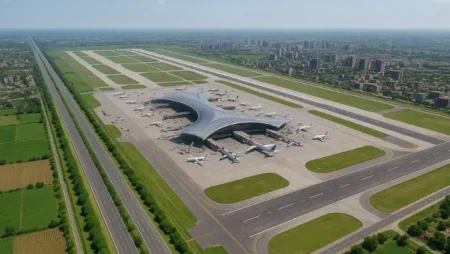
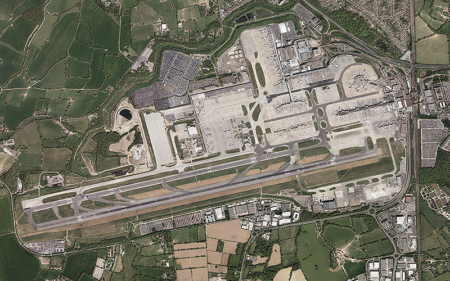
The UK government has approved the construction of a second runway at London Gatwick Airport, marking a major aviation expansion. The privately-financed project, costing £2.2 billion, will enhance Gatwick’s capacity from 280,000 yearly flights to 389,000 by the late 2030s, with passenger numbers potentially reaching 80 million annually. This development is part of the UK’s broader aviation strategy to increase airport capacity.
Browsing: Airport Updates
A cyber attack on Collins Aerospace systems has caused extensive delays at European airports, including London Heathrow. The breach affects the Muse system, crucial for check-in and baggage processes, leading to manual handling and significant disruptions. Authorities are working to mitigate the impact while airlines implement backup measures to maintain operations.
A significant systems failure at Dallas TRACON led to the grounding of flights at Dallas-Fort Worth International and Dallas Love Field airports. The malfunction affected the radar and communications, causing 273 flight delays at DFW by 2 p.m. CT, with disruptions likely to continue for several hours.
Terminal 2 at Dublin Airport has been evacuated due to unspecified security concerns, impacting flights and operations. The evacuation is a precautionary measure while authorities assess the situation. Affected passengers are advised to keep updated through official channels.
Chicago O’Hare, a major hub for American and United Airlines, offers several long-haul flight options. The longest route is Cathay Pacific’s service to Hong Kong, followed by Ethiopian Airlines’ flight to Addis Ababa. Other significant routes connect Chicago to Delhi, Taipei, Abu Dhabi, Dubai, and Doha, reflecting the city’s global significance.
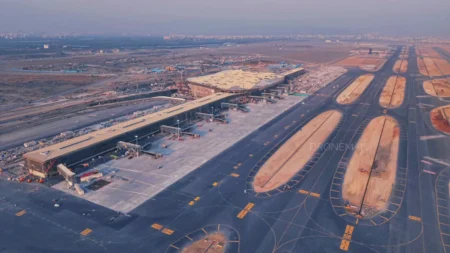
Noida International Airport in Jewar will be inaugurated on October 30, with commercial operations starting shortly after. As Asia’s largest airport, it will initially connect to at least ten cities, providing a key aviation hub in the National Capital Region. The project aims to eventually accommodate 70 million passengers annually across four phases, with significant infrastructure readiness already achieved.
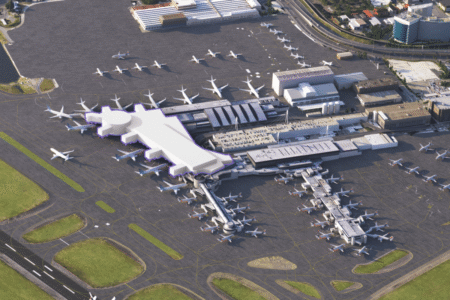
Sydney Airport has introduced Master Plan 2045 to increase its capacity by 75%, aiming for over 72 million annual passengers. This plan includes boosting international travel share and doubling airfreight capacities, while creating significant job opportunities. The expansion, the largest since 2000, focuses on sustainability and modernizing key terminals to meet future demands.
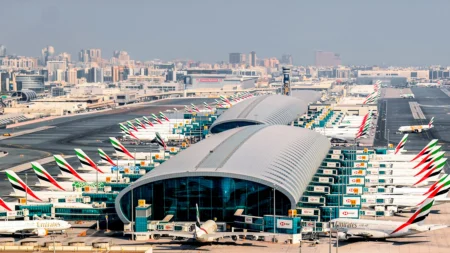
The global aviation industry has rebounded as International Air Transport Association reports a significant increase in passenger demand, surpassing pre-pandemic levels. Dubai International Airport leads as the world’s busiest hub for September 2025, followed by London Heathrow and Amsterdam Airport. Growth trends indicate significant recovery and expansion in Middle Eastern, European, and Asia-Pacific airports.
Bangalore International Airport Limited is initiating Phase 2 of Terminal 2 expansion at Kempegowda International Airport, significantly increasing passenger capacity to over 85 million. The project, continuing the “Terminal in a Garden” design, involves adding 278,000 square meters to the terminal and is set to complete by 2028. With current traffic increasing, the expansion is vital to accommodate future demand.
Navi Mumbai International Airport (NMIA) is set to open, transforming Maharashtra’s economic landscape by easing aviation congestion and driving regional growth. With a capacity for 90 million passengers, NMIA will boost connectivity and job creation. Aligned with sustainability principles, the airport is poised to enhance real estate, tourism, and trade, while its iconic design symbolizes cultural heritage and modernity.