
Boeing Pelican: A Visionary Yet Unrealized Aircraft Concept
Boeing, a leader in aviation innovation, once pursued an ambitious project: the Pelican Super Transport. Conceived in the early 2000s with support from the Pentagon, this massive aircraft was intended to transform military and commercial air cargo operations. Despite its bold design, the plane never became reality.
Introduction to the Pelican Super Transport
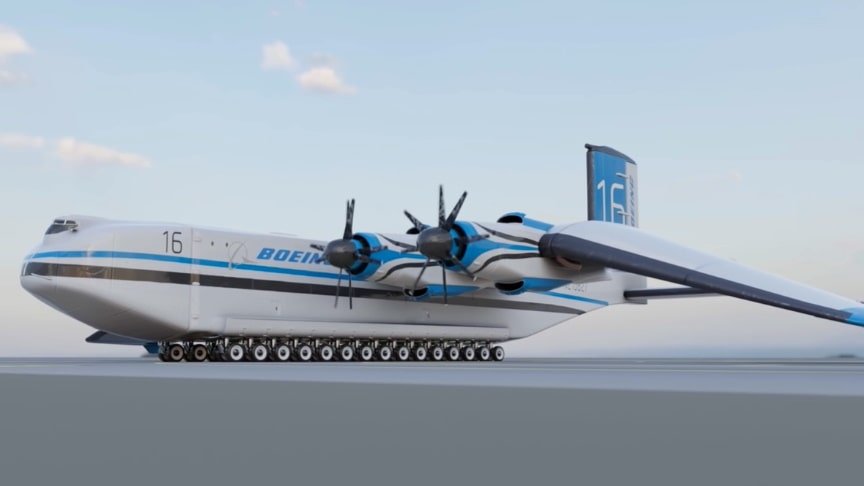
The Pelican Super Transport was envisioned by Boeing’s Phantom Works as the largest aircraft ever conceived, overshadowing competitors like the Stratolaunch Roc. Key airlines and hubs, including United Airlines and New York’s JFK, saw potential in this concept. However, its immense weight and impractical design precluded it from flying over oceans, leading to the abandonment of the project before production began.
Boeing Pelican Design Specifications
Boeing’s Phantom Works division initiated work on the Pelican Super Transport around 2000. It was designed for large payloads for both military and civilian cargo needs. If completed, the specifications would have been remarkable:
| Specification | Details |
|---|---|
| Wingspan | 500 feet |
| Wing Area | 1 acre |
| Weight | 1,600 tons (empty); up to 3,000 tons fully loaded |
| Engines | Eight 80,000-horsepower turbines |
| Landing Gear | 76 individually-steerable wheels |
| Capacity | 3,000 passengers or 7.5 tons of equipment |
| Cargo Space | 20 containers per wing |
Challenges of Ground Effect and Heavy Weight
The primary limitation of the Pelican was its weight. Designed to cruise at 20–50 feet above ground or water, leveraging “ground effect” was meant to reduce drag and extend range. However, this design presented challenges:
- Vulnerability to bird strikes
- Risks from high ocean waves
- Limited maneuverability near the surface
Such limitations made long ocean crossings impractical for an aircraft of this size.
Comparison with Other Heavy Aircraft
| Aircraft | Type | Length | Wingspan | MTOW | Payload Capacity | Features |
|---|---|---|---|---|---|---|
| Boeing Pelican ULTRA | Concept | ~152 m | ~152 m | ~2,700,000 kg | ~1,200,000 kg | Ground-effect design |
| Antonov An-225 Mriya | Transport | 84 m | 88.4 m | 640,000 kg | ~250,000 kg | Proven heavy-lift aircraft |
| Stratolaunch Roc | Carrier | 73 m | 117 m | 590,000 kg | ~230,000 kg | Twin-fuselage design |
| Airbus Beluga | Cargo | 56 m | 44.8 m | 155,000 kg | ~47,000 kg | For aircraft sections |
Congressional and Technical Concerns
In 2005, the U.S. Congress raised concerns about the Pelican, focusing on:
- Efficiency at low altitudes
- Maneuverability on runways
- Safety with 76-wheel gear
- Global airport compatibility
Even major airports lacked the capacity to handle such a massive aircraft at full load.
Economic and Technological Impediments
Beyond performance challenges, the Pelican’s costs were prohibitive. Boeing admitted it could not meet its projected 2015 deadline. By 2006, the project was discontinued without further updates.
Lessons and Future Directions
The Pelican Super Transport was officially discontinued by the mid-2000s. Analysts cited impracticality and high costs as key reasons. However, the lessons learned influenced Boeing’s future projects, moving towards efficient widebody designs such as the Boeing 777X.
Although the Pelican never flew, Boeing and other companies are exploring new technologies like hybrid and hydrogen-powered aircraft to reduce emissions.
Conclusion
Ultimately, the Boeing Pelican Super Transport remains a reminder of both the potential and limitations of aviation innovation. Its ambitious design did not come to fruition, leaving a pathway for more pragmatic solutions in the aviation industry.