

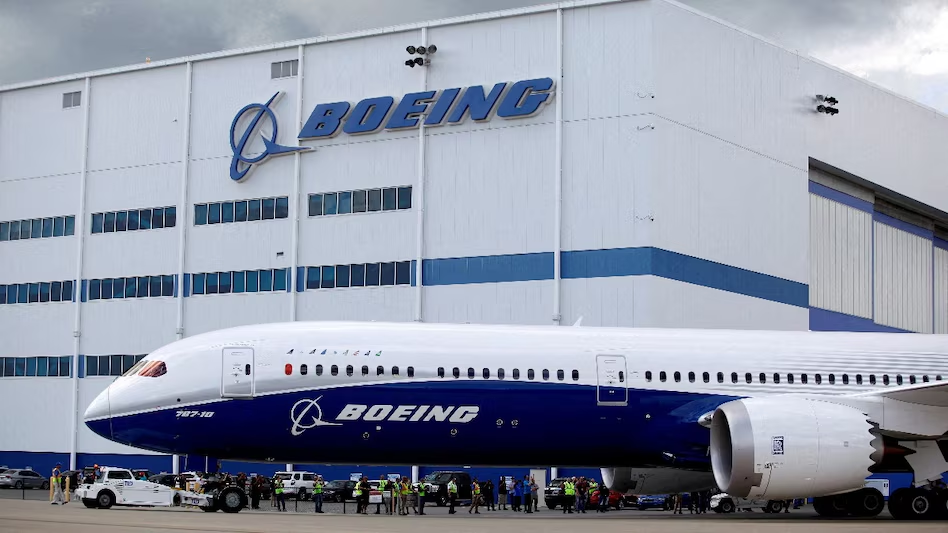
Boeing Gains FAA Authority to Certify Some 737 MAX and 787 Jets
The Federal Aviation Administration (FAA) has announced that starting on September 29, Boeing will once again be allowed to issue airworthiness certificates for certain Boeing 737 MAX and Boeing 787 Dreamliner jets, alternating weeks with the FAA. This pivotal decision marks a shift after years of rigorous oversight, initially imposed on Boeing following safety concerns that began affecting the 737 MAX in 2019 and the 787 in 2022. Although this change does not immediately impact Boeing’s delivery rates, it signifies progress in the company’s efforts to address comprehensive safety and quality issues.
Background and Current Operations
- Boeing regained limited authority to approve these models jointly with the FAA.
- The 737 MAX production is currently capped at 38 aircraft per month.
- A proposed production rate increase will require thorough FAA review.
| Organization | Federal Aviation Administration (FAA) |
|---|---|
| Planemaker | Boeing |
| CEO | Kelly Ortberg |
| Headquarters | Chicago, USA |
In recent developments, the FAA imposed a fine of $3.1 million on Boeing due to numerous quality violations. Despite these challenges, market sentiment responded positively to the FAA’s announcement, with Boeing shares rising approximately 5%.
Implications for Boeing
This recent development acts as a confidence boost for Boeing, symbolizing a step toward restoring some of its self-certification authority for the 737 MAX and 787 programs. This regulatory change aims to reduce delivery delays and improve scheduling predictability, freeing FAA inspectors to focus on earlier production stages.
For investors, this adjustment is a signal of gradual improvements in governance and quality efforts, as evidenced by the stock market response. While the immediate impact on production rates remains unaffected, the potential for future rate increases exists, contingent upon the successful completion of initial audits. However, challenges remain, including the recent quality violations and fines, as well as an investigation by the Department of Justice.
Market Reactions and Future Prospects
Following the FAA’s announcement, the market signaled optimism, with Boeing shares rallying by 4-5%. Investors view this decision as progress in Boeing’s safety and quality initiatives, anticipating improvements in delivery processes.
The FAA’s emphasis on maintaining direct and rigorous oversight remains a critical factor, and investors eagerly await further indications of any adjustments to the 737 MAX production cap. For now, the focus remains on the smooth execution of current schedules and potential positive impacts on Boeing’s future financial outlook.
Ultimately, the gradual easing of FAA oversight could pave the way for increased production rates, provided Boeing successfully addresses quality concerns and regulatory requirements.