
Boeing 747: The Iconic Quadjet
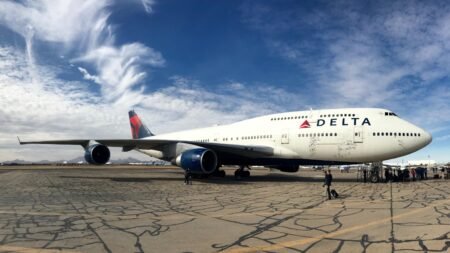
The Boeing 747 is a legendary aircraft known for its four engines and distinctive hump, symbolizing unmatched passenger capacity. Once dominant in long-haul passenger flights, its use in this sector has dwindled. Currently, only Lufthansa, Air China, and Korean Air utilize the advanced passenger variant, the 747-8i.
UPS Airlines: Leading in Long Nonstop Flights
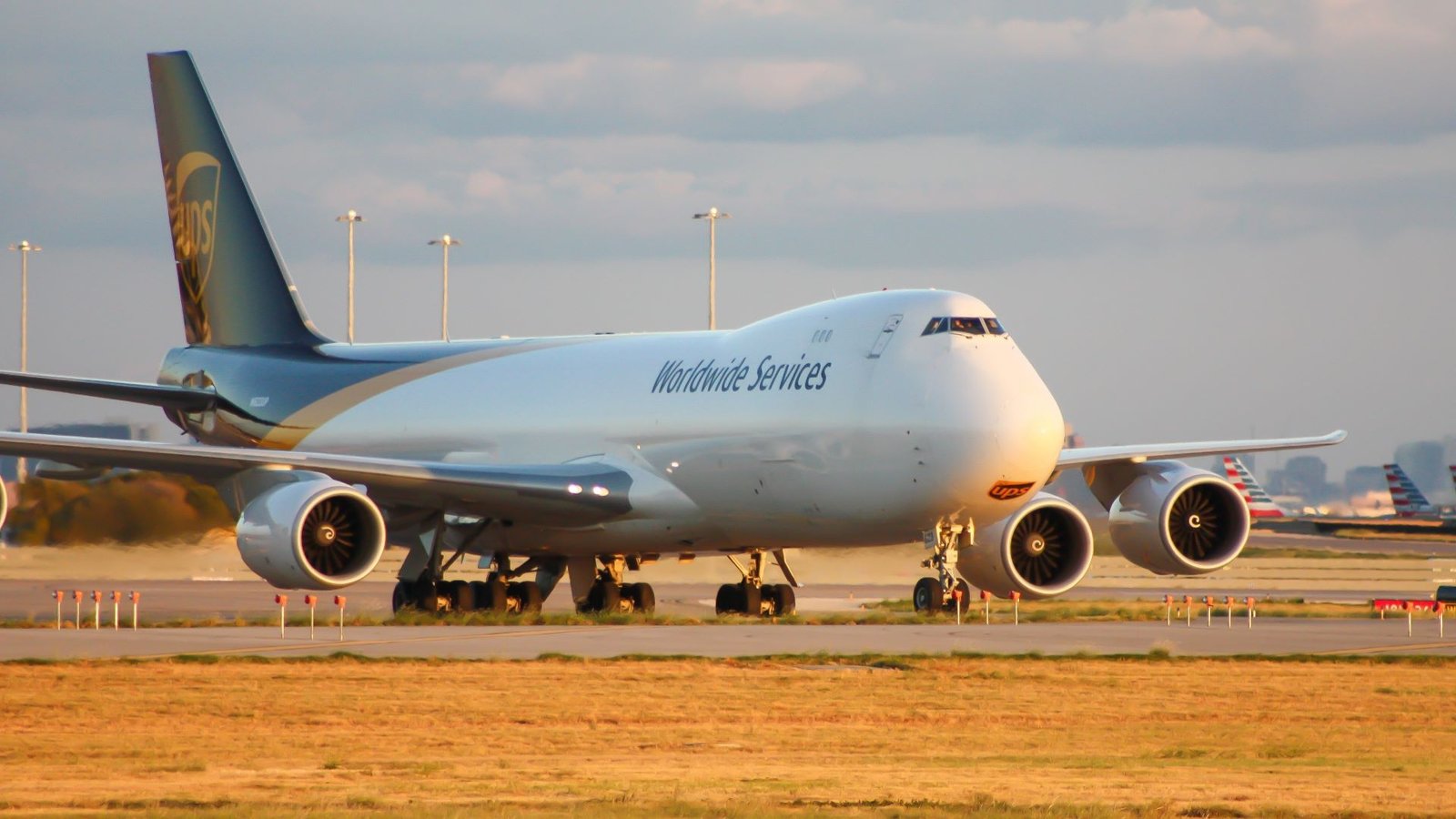
While passenger routes have dwindled, the 747 remains critical for cargo services. The longest nonstop flight by a Boeing 747 today is the UPS Airlines flight 76, connecting Louisville Muhammad Ali International Airport (SDF) and Al Maktoum International Airport (DWC) in Dubai. This journey spans about 7,700 miles (12,400 km) and lasts over 13 hours, capitalizing on the 747-8F’s extended range and payload capabilities.
Route and Flight Details
The route typically arcs northeast over the U.S. and Canada, joining the North Atlantic Organized Track System. It enters European airspace over the United Kingdom, subsequently crossing Central and Eastern Europe and the Middle East, while avoiding Russian and Iranian airspace due to operational restrictions.
Operational Strategy
Crew strategies include heavy-weight step climbs to around 30,000 feet to manage winds, affecting flight time. The flight concludes in Dubai, an optimal endpoint for a high-value cargo carrier like UPS.
The Boeing 747: A UPS Fleet Staple
UPS operates one of the largest active 747 freighter fleets, with 41 models in service and two on standby. This comprises mostly the newer 747-8F, while their older 747-400 models remain valuable for transpacific and transatlantic routes during peak demand.
| Aircraft Model | Number In Fleet (Historic) |
|---|---|
| Boeing 747-100 | 17 |
| Boeing 747-200 | 9 |
| Boeing 747-400 | 14 |
| Boeing 747-8 | 30 |
Fleet Configuration
Equipped with advanced fuel efficiency features, large-scale doors for oversized cargo, and a capacity for 12-14-hour non-stop flights, the UPS fleet utilizes the 747-8F for high-demand, long-haul routes with efficient operating economics.
UPS’s Strategic Network Operations
UPS’s network is anchored by a massive hub in Louisville, minimizing fixed costs and maximizing load factors. This hub-and-spoke model allows UPS to co-locate significant resources, enhancing asset utilization and on-time performance, although it poses risks like weather-induced delays.
Deployment of the Boeing 747 Fleet
UPS employs the Boeing 747 extensively for global connections, including hubs like Cologne/Bonn and Anchorage, and key Asia-Pacific destinations. Its domestic routes link Louisville to major cities like Ontario, Philadelphia, Dallas/Fort Worth, and Miami, with seasonal surges increasing 747 usage.
Conclusion
While commercial use of the Boeing 747 for passengers has waned, its role as a freighter remains strong. Its blend of capacity and long-range capabilities continues to serve cargo airlines efficiently, cementing its status as a preferred choice for global freight operations.