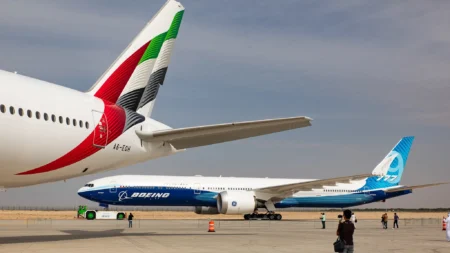
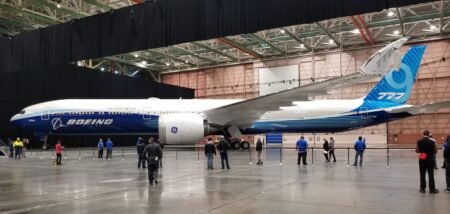
Boeing’s 777X delivery has been postponed to 2027, further frustrating major customers like Emirates and Lufthansa. The aircraft, which promises significant advancements, faces regulatory and technical challenges. The delay has financial implications for Boeing, although the order book remains strong.
Author: Madison Clarke
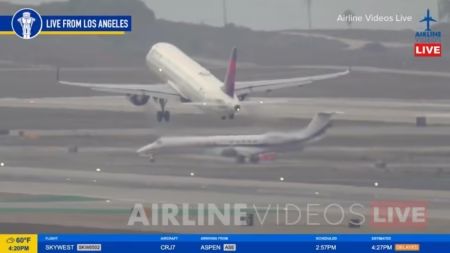
An American Airlines Airbus A321 narrowly avoided a collision at LAX when an AeroLogic Boeing 777F crossed its runway. The quick actions by the air traffic controller and the American Airlines pilots averted the potential disaster. The FAA is investigating the incident, which underscores the ongoing challenges with runway incursions.
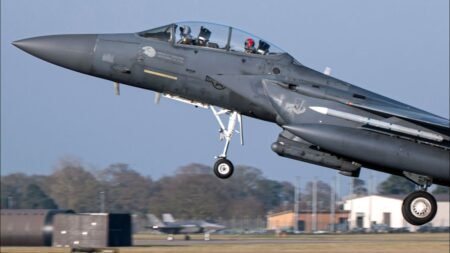
The JASDF F-15J Eagles demonstrated their formidable power as they launched from RAF Coningsby during the Atlantic Eagles International Tour, part of the Cobra Warrior 2025 exercise. Videographer Mark Kerton captured these striking moments, accentuating the event’s appeal to aviation enthusiasts.
Emirates Airline has canceled its initial business class seating design for the Boeing 777X because of the aircraft’s seven-year delay. Competitors have advanced, prompting Emirates to pursue modern suite-style seating for its business class. The airline has also invested heavily in interim upgrades for its current fleet to maintain its market reputation.
In 2025, Lockheed Martin and Boeing continue to compete fiercely in the military aircraft sector. Lockheed dominates with its F-35 program, while Boeing excels in tankers and bombers. Government procurement decisions and ongoing technological developments shape this dynamic landscape, with Lockheed currently leading in exports but Boeing holding strong in innovation and future program involvement.
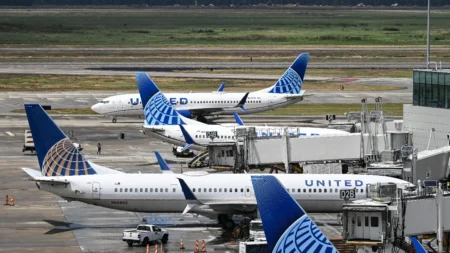
United Airlines grounded flights across the U.S. and Canada due to a connectivity issue, affecting major hubs like Chicago O’Hare and Newark Liberty. The incident was resolved quickly, but analysts emphasize the importance of robust IT systems to prevent reputational damage from repeated technical failures.
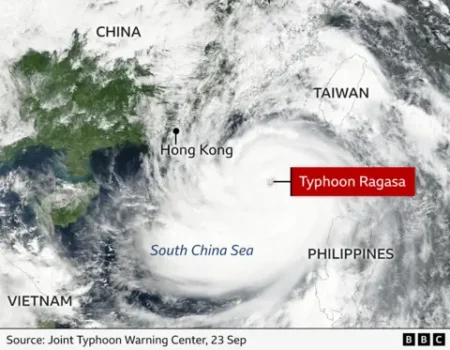
Super Typhoon Ragasa has prompted the closure of four major airports in South China, including Hong Kong, due to anticipated severe weather conditions. The shutdowns are coordinated to mirror the typhoon’s projected impact on the region. Safety is prioritized, causing significant disruptions in some of Asia’s busiest airports, with recovery dependent on post-storm evaluations.
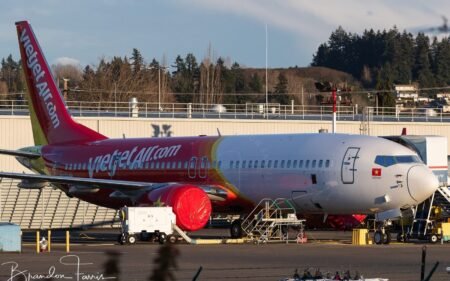
Vietjet is finally receiving its first Boeing 737 MAX, six years after the originally planned delivery date. With a large order placed back in 2016, the airline had anticipated earlier deliveries, but faced delays due to the model’s grounding and other geopolitical factors. Vietjet’s future fleet plans include a significant expansion, with hundreds of aircraft on order from both Boeing and Airbus.
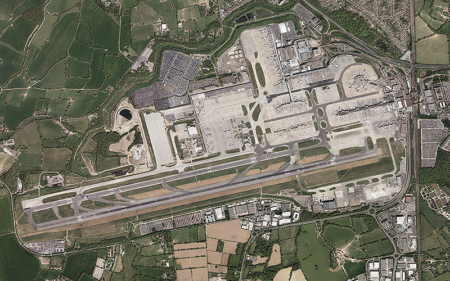
The UK government has approved the construction of a second runway at London Gatwick Airport, marking a major aviation expansion. The privately-financed project, costing £2.2 billion, will enhance Gatwick’s capacity from 280,000 yearly flights to 389,000 by the late 2030s, with passenger numbers potentially reaching 80 million annually. This development is part of the UK’s broader aviation strategy to increase airport capacity.
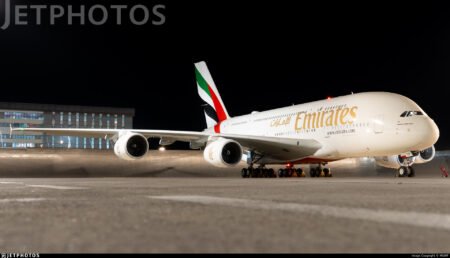
An Emirates Airlines flight from San Francisco to Dubai was delayed over three hours due to concerns about a $100,000 H-1B visa fee announcement. The delay impacted mainly Indian nationals on the flight, causing significant disruptions. President Trump justified the fee citing misuse of the system by U.S. companies, affecting both Indian nationals and the tech industry.