
Airbus Confident in Meeting 2025 Delivery Goals
Airbus CEO Guillaume Faury has expressed optimism about achieving the company’s target of 820 aircraft deliveries by the end of the year, despite ongoing challenges related to engine availability and supply chain delays. Speaking at the US Chamber of Commerce 2025 Global Aerospace Summit, Faury assured stakeholders that the company remains on track, even as it contends with strong market demand and competition from Boeing.
The A220 Family’s Growing Prominence
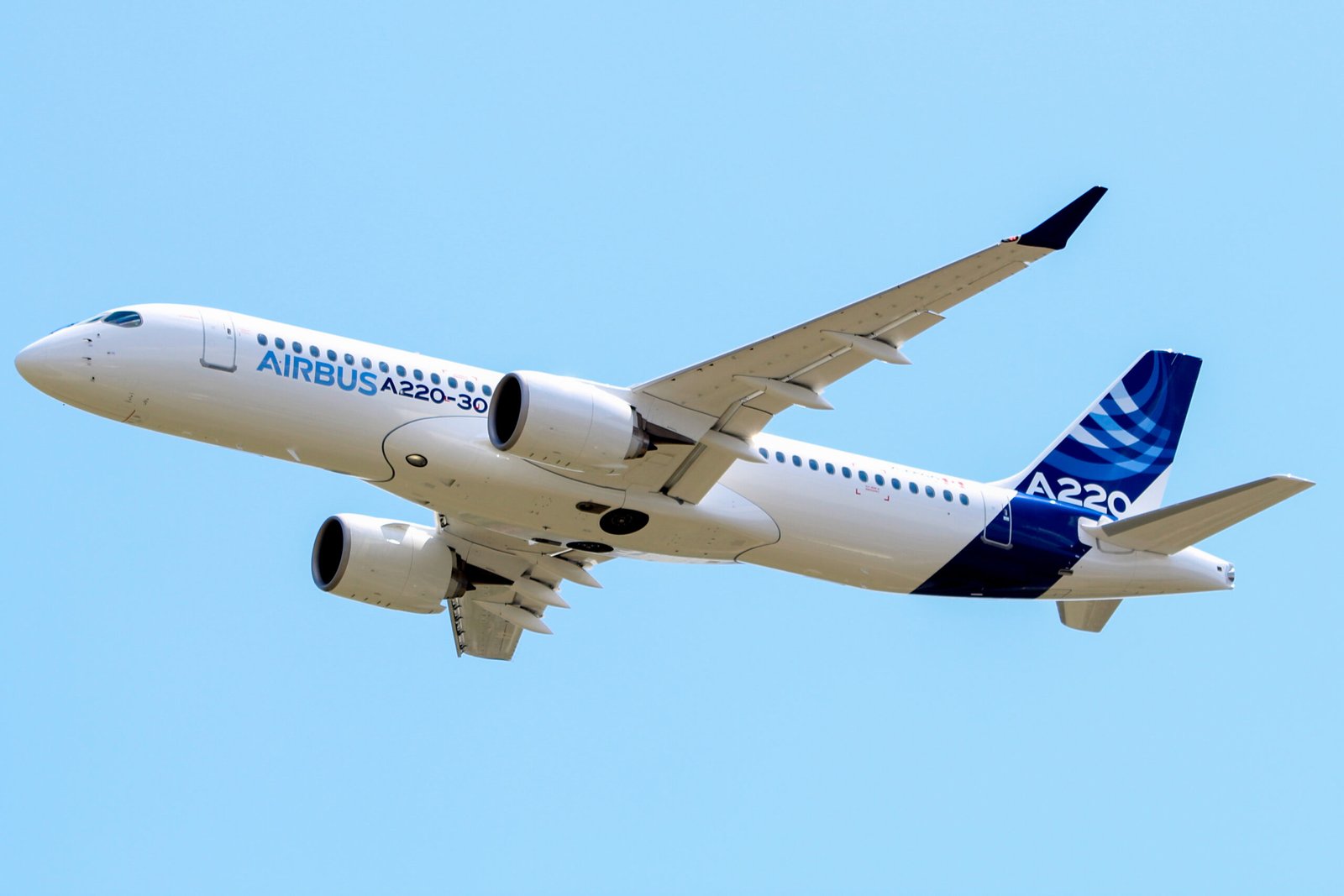
The Airbus A220 program continues to garner interest, yet it has garnered fewer new customers than expected in 2025. A significant order by LOT Polish Airlines, totaling 40 A220s with 44 additional options, is noteworthy. This order is evenly split between the A220-300 and the less popular A220-100 models.
A key hurdle for the A220 program has been production. Airbus is producing eight A220s monthly, which is costly due to its advanced technologies, such as carbon-composite wings. Additionally, engine supply issues with the Pratt & Whitney PW1500G engines have caused delivery delays, affecting both new and existing operators.
Navigating Challenges with the A320neo Family
The A320neo family remains a critical component of Airbus’s strategy. However, the CFM LEAP-1A and Pratt & Whitney PW1100G engines have faced durability issues, necessitating careful engine allocation. Efforts are underway to increase production to 75 aircraft per month by 2026, highlighting the importance of this line in Airbus’s portfolio.
| Variant | Orders |
|---|---|
| A319neo | 57 |
| A320neo | 4,057 |
| A321neo | 7,142 |
| Total | 11,256 |
In November 2024, Iberia launched the first commercial Airbus A321XLR flight, with many operators expecting deliveries into 2025 and 2026. The A321XLR has garnered interest due to its transatlantic range capabilities.
Exploring Widebody A330neo and A350 Series
Contrasting narrower model challenges, the widebody A330neo and A350 programs have stabilized. The A350, utilizing Rolls-Royce Trent XWB engines, boasts success for its efficiency and reliability. The A330neo, equipped with Trent 7000 engines, offers a viable replacement for older A330ceos, with fewer issues compared to its predecessors.
Airbus remains aligned with Rolls-Royce, whereas Boeing partners closely with General Electric. The Boeing 777X employs the GE9X, and the 737 relies on CFM engines—a collaboration between General Electric and Safran. Meanwhile, the Boeing 787 offers a choice between the GEnx and Trent 1000 engines, with the GEnx exhibiting greater popularity and reliability.