
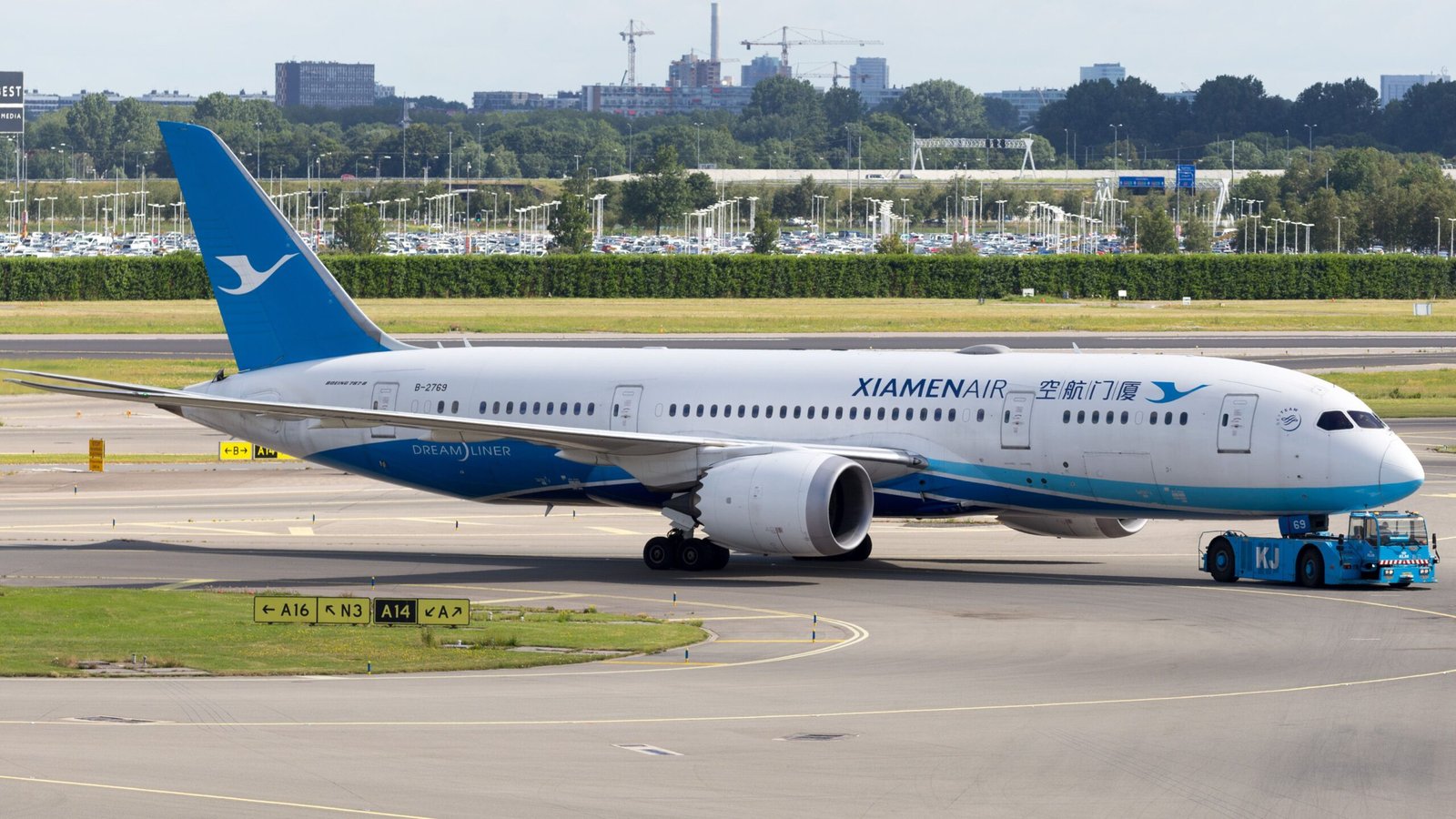
A Chinese airline has quietly stolen the limelight with the introduction of the world’s longest nonstop flight. Xiamen Air’s route from New York John F. Kennedy International Airport (JFK) to Fuzhou Changle International Airport in China is now blocked at an astonishing 19 hours and 20 minutes.
The Unprecedented Journey of Xiamen Air
Xiamen Air, not as widely recognized as some of its other Asian counterparts, has made waves in the aviation industry by launching this extraordinary route. The flight, which was previously operational between 2017 and 2020, has resumed in 2024 with a longer block time due to necessary airspace detours.
Why Avoiding Russian Airspace Matters
The route stretches 6,752 nautical miles (12,505 km) each way, a considerable distance even on a great circle basis. Notably, the extended flight duration is primarily due to the airline’s decision to bypass Russian airspace, resulting in more significant flying time compared to competitors who still fly over Russia.
Comparing the World’s Longest Flights
To understand the significance of Xiamen Air’s achievement, here are some of the longest nonstop flights currently in operation:
| Block Time | Route | Airline |
|---|---|---|
| 19h 20m | JFK to Fuzhou | Xiamen Air |
| 19h 10m | Newark to Singapore | Singapore Airlines |
| 18h 55m | JFK to Singapore | Singapore Airlines |
| 18h 20m | JFK to Manila | Philippine Airlines |
The Significance of Fuzhou for New York’s Chinese Community
The route’s popularity is further emphasized by the substantial traffic between New York and Fuzhou. New York’s Chinatown is home to a large Fuzhou immigrant population, which contributes significantly to the demand for this route. Approximately 160,000 passengers traveled between these locations over a 12-month period.
Future Implications for Global Aviation
With the aviation industry constantly evolving, airlines are consistently exploring new strategies for increasing efficiency while also expanding their global capabilities. Xiamen Air’s commitment to this ultra-long-haul route reflects its strategy to cater to underserved markets and could inspire other carriers to consider similar expansions.