
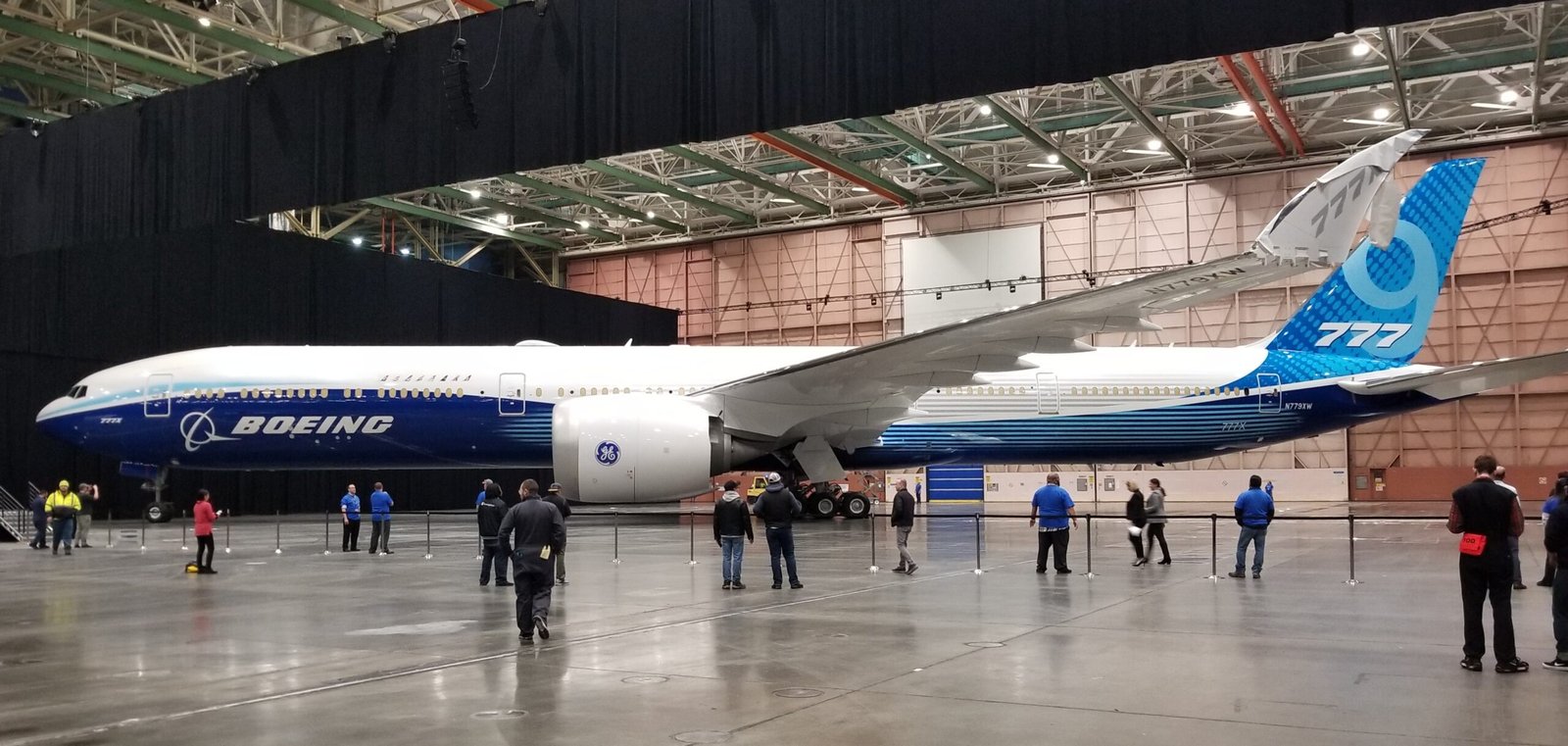
Boeing’s flagship 777X program is experiencing another setback, with delivery now postponed to 2027. Initially scheduled for launch in 2020, this marks nearly a decade of delays for the ambitious widebody jet.
A Disappointing Timeline
Boeing first unveiled plans for the 777X at the 2013 Dubai Airshow, promising a cutting-edge aircraft with folding wingtips and the largest engines ever placed on a twinjet. However, technical challenges, compounded by rigorous regulatory requirements and the impact of the COVID-19 pandemic, have continuously pushed back its timeline.
Customer Frustrations
Major airlines, including Emirates and Lufthansa, have expressed frustration over the repeated delays. Emirates, the largest 777 operator globally, initially ordered 200 units but has now shifted some focus to Airbus’s A350 models. Lufthansa, meanwhile, continues to rely on older aircraft like the 747 and A340 to meet its operational needs.
Technical and Regulatory Challenges
Currently, the primary bottlenecks are not new technical issues but rather the completion of rigorous safety certifications. The Federal Aviation Administration (FAA) has tightened its oversight following past controversies, notably the 737 MAX incidents, compelling Boeing to prioritize safety.
The Future of the 777X
Despite setbacks, the 777X is anticipated to set new benchmarks in fuel efficiency and operational capacity. Its development remains critical to Boeing’s future strategy, although competitors are closely watching and responding to the delays.
Financial Implications
The prolonged delays have significant financial repercussions for Boeing, with projected losses in the billions. Nonetheless, the company is focusing on ensuring that the final product lives up to its high expectations and guarantees the promised leap in aviation technology.
- Largest Twinjet: Once operational, the 777X will be the world’s largest commercial twin-engine jet.
- Advanced Features: Features include innovative folding wingtips and GE9X engines.
- Future Orders: Despite delays, Boeing’s order books are still robust.