
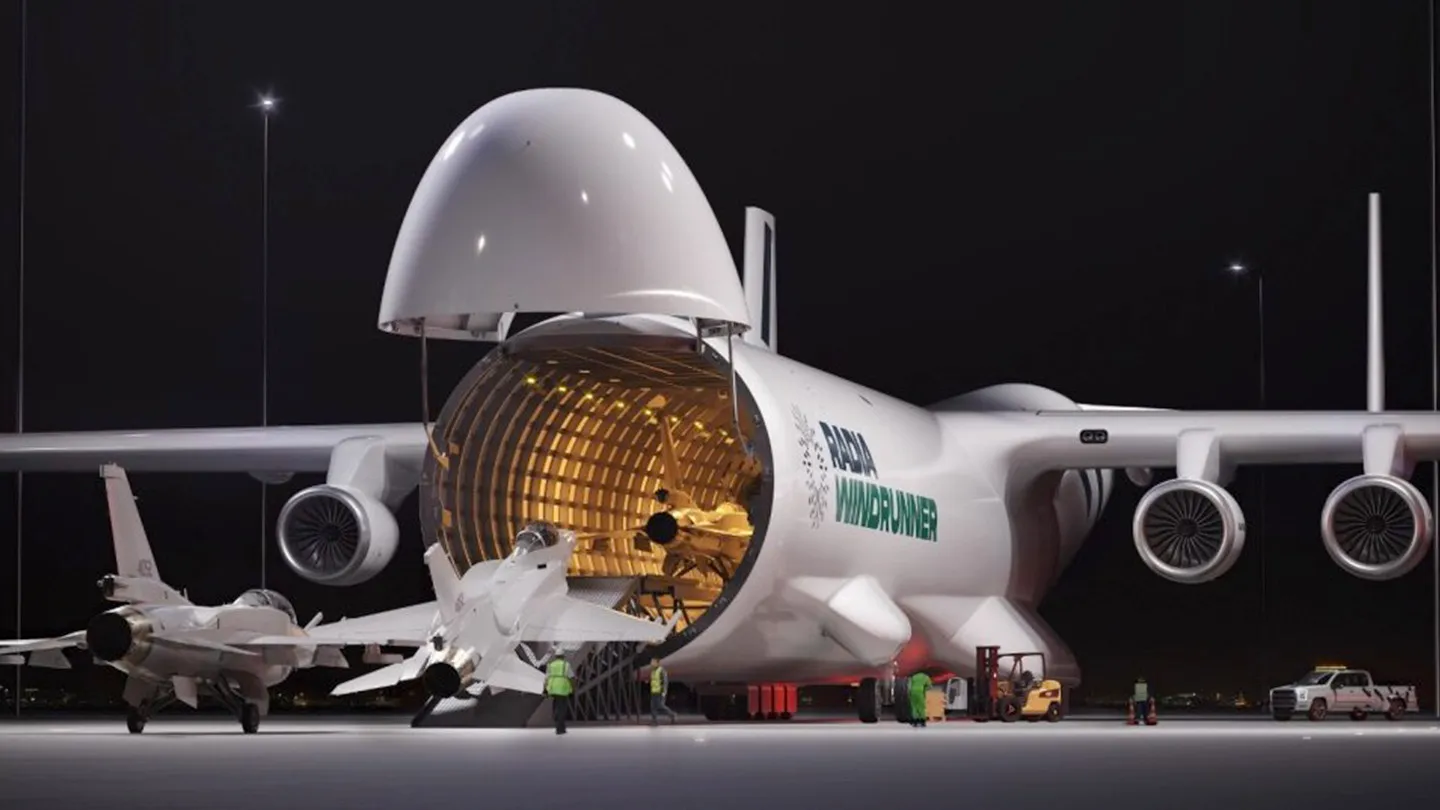
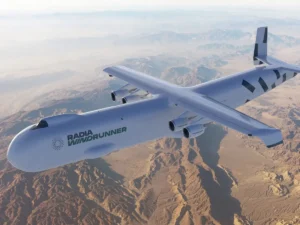
In the bustling halls of the U.S. Air & Space Forces Association conference, Colorado’s Radia introduced a concept that could redefine strategic airlift for decades to come—the WindRunner. This immense cargo plane is designed to carry massive loads effortlessly, potentially transforming both commercial and military transportation.
WindRunner’s Mammoth Capacity
The WindRunner stands distinguished by its voluminous interior, which boasts a carrying capacity significantly larger than existing military cargo giants:
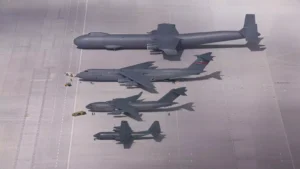
- Interior Volume: Seven times that of the C-5 Galaxy
- Cargo Space: Twelve times that of a C-17 Globemaster III
Such capacity allows it to transport vehicles, missile systems, or entire wind turbine blades without disassembly, a feat today’s airlift aircraft often struggle to achieve.
Designed for Flexibility and Efficiency
One of WindRunner’s most remarkable features is its capability to operate on runways as short as 6,000 feet. Its raised cockpit design maximizes cargo space, enabling seamless loading without the need for dismantling. Although its maximum payload of 72.6 tons is less than a C-5 Galaxy, its unmatched volume makes it indispensable for large but lighter cargo.
Performance Specifications
| Metric | Specification |
|---|---|
| Payload Capacity | 72.6 tons |
| Internal Volume | 270,000 cubic feet |
| Range | 1,200 miles (fully loaded) |
With in-flight refueling capabilities, the WindRunner stands ready for long-range missions, adding agility to its impressive list of attributes.
Military Potential and Investment
The U.S. Air Force’s Next Generation Airlift (NGAL) program aims to eventually supersede existing fleets with faster, more adaptable aircraft, and while the WindRunner isn’t officially part of this initiative, its design offers promise for specialized missions. Its ability to transport oversized cargo efficiently could fulfill niche requirements for the military.
Radia has successfully raised $150 million for the development of the WindRunner, and although a production site is pending, projections for its maiden flight are set for 2030. The aircraft’s dual-use potential in commercial and military logistics could alter how global deployment is conducted.