
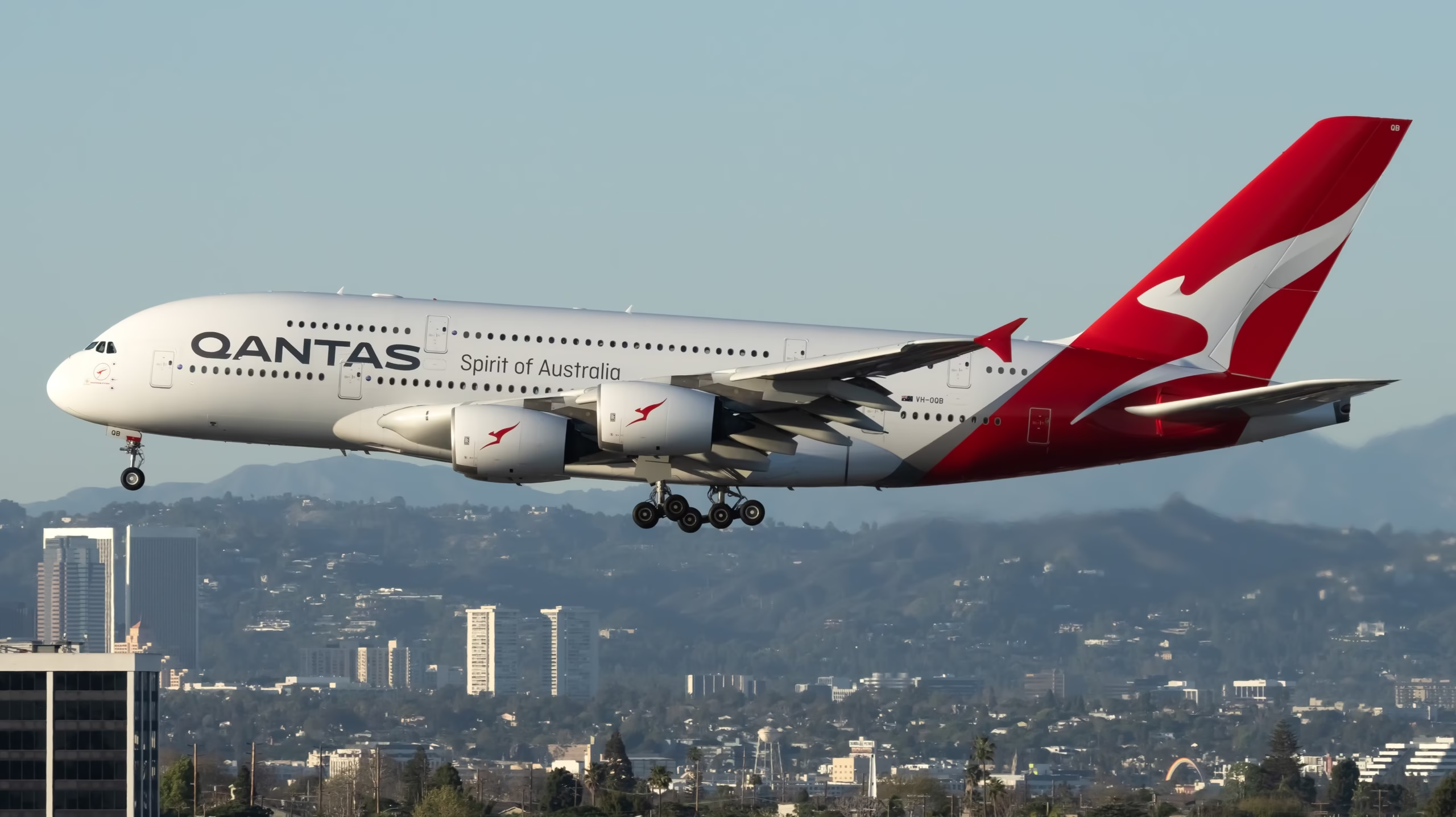
A recent Qantas flight from Sydney to Johannesburg took an unexpected turn, captivating aviation enthusiasts worldwide. The Airbus A380-842, designated as QF63, was forced to return to Sydney after nearly nine hours in the air, leaving passengers and crew with an unexpected aerial journey.
The Unforeseen Return
What was supposed to be a routine 14-hour and 45-minute flight became a challenging decision for the Qantas crew as the aircraft made its way halfway across the Indian Ocean. The absence of immediate diversion options along this vast route underscores the complexity Qantas faces when such issues arise. While the specific cause for the return remains undisclosed, potential reasons could range from technical glitches to passenger health crises, both of which require immediate attention and action.
Critical Route Details
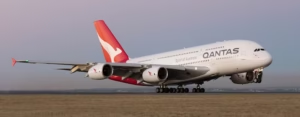
Flight QF63 is a vital link between Australia and Africa. Operating several times a week, this route is one of Qantas’s longest, spanning approximately 11,036 kilometers (6,816 miles). With limited diversion options over the Indian Ocean, the decision to return rather than continue underscores the critical nature of safety and operational protocols.
Impact on Passengers and Crew
For the passengers onboard, this unexpected return meant hours in the air only to find themselves back at their starting point. Qantas has rebooked them on a fresh departure scheduled for the following afternoon, providing meals and accommodations as needed. The airline’s response highlights its commitment to passenger care in the face of logistical challenges.
Operational Challenges
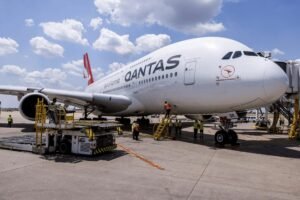
Managing a return of this magnitude involves intricate logistical coordination, from rebooking and passenger care to ensuring the aircraft’s readiness for another long-haul journey. Flight QF63’s experience exemplifies the unpredictability of air travel, where quick decision-making is crucial to ensure passenger safety.