
Delta A330 Emergency Landing in Accra
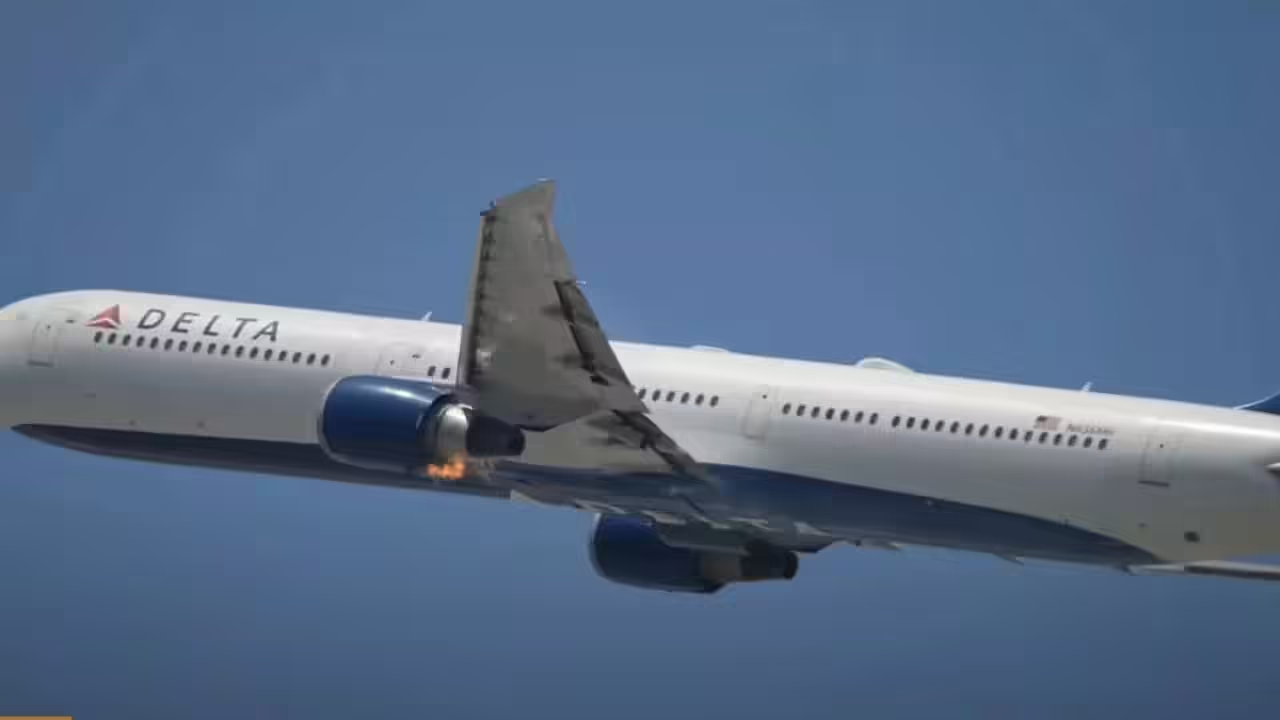
A Delta Air Lines Airbus A330, registration N857NW, operating as Flight DL055 from Lagos (LOS) to Atlanta (ATL), was compelled to make an emergency landing at Kotoka International Airport (ACC) in Accra, Ghana, on September 23, 2025, after a galley oven fire occurred. Although the fire was swiftly controlled by the cabin crew with no injuries reported, the diversion and prolonged flight duration resulted in the flight crew exceeding their allowable duty time limits.
The aircraft remained grounded overnight, and passengers were rebooked prior to the flight resuming from Accra around 12:00 UTC on September 25.
Incident Details
Flight DL055 had departed from Murtala Muhammed International Airport in Lagos at 11:02 UTC on September 23. The aircraft, which is over 20 years old, operates a daily nonstop service between Lagos and Hartsfield-Jackson Atlanta International Airport. Approximately 70 minutes into the flight, while ascending, a fire ignited in a galley oven. The precise cause of the fire, such as an electrical fault, remains unconfirmed.
Pilots diverted to Accra, executing a brief holding pattern over Kumasi before safely landing at about 12:12 UTC. All passengers and crew exited the aircraft unharmed.
Operational and Regulatory Impact
Following the landing, operational constraints meant the flight could not continue immediately as the crew had exceeded aviation regulation limits for duty/rest times. Delta initiated rebooking processes for affected passengers on alternative flights, utilizing partner airlines including KLM, Lufthansa, British Airways, and Air France.
Ultimately, Flight DL055 departed Accra for Atlanta on September 25 at approximately 12:00 UTC.
As of now, Delta has not provided details on the oven model, maintenance record, or exact cause of the fire. The Nigerian Civil Aviation Authority (NCAA) has acknowledged the incident and noted the implementation of safety measures but has not yet published the results of their investigation.
No public data is available on passenger and crew numbers, though tracking sources confirm the aircraft is routinely used on that route and is over two decades old.
Comparison and Procedures
While galley fires are infrequent, flight attendants are well trained to manage such events. Common procedures involve isolating electrical power to the affected device, employing fire extinguishers such as halon, and safely disposing of hazardous items.
Even though specific procedures followed in this case have not been confirmed, the quick containment indicates crew adherence to standard protocols. This incident illustrates how non-mechanical failures, like an oven fire, can cause significant operational delays, particularly when crew duty-time regulations are involved.
It also highlights the importance of comprehensive inspections of galley equipment, catering methods, and emergency preparedness in long-haul operations.