
Future Combat Air System (FCAS): Europe’s Ambition in Sixth-Generation Fighter Jets
Even before the COVID-19 pandemic stalled global aviation, questions arose about whether France and Germany could lead the development of the Future Combat Air System (FCAS), a sixth-generation fighter designed to bolster Europe’s defense autonomy. The FCAS, revealed at the 2019 Paris Air Show, carries a hefty price tag of €100 billion ($117 billion), casting uncertainty on its future before its second phase has even begun.
FCAS 6th-Gen Fighter Jet Program: Technical and Strategic Overview
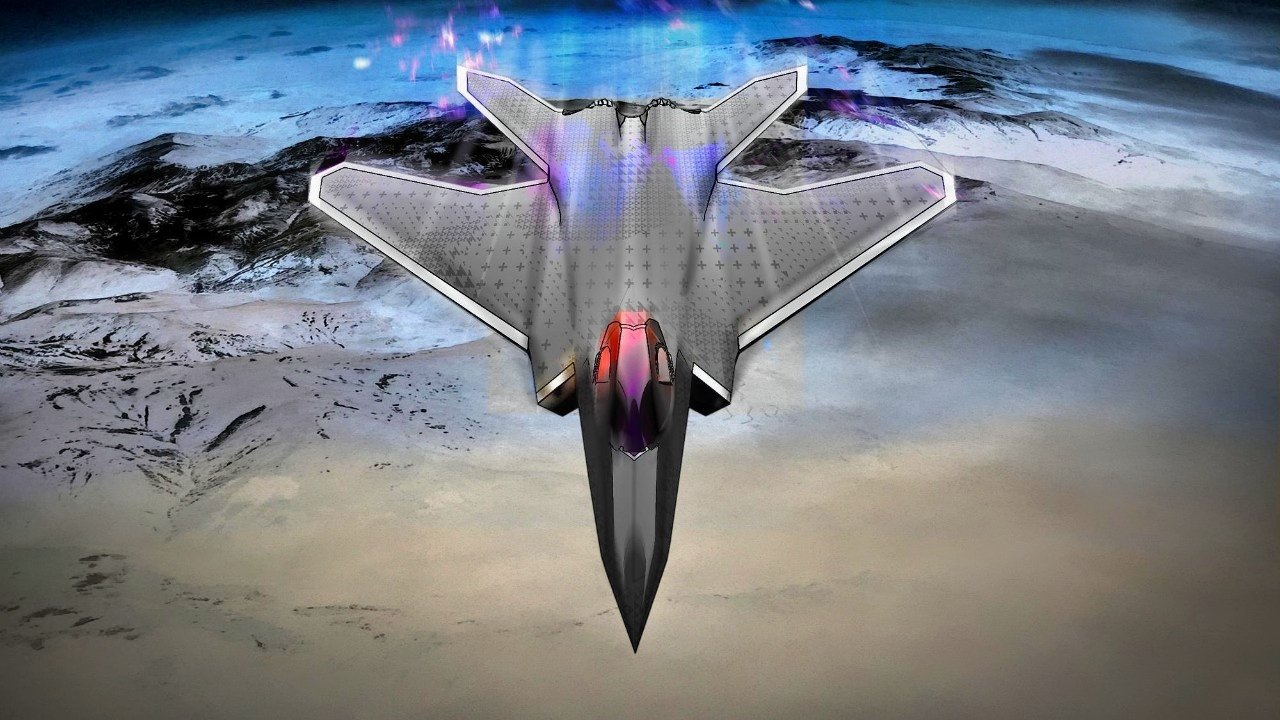
Germany, France, and Spain are jointly pioneering the FCAS initiative, which integrates drone swarms and a digital combat network. This “system of systems” aims to merge the Next Generation Fighter (NGF) with unmanned platforms and a secure AI-fueled combat cloud. The core of FCAS, the NGF, is a stealth-capable jet intended to replace France’s Rafale and Germany and Spain’s Eurofighter Typhoon fleets. Supporting it are remote carriers for reconnaissance, electronic warfare, and strike missions. These elements will communicate in real time through a secure, AI-enabled Air Combat Cloud.
FCAS aims to surpass current fifth-generation fighters in stealth, speed (supercruise above Mach 2.5), range (3,500-4,000 kilometers), AI-guided team operations, and integration of advanced weapons. Airbus plans phased achievements:
– Late 2020s: Upgraded situational awareness
– Early 2030s: Manned-unmanned operations
– 2035-2037: Full-scale production
– 2040: Full operational capability
A demonstrator flight, including the NGF linked through the combat cloud, is planned for 2028 or 2029. According to Ignacio Rosell of Airbus, this operating system supports comprehensive integration akin to an “Internet of Military Things.”
| Feature | Description |
|---|---|
| Stealth | Advanced stealth capabilities less detectable than the F-35 |
| Speed | Supersonic, exceeding Mach 2.5 |
| Range | 3,500–4,000 km without refueling |
| AI Integration | Facilitates coordination with drone swarms |
| Weapons | Potential hypersonic missiles and lasers |
| Networking | Integrates multiple assets via a real-time digital network |
Obstacles and National Rivalries
FCAS faces challenges from industrial rivalries and national interests. Key contractors include France’s Dassault Aviation and Germany and Spain’s Airbus. France claims a lead role based on Rafale experience and nuclear deterrent maintenance, seeking almost 80% of workshare, a demand Germany contests. German Defense Minister Boris Pistorius emphasizes compromise to progress, noting that national interests must be secondary. Spain, committed to FCAS, excludes the US F-35 as a replacement option.
| Country | Industry Lead | Position on FCAS Role | Recent Statements |
|---|---|---|---|
| France | Dassault Aviation | Asserts leadership due to Rafale expertise | CEO Eric Trappier: Independence and mutual dependence principle |
| Germany | Airbus | Seeks balanced workshare | Minister Pistorius: National interests must be set aside |
| Spain | Airbus (Spanish role) | Strong support, not considering the F-35 | Minister Margarita Robles: Commitment and necessity to proceed |
Comparisons and European Unity
Failure could compromise Europe’s defense aspirations and increase foreign dependence. Comparing global sixth-generation fighter initiatives, Europe faces stiff competition:
– United States: NGAD with stealth and AI
– China: J-20 upgrades
– Russia: Su-57 upgrades stunted by sanctions
– UK/Italy/Japan: GCAP initiative
Despite their differences, Europe’s political leaders recognize the urgency. French President Emmanuel Macron and German Chancellor Friedrich Merz plan a joint decision on FCAS by the end of 2025.
FCAS Phases and Strategic Implications
Phases 1A and 1B are complete, the latter costing €3.2 billion ($3.4 billion), with all technologies set for demonstration by 2028-2029. At this juncture, delays could have significant impacts. German Minister Pistorius insists on adherence to contracts to avoid further setbacks.
| Program/System | Prime Contractor | Main Partner(s) |
|---|---|---|
| New Generation Fighter (NGF) | Dassault Aviation | Airbus |
| Unmanned Systems Remote Carrier (RC) | Airbus | MBDA |
| Combat Cloud (CC) | Airbus | Thales |
| Fighter Aircraft Engine | Safran | MTU Aero Engines |
The FCAS project’s fate involves complex dynamics, with different perceptions on leadership roles and power distribution. Dassault’s ability to develop independently adds another layer. The absence of a major European power like the UK in FCAS has sparked discussions on comprehensive European cooperation for aerospace advancements.