
Boeing 777X: A New Era in Aviation Technology
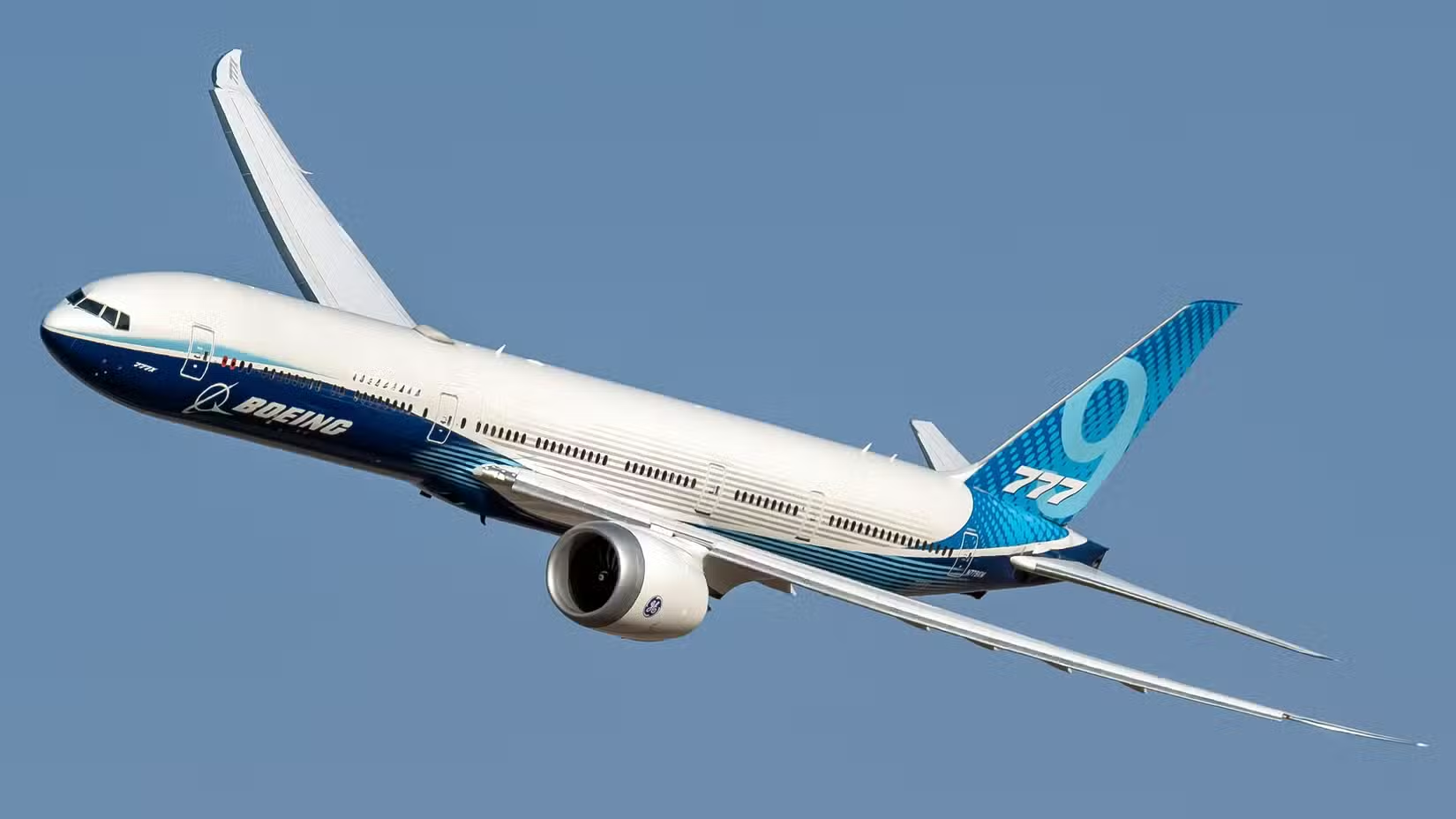
The Boeing 777X represents the latest in widebody aircraft technology by Boeing, a major American aerospace manufacturer. Designed to succeed the Boeing 777-300ER, the Boeing 777X targets very long-haul missions with reduced fuel consumption and increased seating capacity. This aircraft is available in two variants: the high-capacity Boeing 777-9, ideal for major routes, and the Boeing 777-8, designed for ultra-long-haul flights. With advanced carbon-fiber composite wings and folding wingtips, the 777X extends its range and enhances cruising efficiency while fitting into existing airport gates.
Boeing 777 Overview
| Feature | Detail |
|---|---|
| Launch Customer(s) | United Airlines |
| Manufacturer | Boeing |
| Aircraft Type | Widebody |
| First Delivery | May 15, 1995 |
| Number Delivered | 1,735 |
| Production Sites | Everett, Washington, United States |
Innovations in Gate-Fitting Technology
The folding wingtips of the Boeing 777X enable operators to park at existing Code-E gates while offering the benefits of a high-efficiency composite wing. This design leverages advanced technology to provide operational flexibility, particularly at slot-constrained airports like London Heathrow. The aircraft matches the capacity and range of the Boeing 777-300ER without requiring infrastructure changes, making it economically appealing for airlines dealing with expensive landing slots.
Improving Long-Haul Economics
The Boeing 777X enhances long-haul cost efficiency by preserving generous cargo space and premium cabin real estate. It consolidates demand on trunk routes into fewer departures with more seats, providing better per-seat economics. The Boeing 777-8 caters to markets that are beyond the reach of the Boeing 787-10 but do not need the Airbus A380’s capacity. This aspect enhances viability in leisure markets and supports improved contractual commitments without requiring additional flight frequencies.
Comfort and Cabin Upgrades
Inspired by the Boeing 787, the 777X offers superior cabin pressurization and humidity, larger windows, and wider cabins to increase passenger comfort on long-haul journeys. Innovations in noise insulation, LED lighting, and aerodynamic design further enhance passenger experience by reducing fatigue and improving sleep quality. The aircraft supports next-generation business class suites and premium seating configurations.
Fuel Efficiency and Emissions
The Boeing 777X blends advanced carbon-fiber wings and GE9X engines to maximize fuel efficiency, reducing trip costs and emissions. Its compatibility with sustainable aviation fuel aids airlines in meeting decarbonization targets. The aircraft’s higher seating capacity reduces flight numbers, thereby easing carbon footprints. Key specifications include:
| Category | Boeing 777-8 Specification |
|---|---|
| Cockpit Crew | 2 |
| Complete Wingspan | 235 feet, 5 inches (71.75 meters) |
| Folded Wingspan | 212 feet, 9 inches (64.85 meters) |
Industry Impacts
The Boeing 777X, as an evolution of the Boeing 777 family, allows airlines to transition with existing pilots and maintenance networks, facilitating smooth fleet integration. Enhanced cargo capacity ensures its suitability for e-commerce needs. The industry is likely to adopt regulations that support such innovations, paving the way for further advancements in aviation technology.
Conclusion: The Significance of the Boeing 777X
With its upcoming entry into service, the Boeing 777X is set to transform aviation by offering superior capacity and range alongside the economic advantages of twin-engine jets. It represents a significant leap in technology and efficiency, setting a new standard in the market and promising enhanced passenger experiences.