

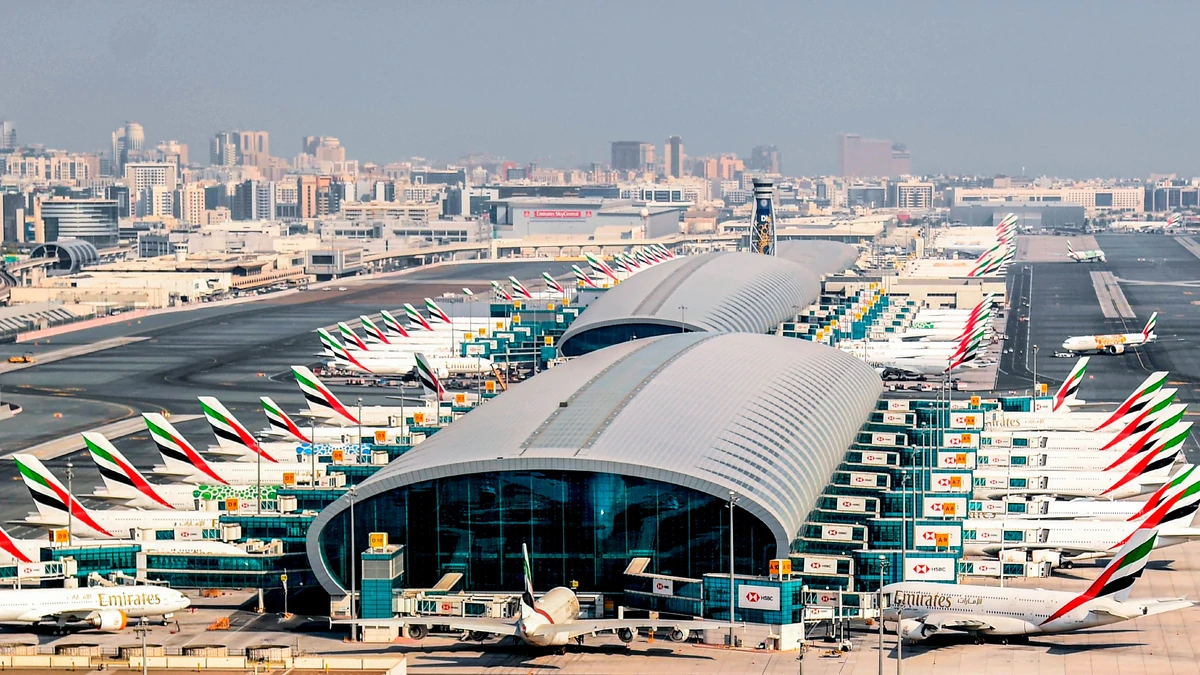
Dubai Airport‘s Recognition as a Leading Low-Cost Hub
Dubai International Airport (DXB) has been named the best low-cost hub in the Middle East for 2025, according to the recent OAG Mega Hubs 2025 report. Globally, DXB is recognized as the 5th most connected low-cost hub, highlighting its successful aviation strategy and the growing importance of budget travel within the UAE.
Dubai Airport: Low-Cost Hub Achievements
DXB boasts the highest volume of potential low-cost carrier (LCC) connections in its category. With flydubai contributing approximately 28% of the airport’s flights, there is a 4% year-on-year increase in low-cost routes. This success is notable as DXB maintains its status as a prominent premium hub, climbing from 16th to 15th place in the global “most connected airports” ranking.
In 2024, DXB handled over 92 million passengers, marking a 6.1% increase from the previous year. The airport’s dual focus on full-service and low-cost operations is advancing its position as a competitive hub for budget travelers.
| Metric | Value / Ranking |
|---|---|
| Global LCC hub rank | 5th most connected low-cost hub |
| Regional rank (Middle East) | 1st among Middle East low-cost hubs |
| Share of LCC flights | ~28% of total flight operations |
| Increase in LCC connections | ~4% year-on-year growth |
| Overall connectivity rank | 15th among global airports |
Regional and Global Comparisons
While DXB excels regionally, Istanbul Airport (IST) has significantly advanced, moving from 8th to 2nd place globally in low-cost connectivity, with Turkish Airlines operating about 79% of flights. Middle East competitors like Riyadh (RUH) and Doha (DOH) are also noteworthy, with Riyadh rising to 31st globally and Doha maintaining strength with Qatar Airways operating 77% of flights.
DXB’s growing connectivity aims to attract price-sensitive travelers and may enhance its influence with airlines seeking Middle Eastern expansion. Plans are in place to shift much of the airport’s functions to Al Maktoum International Airport (DWC), expected to handle up to 260 million passengers.
Conclusion
Despite infrastructure and operational challenges, DXB’s position as a top regional hub for low-cost connectivity is well established. Balancing premium and budget services is crucial for avoiding internal competition. DXB’s achievements in both market segments reinforce its status as a major aviation hub, ready to connect travelers globally.