
Boeing’s T-7A Red Hawk: Milestones in Flight Testing and Training Advancements
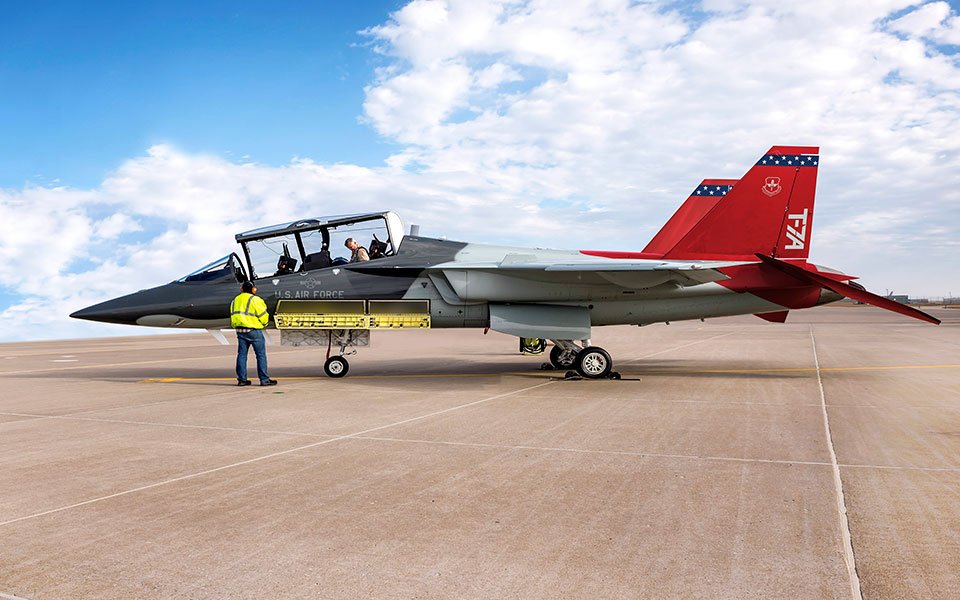
Boeing Defense has released a new video showcasing critical stages in the flight-test process of the T-7A Red Hawk, a next-generation advanced trainer jet created using digital tools from the outset. The footage highlights significant steps forward in modernizing pilot training and is intended to demonstrate Boeing’s progress to a wide audience.
Live-Virtual-Constructive Simulation
The video emphasizes the Red Hawk’s use of integrated live, virtual, and constructive (LVC) simulations. This multifaceted approach combines real flight experiences with virtual environments and constructive software elements, facilitating pilot training and system testing. LVC helps reduce risks and uncovers potential issues at early stages.
Production Advancements
- The video provides a glimpse of the Red Hawk production line, illustrating the assembly of wings, fuselages, and tails.
- This visual confirmation underscores the tangible progress beyond theoretical development as physical units are constructed and prepared.
Dual Test Flights
Test flights have been conducted at two prominent U.S. Air Force locations: Edwards Air Force Base in California and a site in St. Louis, Missouri. These rigorous tests focus on assessing performance, safety, handling, and system integration.
The Importance of the Red Hawk
Replacing the T-38 Talon
The T-7A Red Hawk, developed by Boeing in collaboration with Saab, aims to replace the venerable T-38 Talon, an aircraft in service since the 1960s, marking a significant generational advancement.
Digital Engineering Approach
This new aircraft was engineered digitally from the start, utilizing virtual design tools and model-based engineering to expedite development, cut costs, enhance safety, and streamline manufacturing processes.
Modern Features
The T-7A Red Hawk offers notable capabilities, including high-G maneuverability, advanced avionics, and open mission systems architecture, along with safety elements like a high-quality ejection system. Its state-of-the-art cockpit features touchscreen displays and embedded training technologies.
Program Confidence
A noteworthy detail in the program development is that non-test pilots have safely flown the Red Hawk under test conditions, indicating the program’s maturity and the U.S. Air Force’s confidence in its reliability.
Core Specifications and Status
| Specifications | Details |
|---|---|
| Main Engine | Single General Electric F404 |
| Top Speed | Near Mach 0.975 |
| Altitude Range | Up to 45,000 feet |
Currently, the T-7A is in the Engineering & Manufacturing Development (EMD) phase. Several test units have been delivered, and the program’s primary operations will take place at Joint Base San Antonio, with full production anticipated in upcoming program phases.
Future Acquisition and Mission Flexibility
The U.S. Air Force plans to procure hundreds of these jets, replacing the older T-38 fleet. The flexibility of the T-7A allows it to support a variety of mission profiles and adapt to changing needs.
Looking Forward
Operational Milestones
The Initial Operational Capability (IOC) of the Red Hawk is projected for around 2027, although exact timelines may vary.
Budget and Development Challenges
The digital engineering approach promises cost savings, but General Accountability Office (GAO) reports have noted some optimistic projections and software challenges. Effective management by Boeing is crucial.
Training Program Integration
The transition from T-38 to Red Hawk training programs, as well as the associated ground training systems and simulators, will be closely monitored.
Maintenance and Upgrades
Ensuring ease of maintenance and availability of parts will be vital in enhancing operational sustainability. The commonality with other U.S. 4th and 5th generation fighters is designed to simplify upkeep, but practical application will provide further insights.
The T-7A Red Hawk represents a significant investment in the advancement of pilot training. The recent video underscores that the program is advancing, testing protocols are effective, and both Boeing and the USAF are anchoring a new era of aviation training. These efforts not only equip pilots but also herald future trends in aerospace development: more digital, integrated, and agile solutions.