
Introduction to Lockheed Martin‘s Vectis Aircraft
Lockheed Martin has introduced its latest autonomous collaborative combat aircraft named Vectis, designed to work alongside the F-35 stealth fighter for multi-domain mission operations. Developed by Skunk Works, the advanced projects unit of Lockheed Martin, Vectis aims to seamlessly integrate with fifth-generation platforms and enhance capabilities such as targeting, electronic warfare, and intelligence, surveillance, and reconnaissance (ISR).
Design and Capabilities of Vectis
The U.S. company plans to have the first Vectis prototype ready for flight within two years. Utilizing stealth design elements and a modular architecture, Vectis seeks to achieve survivability at a price competitive with other collaborative combat aircraft (CCA).
- Roles: Offensive and defensive counter-air, electronic warfare, precision strike, ISR.
- Integration: Works with crewed fighters such as the F-35 and potentially the F-22.
- Architecture: Open systems for integrating external payloads and mission systems.
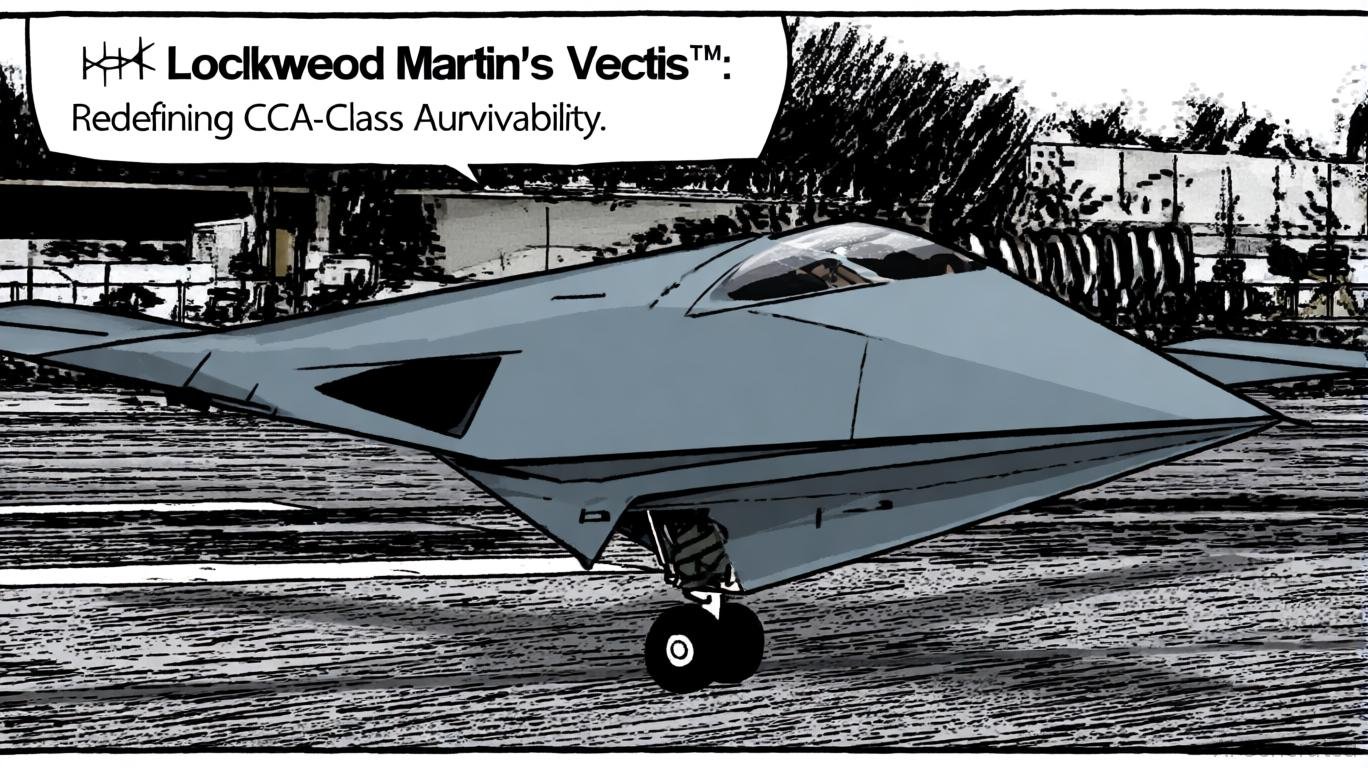
Vectis showcases a blended-wing body fuselage, characterized by a single dorsal air intake and delta wing design, as seen in artist renderings.
Strategic Implications
Lockheed Martin leverages its expertise in stealth and low-observable systems to claim that Vectis provides “best-in-class survivability” for CCA. While specific features like engine type or top speed remain undisclosed, the aircraft is not required to achieve supersonic performance.
Lockheed Martin’s ambition is to build and test a Vectis prototype within the next two years, with a targeted price of under $20 million per aircraft, aligning with other CCA models. Development milestones are underway with ordered parts.
| Key Features | Status |
|---|---|
| Engine Type | Undisclosed |
| Speed | Undisclosed |
| Maximum Payload | Undisclosed |
| Stealth Metrics | Undisclosed |
Market and Development Considerations
The U.S. Air Force is a leader in Western CCA development, conducting competing prototype flight tests. Although Vectis hasn’t officially entered all competitions, Lockheed Martin suggests it may compete in future requirements, such as Increment 2 of the CCA program, attracting interest from international allies for global mission compatibility.
As with all advanced military programs, potential risks include cost, certification, and integration, which may affect deployment timelines.
Conclusion
Lockheed Martin’s Vectis represents a significant shift in crewed-uncrewed aerial systems, promising enhanced survivability, mission adaptability, and cost-efficiency. The development over the next two years will determine if Vectis meets its ambitious design and budgetary goals.