
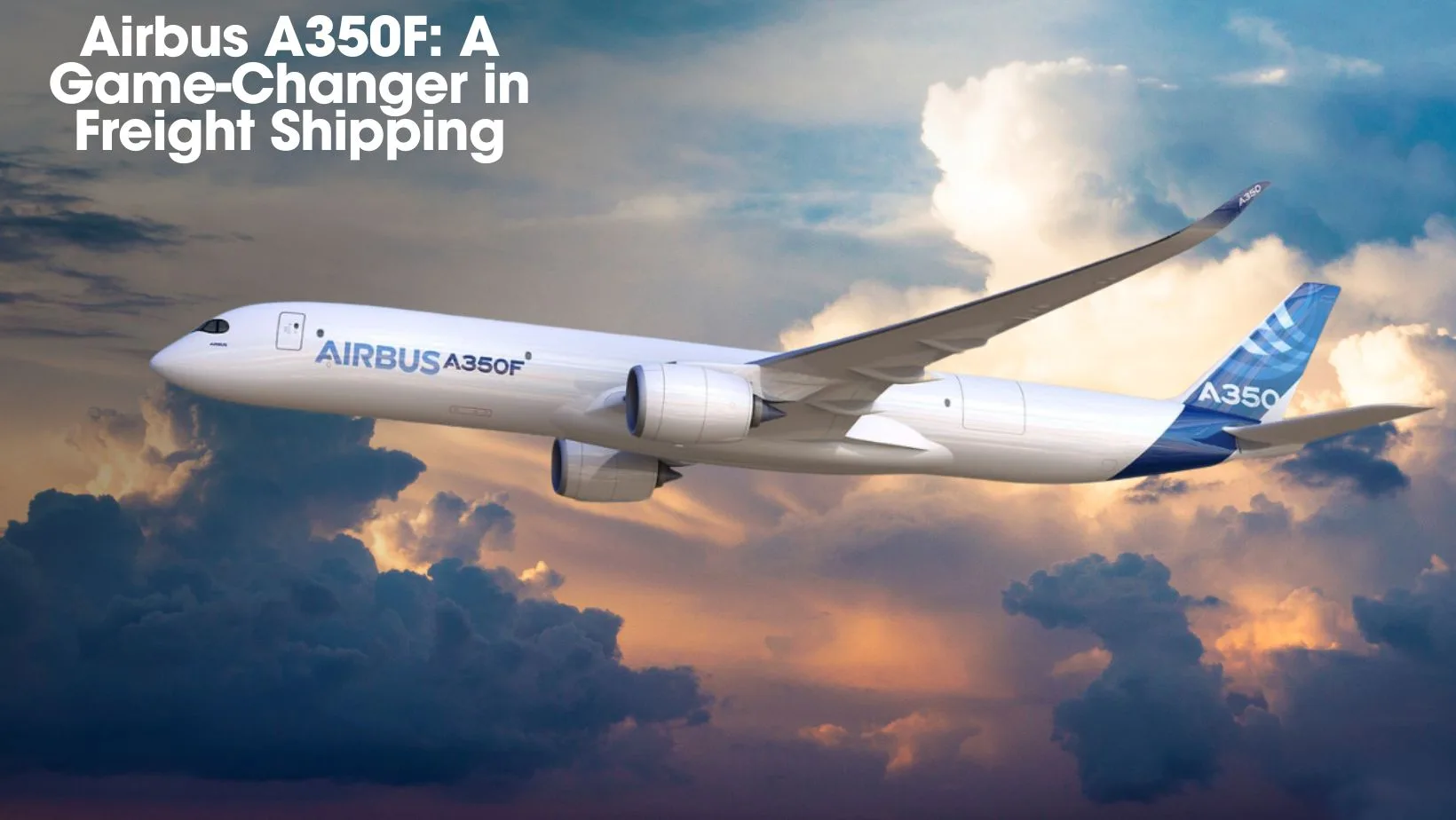
Airbus A350F: A New Chapter in Freight Aviation
The Airbus A350 is a significant player in the commercial passenger aviation market due to its lightweight design, primarily using carbon-fiber-reinforced polymers. Over a decade since its first flight, its backlog remains substantial, attributed to its efficiency, appealing to airlines globally.
- Launch Customer(s): Qatar Airways
- Manufacturer: Airbus
- Aircraft Type: Widebody
- First Delivery: February 20, 2018
- Number Delivered: 613
- Production Sites: Toulouse, France
Comparison with Boeing 787 Dreamliner
The A350 competes against Boeing’s 787 Dreamliner, which also features similar fuel-efficient technologies. Airbus initiated the A350F program in July 2021, aiming to expand its presence in the freight sector, while Boeing’s similar freight variant, the 787F, has yet to take shape. This analysis delves into the progress and potential impact of Airbus’s A350F and the developments surrounding Boeing’s prospective 787F.
Progress on the A350F
Last month, Airbus commenced the final assembly of the A350F, receiving crucial fuselage sections transported to Toulouse, France. Initial production components, including wing and horizontal stabilizer, were completed earlier this year in the UK and Spain. Originally expected to hit the market in 2026, delivery is postponed to the latter half of 2027 due to supply chain issues involving Spirit Aerosystems.
Flight testing for the A350F is scheduled to begin between 2026 and 2027, with two test units under construction. The program has garnered 65 firm orders, surpassing the 50 required to proceed, with CMA CGM Air Cargo as the launch customer, following cancellations by Singapore Airlines and Air Lease Corporation.
Unique Features of the A350F
One of the A350F’s distinguishing features is its enhanced main-deck cargo door (MDCD), boasting the largest aperture among commercial aircraft at 175 inches in width, significantly larger than Boeing 777 Freighter’s. Located at the rear to improve balance during loading, the door’s composite material construction matches the fuselage, reducing weight and employing electrical mechanisms to enhance reliability.
| Variant | Range | Capacity | Length | Wing Area | Maximum Takeoff Weight | Maximum Payload | Fuel Capacity | Powerplant |
|---|---|---|---|---|---|---|---|---|
| A350-900 | 8,500 nautical miles | 440 seats | 219.2 feet | 4,760 sq ft | 623,908 pounds | 118,000 pounds | 37,200 US gallons | 2x Rolls-Royce Trent XWB-84 |
| A350-1000 | 9,000 nautical miles | 480 seats | 242.1 feet | 4,998 sq ft | 710,000 pounds | 150,000 pounds | 42,000 US gallons | 2x Rolls-Royce Trent XWB-84 |
| A350F | 4,700 nautical miles | 30 pallets 96 x 125’’ | 232.2 feet | Similar to A350-1000 | 703,000 pounds | 245,000 pounds | Similar to A350-1000 | 2x Rolls-Royce Trent XWB-84 |
The A350F doesn’t directly transfer its fuselage from the passenger versions but gains from the A350-1000’s wings and engines, enhancing its loading capabilities and range potential.
The Situation with Boeing 787F
Despite anticipation, the 787F program has not launched. Upcoming ICAO emission regulations could phase out Boeing’s 767F and 777F by 2028, giving Airbus an edge if Boeing fails to introduce a compliant freighter. While Boeing received a reprieve to continue the 767F post-2027, the absence of new orders has led the company to plan cessation of its production by 2027.
| Variant | Range (Nautical Miles) | Net Revenue Payload (Tonnes) |
|---|---|---|
| 777-8 Freighter | 4,410 | 112.3 |
| 777 Freighter | 4,970 | 102.0 |
| 767-300 Freighter | 3,255 | 52.4 |
| 767-300 Converted Freighter | 3,345 | 51.6 |
| 737-800 Converted Freighter | 2,025 | 21.5 |
Met with economic uncertainty, the aviation freight market, easing from pandemic disruptions, a new freighter might misalign with current demand. Boeing’s reliance on the delayed 777-8F could restrict their market share if the A350F capitalizes on current freight trends.
The stakes for Boeing are high as Airbus focuses on the A350F. The strategy Boeing adopts, whether risking an investment in the 787F or betting on the 777-8F, will largely dictate its competitive standing against Airbus, now the world leader in aircraft manufacturing.