

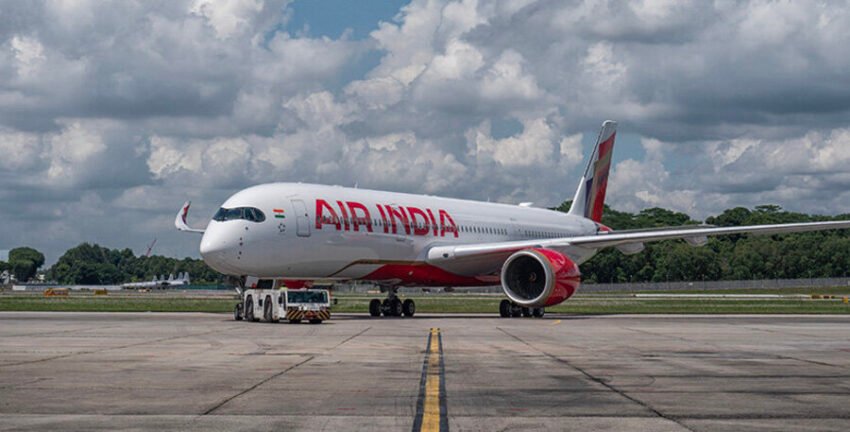
Navi Mumbai International Airport: A New Hub for Air India
Focus Keyword: Air India Navi Mumbai Airport
Tata-owned Air India Group (AI) has confirmed plans to initiate commercial services from Navi Mumbai International Airport (NMI), operated by Adani Airport Holdings Ltd., upon its inaugural operational phase. Once opened, NMI will become the second major aviation hub within the Mumbai Metropolitan Region.
Air India Express Flights from NMI
- Air India Express (IX), the group’s low-cost carrier, will start with 20 daily departures, amounting to 40 Air Traffic Movements (ATMs).
- These flights will connect NMI to 15 Indian cities initially.
- Plans indicate substantial growth within two years, positioning the airport as pivotal for both domestic and international routes.
Expanding Operations
In the medium term, Air India aims to expand its operations at NMI:
- By mid-2026, the airline plans for 90 daily departures (180 ATMs), potentially including five international flights.
- By 2027, the target is 140 daily departures (280 ATMs), thereby advancing NMI’s stature as a global transit hub.
Vision for Mumbai as a Twin-Airport City
Campbell Wilson, CEO and MD of Air India, remarked on the strategic advantages of Mumbai housing two international airports, highlighting the group’s mission to link India with Eastern and Western regions, while contributing to the country’s role as an aviation hub. Similarly, Arun Bansal, Adani Airport Holdings CEO, endorsed this vision as synergistic with NMI’s intent to establish itself as a global standard in aviation.
Navi Mumbai International Airport Development
The development of NMI is scheduled across five phases:
- The first phase will support 20 million passengers annually and handle 0.5 million metric tons of cargo.
- Ultimately, the airport can accommodate 90 million passengers and manage 3.2 million metric tons of cargo annually.
- NMI spans over 1,160 hectares, featuring two runways, advanced terminal infrastructure, and sophisticated cargo facilities.
- The design is inspired by the lotus, incorporating sustainable elements like renewable energy and eco-friendly construction.
Air India Group’s Growth Strategy
The Air India group, including Air India (AI) and Air India Express (IX), is undergoing a comprehensive transformation dubbed Vihaan.AI. Having returned to Tata Sons in 2022, strategic steps include:
- A fleet renewal involving 570 new aircraft orders.
- Mergers with carriers like Vistara and AirAsia India.
- Development of aviation training and maintenance facilities.
Currently, the group manages over 300 aircraft, serving 55 domestic and 45 international destinations, supported by a workforce exceeding 30,000 employees.
Enhancing India’s Aviation Connectivity
Navi Mumbai International Airport aims to alleviate congestion at Chhatrapati Shivaji Maharaj International Airport (BOM) while serving as a key international transit hub. By integrating advanced technology and passenger-centric design, the facility seeks to support India’s goal of being the third-largest aviation market by 2030. With Air India Group as its main airline partner, NMI is poised to significantly impact Western India’s aviation, offering new opportunities for passengers and cargo enterprises.