
Discovering the Uncommon Asymmetry in the C-17 Globemaster III
Aviation is a field characterized by precision and symmetry, crucially influenced by aerodynamics. Aircraft designs typically embrace symmetry along the centerline, ensuring balanced wings and mirrored fuselage elements. However, certain aircraft exhibit asymmetrical designs, which result in unequal components. This article delves into such unique aircraft, focusing on the C-17 Globemaster III’s asymmetry and revisits historical and modern designs, the physics of asymmetry, and its implications on aviation.
The C-17 Globemaster III and Its Notable Asymmetry
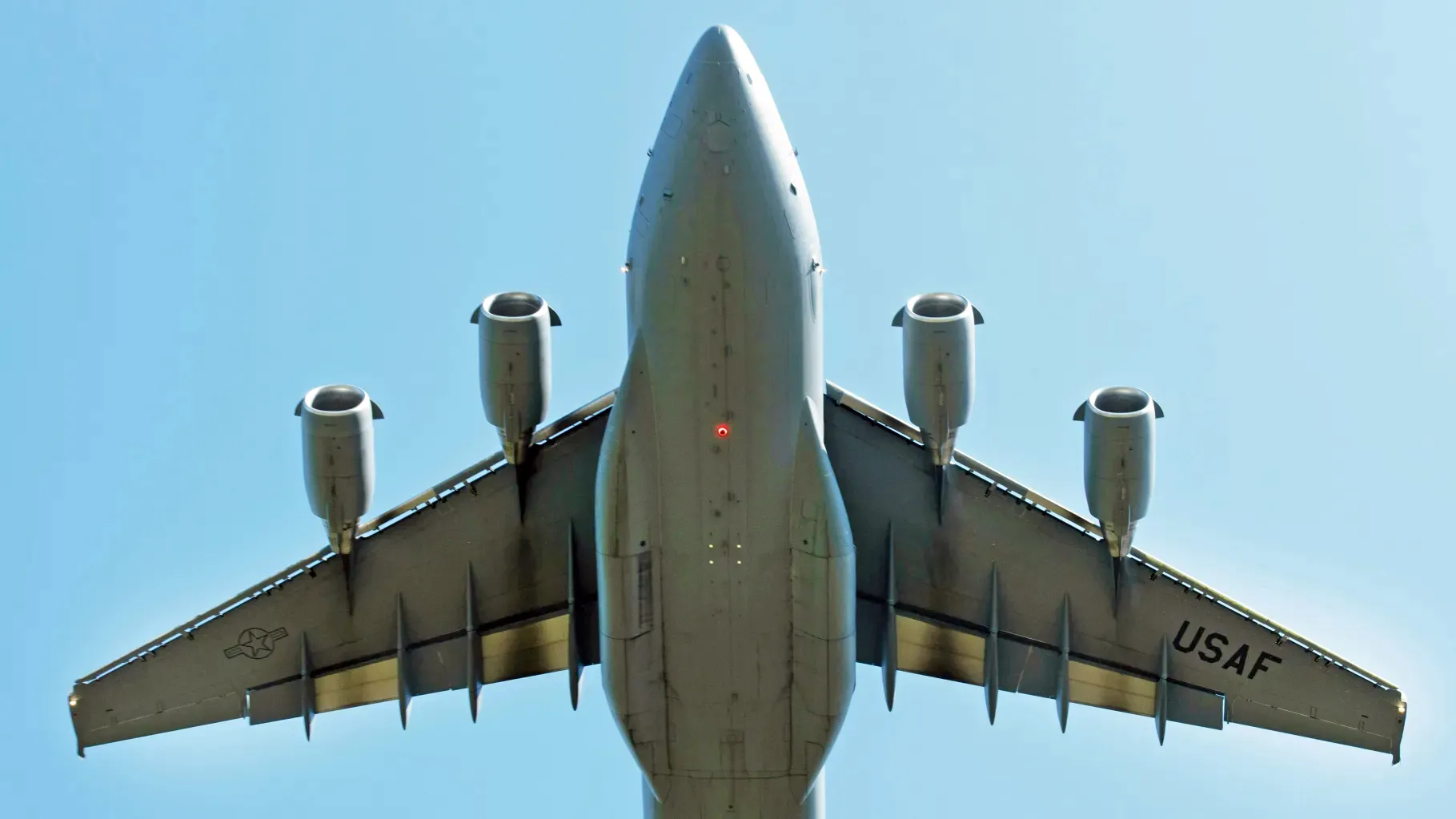
In September 2025, The War Zone highlighted an intriguing asymmetry in the Boeing C-17 Globemaster III. The aircraft features an asymmetry in its under-fuselage sponsons that accommodate the main landing gear. The right-hand sponson is longer than the left due to housing the auxiliary components. This difference, mainly unnoticed due to the aircraft’s size, is more apparent from certain angles.
The right sponson houses the auxiliary power unit (APU), which powers systems such as electrical, hydraulic, and environmental control independent of the main engines. It also contains a ram air turbine (RAT) extension for hydraulic power during primary power failure. Despite the visible length difference, the design ensures structural balance, weight distribution, and aerodynamic trimming, preserving stable flight without affecting performance.
Historical Asymmetry: The Blohm & Voss Influence
The concept of asymmetry dates back to the 1930s and World War II. The Blohm & Voss BV 141, for example, featured an offset engine nacelle with a starboard observation gondola and an asymmetrical tailplane to enhance the gunner’s view, demonstrating good stability. However, the Luftwaffe preferred more conventional designs like the Focke-Wulf Fw 189.
| Aircraft | Era | Role | Nature of Asymmetry | Purpose |
|---|---|---|---|---|
| Blohm & Voss BV 141 | WWII | Reconnaissance | Offset observer gondola | Improved visibility |
| Blohm & Voss P.178 | WWII | Dive bomber | Jet under one wing | Mixed power benefits |
Modern Asymmetrical Designs: Rutan’s Innovations
Post-WWII, asymmetric designs persisted in experimental projects. Burt Rutan’s “Boomerang,” first flown in 1996, stands out for its unique engine layout designed to mitigate control challenges if one engine fails, offering enhanced safety compared to conventional twin-engine aircraft.
| Project | First Flight | Key Asymmetry | Purpose |
|---|---|---|---|
| Rutan Boomerang | 1996 | Offset engines | Improved safety |
| NASA AD-1 | 1979-82 | Oblique wing | Aerodynamics research |
Operational Asymmetric Military Jets
Some asymmetric military jets reached production, such as the A-10 Thunderbolt II, featuring an offset GAU-8 Avenger cannon. This design manages recoil and maintains performance. The de Havilland Sea Vixen and the Canberra PR.9 also exemplify successful operational asymmetric designs.
| Aircraft | Nation | Asymmetric Feature | Purpose |
|---|---|---|---|
| A-10 Thunderbolt II | USA | GAU-8 Avenger cannon | Balanced recoil forces |
| de Havilland Sea Vixen | UK | Offset cockpit canopy | Improved visibility |
Asymmetry in Civil Aviation: The Hawker Siddeley Trident
Although rare in civil aviation, the Hawker Siddeley Trident incorporated an offset nose landing gear, allowing for crucial space for avionics and other systems. This layout managed essential equipment without compromising handling or safety significantly.
The Physics Behind Asymmetry
Asymmetrical aircraft balance lift, weight, thrust, and drag with carefully engineered compensations, using varied wingspans, offset weights, or differential drag. While larger aircraft withstand these adjustments better due to their inertia, drones and UAVs may explore asymmetrical designs for specialized advantages.