
US Air Force‘s KC-46 Pegasus Acquisition Plans Under Scrutiny
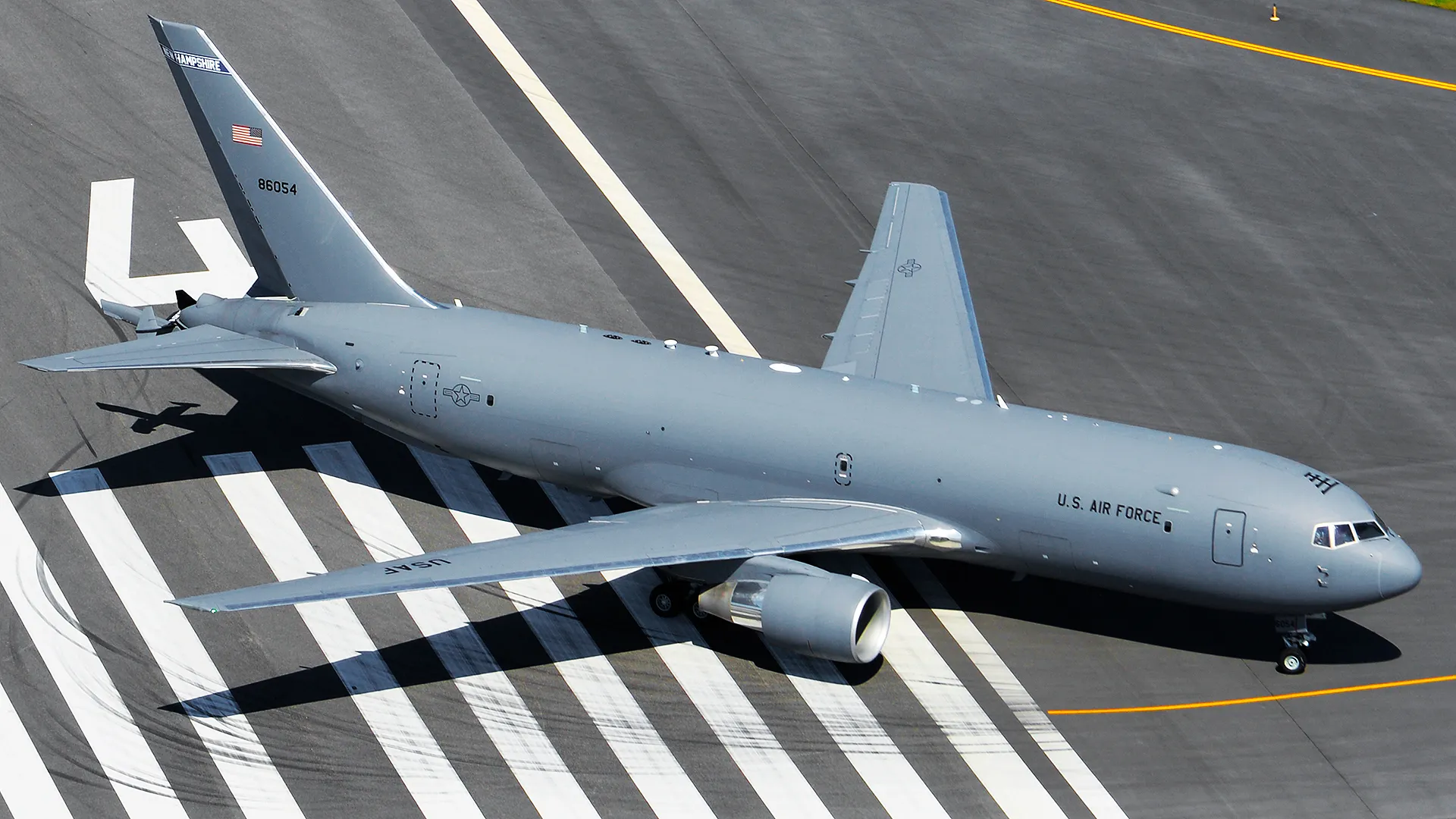
The US Air Force’s latest tanker, the Boeing KC-46 Pegasus, faces reduced procurement numbers due to congressional oversight. Originally, over 250 of these military-grade 767-based tankers were planned for acquisition in 2026. However, the lawmakers have expressed concerns about unresolved engineering and performance deficiencies, leading to a recommendation to slow down procurements. Instead, they suggest extending the retirement timeline for the existing KC-135 Stratotanker fleet until the KC-46 is fully operational.
Refreshing the US Air Force’s Tanker Fleet
In July, the USAF decided to bypass competitive bidding for new tanker models. The focus shifted to acquiring up to 75 additional KC-46s, reducing their investment in the next-generation air-refueling system (NGAS). According to Air and Space Forces Magazine, extending the KC-46A production is seen as a strategic move to modernize the KC-135 fleet as older tankers are retired.
Congress has capped the KC-46A acquisitions at 183 units until a comprehensive plan is in place addressing all major deficiencies. Jack Flynt, an Air Force veteran with vast experience transitioning from the KC-135 to the KC-46A, praised the program, stating, “We’re making leaps and bounds with the KC-46A. Together, we are strengthening the KC-46 program to promote continued mission readiness and unmatched global air refueling operations.”
Expanding and Maintaining Fleet Capacity
Although new KC-46 acquisitions may be limited, Congress still seeks to expand the overall fleet. The draft 2026 National Defense Authorization Act (NDAA) aims to increase the USAF tanker fleet to 504 aircraft by 2027, ensuring the fleet’s necessary capacity with KC-135s and KC-46s. Strict retirement restrictions of airframes like the Boeing KC-10 will apply if fleet requirements are not met by 2027.
| Specification | KC-46A | KC-135 | |
|---|---|---|---|
| Fuel Capacity | 212,299 pounds (96,297 kilograms) | 200,000 pounds (90,719 kilograms) | |
| Power Plant | 2 Pratt & Whitney 4062 62,000 lbs. – Thrust per High-Bypass engine (sea-level standard day) International CFM-56 turbofan engines | Thrust 62,000 lbs. – Thrust per High-Bypass engine (sea-level standard day) | 21,634 pounds each engine |
| Maximum Cargo Capacity | 65,000 pounds (29,484 kilograms), 58 passengers | 83,000 pounds (37,648 kilograms), 37 passengers |
The KC-10s retired under these conditions must remain in a condition ready to fly, with in-flight refueling booms installed, and cannot be used for spare parts.
Advantages of the KC-46 Pegasus
The KC-46 offers advanced capabilities including multirole cargo and passenger services superior to previous models. It can transport up to 54 patients and features a roll-on/roll-off cargo floor. Equipped with advanced systems like a fly-by-wire boom and remote vision system, the KC-46 supports electronic countermeasures and has enhanced connectivity options, making it a crucial air refueling platform.
Key specifications include:
- ICAO Code: KC46
- Crew: 3
- Passenger Configuration: 58
- Engine Count: 2
- Engine Type: CF6-80C2B1F
- Engine Class: High-bypass turbofan
- Engine Power: 60,000 lbf (267 kN) each
- Manufacturer: Boeing
- First Flight Date: December 28, 2014
With its improved flight deck and safety features, including large-format displays and synthetic-vision, the KC-46 is also more fuel-efficient than its predecessors and benefits from Boeing’s global supply chain for faster maintenance.